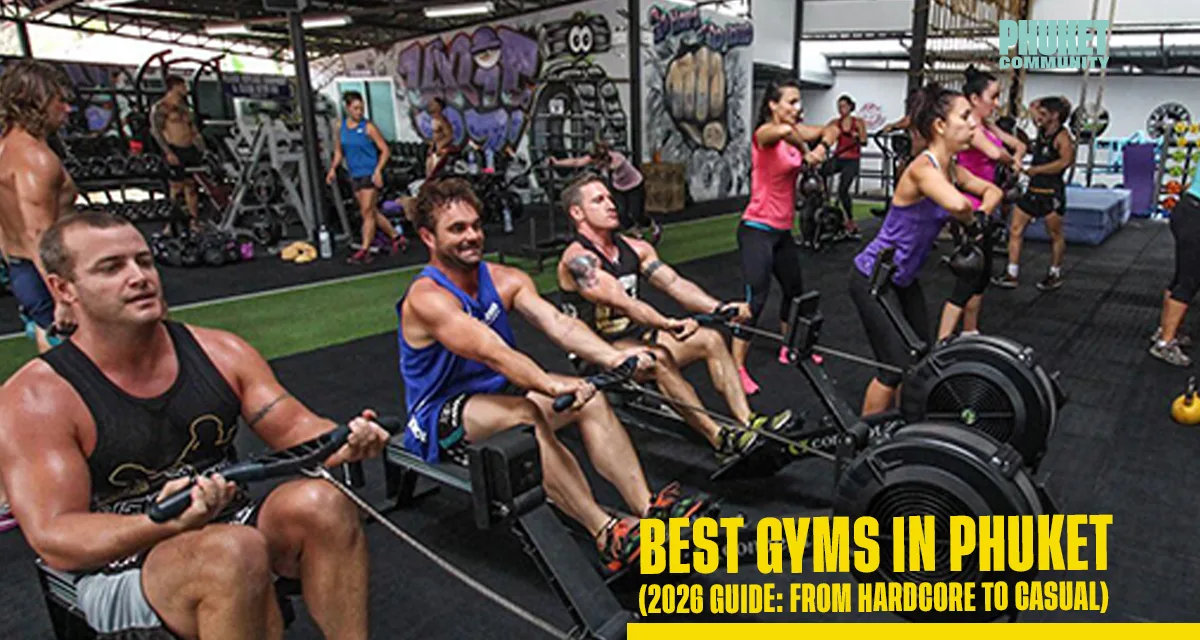
Finding the Best Gyms in Phuket isn’t about rankings or hype. It’s about understanding how location, lifestyle, and the way you train shape what actually works here. This guide breaks down Phuket’s fitness landscape in a practical, lived-in way, helping locals, fighters, and expats find a gym that fits their routine, supports recovery, and makes training sustainable over the long term.
Table of Contents
The first week in Phuket is always messy if you’re trying to train.
You land with a plan. You’re motivated. Then you open Google Maps and suddenly there are gyms everywhere. Muay Thai camps on every corner. Strength gyms tucked behind cafes. Hybrid places promising everything at once. You ask a few people and it gets even noisier. Everyone swears their gym is the one. Best coaches. Best vibe. Best results. Always the best.
What hits you pretty fast is that training here doesn’t work the way it did back home. Distance matters more. Heat changes everything. Traffic turns a “quick session” into a half-day commitment. Recovery isn’t optional anymore, it’s survival. Trying to force your old routine into this environment usually ends in frustration or burnout.
I remember thinking I just needed to find the right gym and everything would click. What actually made things easier was realizing the gym was only one piece of the puzzle. Where I lived. How I moved through the day. When I trained. When I rested. Those things mattered more than any logo on a wall.
That’s when the noise started to fade a bit. Not because the gyms were bad, but because I stopped looking for a single answer. Phuket isn’t short on great places to train. The challenge is finding one that fits how you actually live here.
And once you see that, choosing a gym stops being stressful. It becomes practical. Personal. A lot more sustainable.
There Is No Single Best Gym in Phuket
Phuket doesn’t work well with rankings.
People often arrive looking for a top ten list, like they’re choosing a hotel or a phone. The problem is that gyms here aren’t interchangeable. This isn’t a mall where everything sits under one roof and offers the same experience with a different logo.
Phuket is more like a fitness island made up of small ecosystems. Where a gym is located shapes how you train. Who shows up there shapes the pace. The surrounding lifestyle shapes how long you last.
Some gyms are built for early mornings and hard sessions. Others make more sense if you’re balancing training with work, family, or recovery. Some places thrive on intensity. Others on consistency. None of that shows up in a ranking.
When someone says a gym didn’t work for them, it usually isn’t because the gym was bad. It’s because the fit was off. Wrong location. Wrong rhythm. Wrong expectations for where they were in their training or their life.
Once you drop the idea that there’s one best gym for everyone, things get clearer. You stop chasing recommendations and start paying attention to what actually supports how you want to train here.
Phuket’s Fitness Map
Before you think about specific gyms, it helps to understand how training is spread across the island. Phuket pulls different types of people into different areas, and training naturally follows that. Once you see the pattern, a lot of confusion disappears.
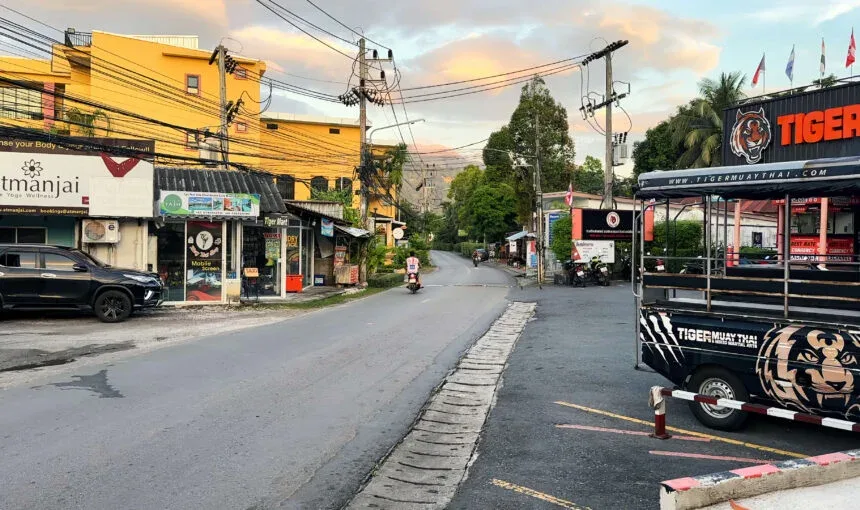
Chalong and Rawai are where training becomes the main event. Days tend to revolve around sessions, meals, and recovery. Early mornings are normal. Double sessions aren’t unusual. The people here usually came with a clear intention to train hard, and the routine reflects that. It’s focused, repetitive, and built around consistency rather than comfort.
Bangtao moves at a different pace. Training is still important, but it fits into a broader lifestyle. Sessions tend to be balanced with work, family time, and recovery. You’ll see more people thinking long term, managing load, and training in a way they can maintain for months or years rather than weeks.
Patong is shaped by convenience. Short stays, flexible schedules, and easy access matter more than strict routines. Training often works around travel plans, nightlife, or packed days. People here usually want to stay active while passing through, not restructure their entire life around training.
Phuket Town feels more settled. Less performance-focused, more routine-driven. Many gyms here serve people who live nearby and train as part of their normal week. There’s less noise, less marketing, and often a stronger sense of familiarity. It’s easy to overlook, but for the right person, it quietly makes a lot of sense.
Seeing Phuket this way makes choices simpler. You’re not hunting for the best gym on the island. You’re narrowing the part of the island that actually fits how you live and train.
Best Gyms in Phuket (Map)
Finding Your Lane
This part isn’t about labeling yourself or locking you into one identity. It’s just a quick way to narrow things down. Phuket has a lot of options, and knowing what kind of environment you actually enjoy can save you a lot of trial and error.
Hardcore Muay Thai and fight camps tend to attract people who want structure and volume. Days are built around training, often more than once. Sessions are demanding, and progress comes from repetition rather than variety. This works well if fighting or serious skill development is the priority. It can be tough for people who need flexibility, extra recovery time, or a slower ramp into intensity.
Strength and bodybuilding gyms are usually straightforward. You show up, lift, and leave. The focus is on equipment, space, and consistency rather than group energy. This suits people who already know how they like to train and don’t need much guidance. Beginners or those looking for coaching and community sometimes find these spaces a bit isolating.
Hybrid gyms that mix fitness and combat sit somewhere in the middle. You’ll often see Muay Thai paired with strength work, conditioning, or classes. Training feels balanced rather than extreme. These places work well for long stays and people who want variety without burning out. They can feel unfocused for someone chasing a very specific goal.
Recovery-friendly gyms and facilities become more important the longer you stay. These places prioritize movement quality, mobility, and recovery tools alongside training. They’re popular with people managing injuries or heavy training loads. If your main motivation is intensity or fast progress, these environments can feel too slow.
None of these paths is better than the others. They just suit different bodies, goals, and timelines. The clearer you are on that, the easier the choice becomes.
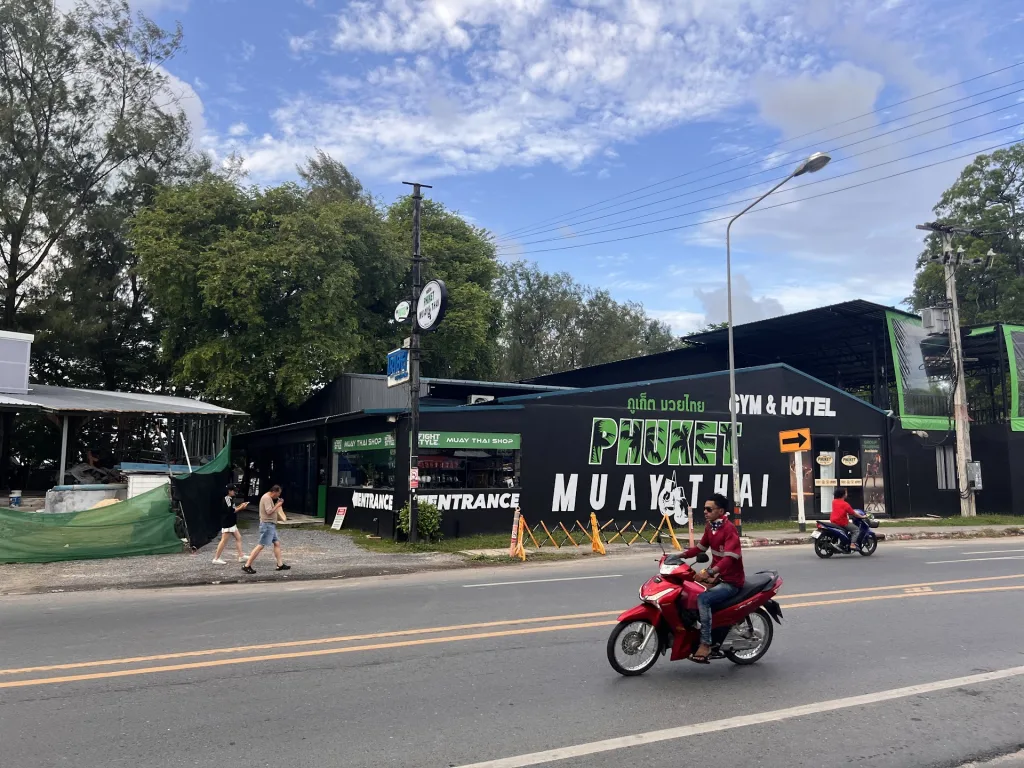
🥊 Muay Thai & Combat Training Camps
Phuket is one of the world’s go-to destinations for Muay Thai training — whether you’re a beginner looking to try Thailand’s national sport or a seasoned fighter chasing new skills.
🌟 Popular Muay Thai Gyms
AKA Thailand
A well-rated MMA & Muay Thai centre with great coaching, grappling, boxing, and strength-conditioning options — popular among both locals and visitors.
Sumalee Boxing Gym
A beloved traditional training camp with a friendly vibe and holistic touches (yoga, nutrition), combining serious training with community.
Phuket Fight Club
Offers authentic Muay Thai, MMA, BJJ, wrestling, and conditioning classes with experienced coaches — good for beginners and advanced fit folk alike.
Powerhouse Phuket & Phuket King
Strong local picks for striking training and boxing-focused regimens, with solid reviews and welcoming environments.
🏋️♂️ Fitness & Weight Training Gyms
If you’re more into iron, bars, and machines than elbows and clinches, Phuket delivers a broad range of mainstream gyms with well-equipped fitness areas.
💪 Popular Fitness Gyms & Clubs
Maximum Fitness
One of Phuket’s largest, with a wide range of machines, free weights, and conditioning areas — great for strength training, fat loss, or general workouts.
Fitness Hero
High-reviewed gym in Patong with modern equipment and a friendly, community vibe — perfect for consistent fitness routines.
Workout club
A 1,300 m² facility blending fitness training with Muay Thai elements if you want a mix of both.
My Gym Patong, FX Fitness Gym Rawai, SK-11 GYM
Well-liked neighbourhood gyms ideal for regular workouts, strength work, and cardio.
🧘♂️ Hybrid & Specialty Gyms
Beyond pure hardware and punching, there are places that mix fitness with wellness, community, or specialty training:
🌿 KAMALA GYM — gym with sauna, ice bath, and pool.
🔥 ADRENALINE FITNESS CLUB & The Cult Fitness Society Rawai — great community feel and varied training.
🏃 KONG PHUKET STRENGTH & CONDITIONING GYM — focused on strength and functional training.
🤸 Gym Club Phuket & Studio X Fitness — local clubs with classes and wellness.
🌴 Something Extra: Performance & Elite Training
For high-performance athletes and holistic fitness travellers, there are world-class training and sports resorts like Thanyapura Sports & Leisure Club, offering Olympic-level facilities, analysis, recovery, and wellness all in one place.
A Few Common Missteps
Most people don’t get it wrong on purpose. They’re just reacting to noise.
One of the most common traps is choosing a gym based on how it looks online. Phuket gyms photograph well. Pads, pools, palm trees. What you don’t see is the daily reality. How long it takes to get there. How your body feels after a week. Whether the schedule actually fits your life.
Distance gets underestimated all the time. A gym that looks close on a map can quietly drain your energy once traffic, heat, and timing are factored in. What feels exciting on day one can start to feel heavy by week two.
Another pattern is pushing training without adjusting the rest of the day. Hard sessions on little sleep. Big volume without fixing food. It works briefly, then it doesn’t. Phuket has a way of exposing those gaps quickly.
Some people respond by switching gyms every few days, hoping the next place will solve it. Usually the issue isn’t the gym. It’s everything around it.
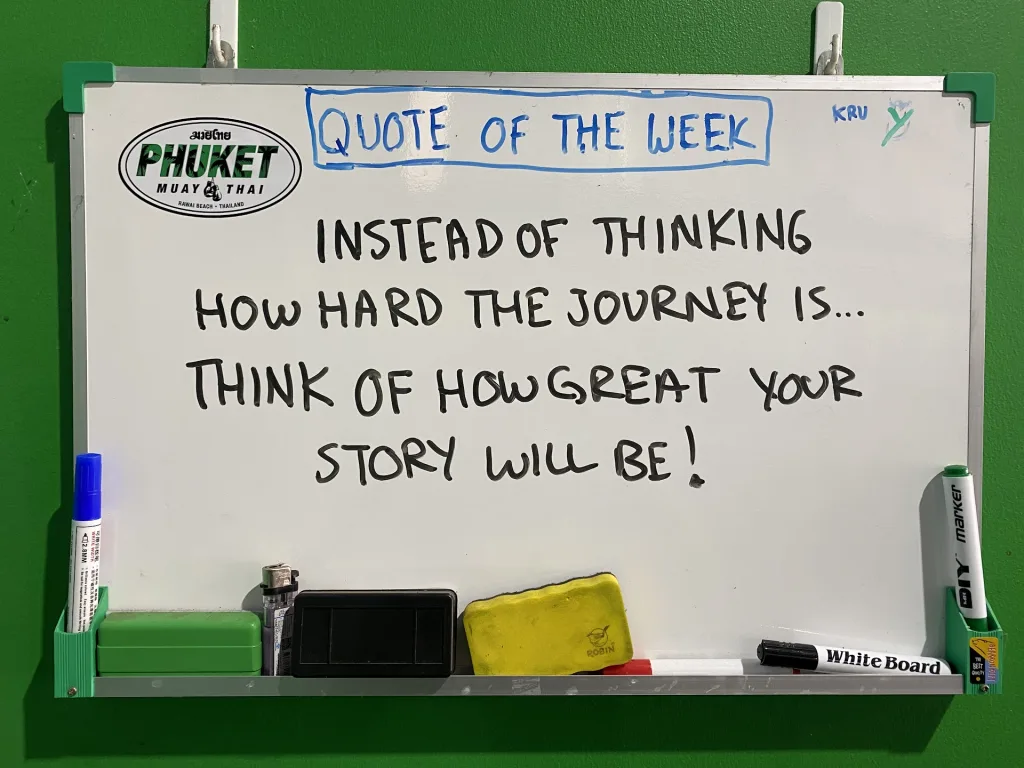
What tends to work here is simpler. Training that fits your life. Food that supports it. Recovery that’s taken seriously. And a place where you feel comfortable showing up consistently. When those pieces line up, progress feels less forced.
How to Use This Guide
This guide isn’t meant to push you toward a quick decision. It’s here to help you narrow things down without overthinking it.
Start with where you live or plan to live. That one choice removes more options than any review ever could. A gym that fits into your day will always beat a “better” gym that slowly drains your energy.
From there, think about how you actually like to train. Not how you wish you trained, or how people around you train, but what you’ll show up for consistently. That’s where style starts to matter.
Once that feels clear, zoom out a bit. Look at recovery and food. These things don’t feel exciting at first, but they shape how long you can train without hitting a wall. In Phuket, they’re part of the system, not extras.
After that, give yourself time. Try a place. Settle into a routine. Commit for a few weeks before judging it. Most gyms make more sense once your body and schedule adapt.
Think of this as exploration, not a test you need to pass. The goal isn’t to get it perfect on day one. It’s to find something that works well enough to keep showing up.
Phuket has a way of rewarding people who slow down enough to pay attention.
The island offers plenty of places to train, but the ones that work best are usually the ones that fit quietly into your life. Not the loudest. Not the most impressive online. Just the places you can return to without friction.
If you explore based on how you live and what you actually want from training, choices get simpler. The right fit tends to reveal itself over time, not through hype or urgency.
Consistency matters more here than pushing hard for a short burst. Heat, distance, and daily rhythm all nudge you in that direction whether you plan for it or not.
The right gym in Phuket doesn’t just make you fitter.
It makes training sustainable.