Trying to decide between co-living vs renting Phuket? Most digital nomads think it’s one or the other. But once you’ve spent some time on the island, the choice isn’t that simple. This guide breaks down what each option really feels like, and why most people end up doing both.
Table of Contents
Most people land in Phuket with the same question in their head.
Do I go for co-living, or just rent my own place?
You’ll hear both sides right away. Someone at the airport recommends HOMA. Someone else swears by getting a place in Rawai and never looking back.
It feels like a decision you need to get right from day one.
But after a bit of time here, you start noticing a pattern.
The people who stay longer don’t really choose one or the other.
They start in one, then drift into the other without even planning it.
Why Digital Nomads Are Choosing Phuket
Phuket just works for this kind of lifestyle.
You’ve got fast, reliable WiFi almost everywhere you go. Cafés, coworking spots, even small local places. You don’t have to think about it.
Then there’s the fitness side. Gyms are everywhere. Muay Thai is part of daily life here, not some tourist thing. You can train in the morning, grab food, then get back to work by early afternoon.
And compared to most Western cities, it’s still affordable. Rent, food, transport. You can build a solid routine without burning through your savings.
Nothing feels forced. You settle into a rhythm pretty quickly, and that’s what keeps people here longer than they planned.
What Co-Living in Phuket Actually Feels Like
You land, check in, and that’s pretty much it.
WiFi works straight away. There’s a place to sit and work. Gym downstairs. Pool right there. No setting things up, no chasing landlords, no figuring out bills.
It’s all ready before you even think about it.
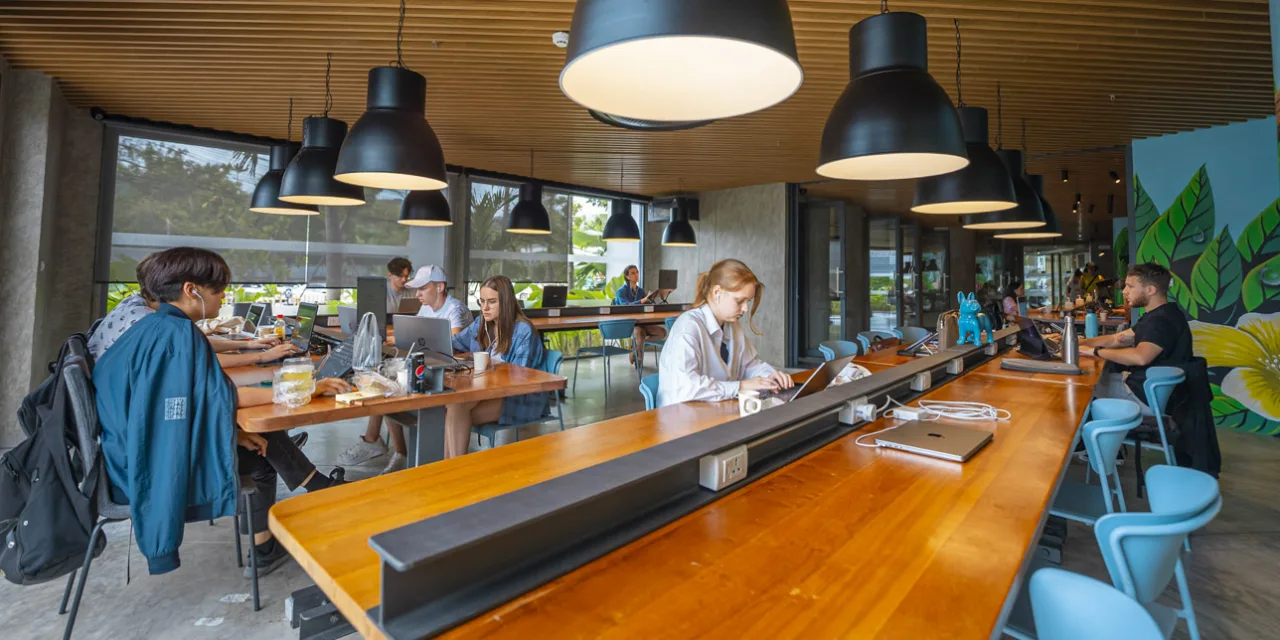
The social side happens fast too. You walk into the coworking space and end up in a conversation without trying. Same faces at breakfast, by the pool, in the lift. After a couple of days, you already know a few people.
It’s easy. Maybe a bit too easy.
Everything you need is in one place, which is great at the start. But after a while, you notice you’re mostly seeing the same circle every day. You don’t really leave unless you make the effort.
Still, for landing in a new place, it makes things feel simple. You can focus on work, meet people, and ease into the island without thinking too much about logistics.

✅ What You Get in Co-Living
- Fast WiFi from day one
- Coworking space on-site
- Gym and pool access
- Furnished room, ready to use
- Bills included
- Regular events and meetups
- People around you all the time
👍 Why People Start with Co-Living
It removes all the friction at the start.
You don’t have to think about contracts, setting up internet, or buying anything. You arrive and get straight into your routine.
The social side is a big part of it. You meet people without trying. It happens in the kitchen, at the pool, in coworking. That matters when you don’t know anyone yet.
And it’s flexible. You can stay a few weeks, a month, or leave whenever your plans change.
👎 The Downsides After a While
After a few weeks, things start to feel different.
Cost adds up. It’s fine short term, but over a few months it’s noticeably higher than renting your own place.
Privacy is limited. Even with your own room, you’re always around people. Sometimes you just want quiet.
And it can feel a bit separate from real life in Phuket. You’re in a comfortable bubble, but not always connected to the local rhythm outside.
What Renting in Rawai or Chalong Feels Like
It feels different right away.
Things slow down a bit. Not in a bad way, just less noise around you.
You wake up and head to the same café most mornings. After a few days, they remember your order. No small talk needed. It just becomes part of your routine.
Gym or Muay Thai usually fits into the day somewhere. Morning sessions, then work after. Or the other way around. You start building your own rhythm instead of following whatever’s happening around you.
You’re not surrounded by people all the time. Some days are quiet. You might go hours without talking to anyone, especially at the start.
But over time, that changes. You start recognizing faces. Same gym, same food spots, same streets. It feels more like living, less like passing through.
It’s not as instant as co-living. You have to build it yourself. But once it clicks, it feels a lot more grounded.
✅ What You Get with Local Rentals
- More space for your money
- Lower monthly rent long term
- Your own kitchen and living area
- Quiet environment
- Freedom to build your own routine
- Local cafés, gyms, and food spots nearby
- A more “real” Phuket lifestyle
⚖️ The Trade-Offs
Getting set up takes effort.
You’ll deal with viewings, deposits, and contracts. Sometimes things are unclear, especially at the start. It’s not always smooth.
Upfront costs can be higher too. Deposits, advance rent, maybe buying a few things for the place.
And socially, it’s slower in the beginning. You’re not surrounded by people like in co-living. You have to go out and build your own circle over time.
None of it is a dealbreaker. It just takes a bit more patience.
Co-Living vs Renting in Phuket
| Factor | Co-Living Phuket | Local Rental (Rawai / Chalong) |
| Setup | Instant, everything ready | Takes time to arrange |
| Cost | Higher over time | Lower long term |
| Social Life | Built in, happens naturally | You build it yourself |
| Flexibility | Easy to move or extend | Less flexible contracts |
| Lifestyle Feel | Structured, social, active | Quiet, independent, routine |
Phase 1: Arrival
You’ve just landed and everything feels new.
You don’t know the areas yet. You don’t know where to train, eat, or work. So co-living makes sense. It’s easy. You check in and your life is already set up.
You meet people fast. You get your bearings. It’s a soft landing.
Phase 2: Exploration
After a couple of weeks, you start moving around more.
You try different gyms. Maybe a Muay Thai class here, a café there. You test areas like Rawai, Chalong, maybe even Phuket Town.
You’re still based somewhere, but you’re figuring out what actually fits your routine.
Phase 3: Settling
At some point, things click.
You know where you like to train. You’ve got your go-to food spots. You’ve found an area that feels right.
That’s usually when people get their own place. Somewhere quieter. More space. Less moving around.
It stops feeling temporary. It starts feeling like you live here.
Which One Should You Choose
When Co-Living Makes Sense
- You just arrived in Phuket
- You don’t know the areas yet
- You want to meet people quickly
- You’re staying short term
- You don’t want to deal with setup
It’s the easy starting point. Everything works and you can settle in fast.
When Renting Locally Makes Sense
- You’re staying a few months or longer
- You already have a routine
- You know where you like to train and eat
- You want more space and lower costs
- You prefer a quieter setup
This is when Phuket starts to feel more like home.
Real Example
I met a guy at a coworking spot in Rawai a few months back.
He told me he started out in HOMA when he first arrived. Didn’t know anyone, didn’t want to deal with finding a place. Just wanted something easy so he could get settled and start working.
At first, he liked it. Met people straight away. Always something going on. Easy to stay busy.
But after a while, he said it started to feel a bit repetitive. Same people, same spaces, every day. He wanted a bit more quiet, more space to do his own thing.
So he moved out to Rawai. Found a simple one-bedroom near his gym.
Now his days are pretty steady. Morning training, work in the afternoon, same café most days. He knows the staff, sees familiar faces, has his own routine.
Completely different pace, but he said it suits him way more now.
Final Thoughts
If you’re just landing, co-living makes things easy. You don’t have to think. You just settle in and get started.
But if you stay a bit longer, things shift.
You start building your own routine. Your own places. That’s when renting starts to make more sense.
Co-living is how most people arrive.
Renting is how they end up staying.
FAQ
Is co-living in Phuket worth it?
Yes, especially at the start. It’s simple, social, and takes away all the setup stress.
How much does it cost to rent in Rawai or Chalong?
Roughly $400 to $700 a month for a decent one-bedroom. Can be lower if you go more local.
Where do most digital nomads live in Phuket?
Short term, usually co-living spaces. Longer term, places like Rawai, Chalong, or Phuket Town.
Is Phuket good for long-term digital nomads?
Yes. Once you build a routine, it’s easy to stay here longer than planned.