Inside Phuket's farm-to-table movement
From Michelin kitchens to Saturday markets, Phuket quietly rebuilt its entire food chain. Here are the farms, chefs and restaurants driving the island's sustainable dining boom.
Phuket Community · 10 September 2026
Inside Phuket’s farm-to-table movement
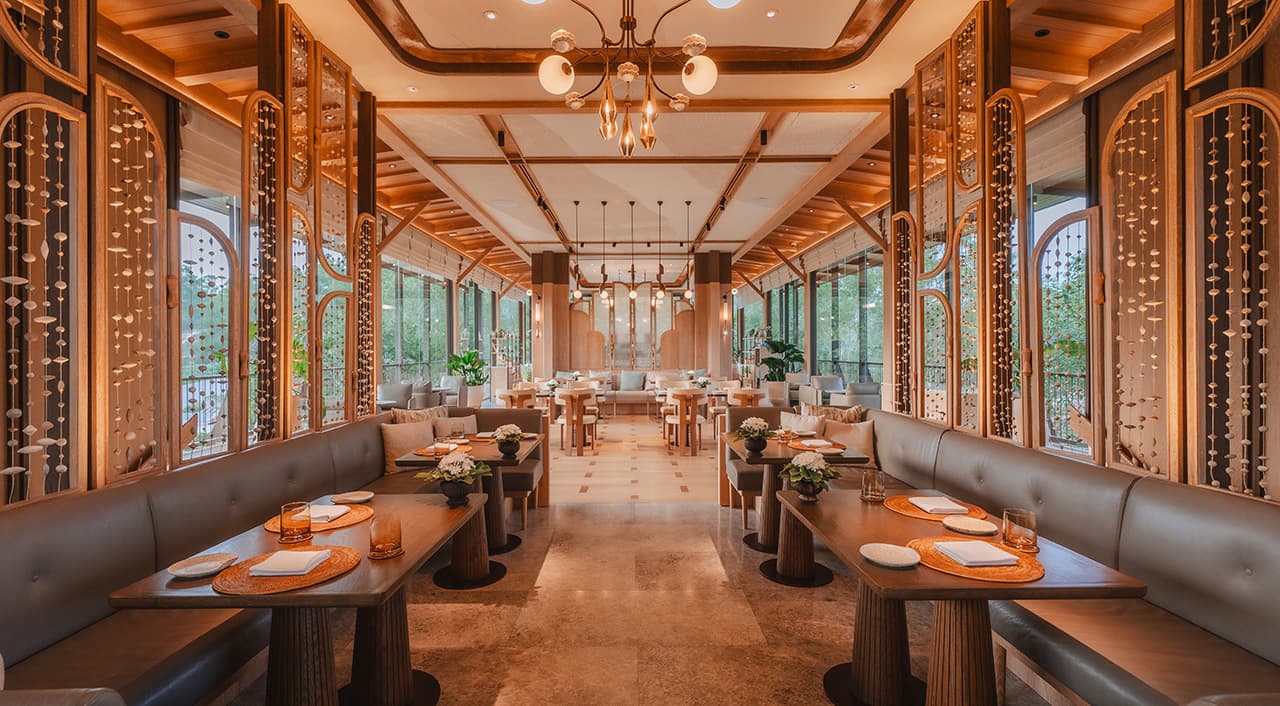
The wood is still catching when the first plate comes out at JAMPA, smoke curling up past the open kitchen with nothing between the flames and your table. No walls, no swinging doors, just a chef pulling dinner straight off the coals and setting it down in front of you. It’s a long way from the Phuket most of us remember, the one built on imported prawns and buffet tables stacked with food that had flown further than most of the guests.
Something shifted here, and it wasn’t just one restaurant getting clever with a menu. Phuket quietly rebuilt its entire food chain, from Michelin kitchens down to Saturday morning market stalls. This is the farm-to-table movement, and it’s turned into one of the more interesting food stories in Southeast Asia. Stick around, it gets better.
Why Phuket suddenly started caring where its food comes from
Nobody wakes up one day and decides to rebuild an island’s entire food system. This kind of shift builds over years, and Phuket’s version has been quietly under construction for a while now. So what changed.
The post-pandemic appetite for real, traceable food
Travellers came out of the pandemic asking different questions at the table. Where did this come from, who grew it, what’s actually in it. That shift toward wellness and personal health didn’t stay in yoga studios; it landed squarely on the menu.
You can see it in what people order now. Functional, plant-forward menus aren’t a niche request anymore. They’re close to an expectation. Diners want sourcing they can actually verify, not just a chalkboard that says “fresh” and hopes nobody asks further.
A growing resident community that wants organic options year-round
Phuket’s long-stay population has changed shape too. Digital nomads, remote executives, families who came for a season and never quite left have settled into pockets like Cherng Talay, Bang Tao, Chalong and Rawai, and they cook at home more than the average two-week tourist ever did.
That’s steady demand, not seasonal demand. It’s the difference between a restaurant chasing a trend and a farm box subscription that needs to show up every single week, rain or shine.
Wellness real estate changed the menu before it changed the view
Master-planned wellness communities started building organic farms into the blueprint before they’d even finished the villas. Tri Vananda out in Thalang and Laguna Phuket over in Cherng Talay both treat sustainable dining as a core amenity, not a nice-to-have tacked on for the brochure.
Once developers start thinking that way, the whole neighbourhood around them shifts with it. Suddenly a working farm isn’t a curiosity; it’s just part of how the community feeds itself.
Signs a Phuket restaurant is genuinely farm-to-table (not just calling itself that):
- Menu changes with the season, not the tourist calendar
- Staff can name the actual farm the vegetables came from
- Kitchen has a composting or waste-return system
- Fish and produce are sourced within Thailand, ideally within the province
The numbers behind Phuket’s sustainable dining boom
We’re not usually one for spreadsheets, but stay with us on this one. The growth rate, the certifications, the tourism strategy all quietly explain why your dinner tastes different now than it did five years ago.
| Indicator | What’s happening | Why it matters for diners |
|---|---|---|
| Thailand’s organic food market | Growing at roughly 8.5% a year | More organic produce reaching Phuket kitchens and markets |
| TAT STAR rating | Scores hospitality businesses across 17 sustainability goals | Gives visitors an official way to spot genuinely sustainable venues |
| Michelin Green Star (discontinued 2025) | Was awarded annually in Thailand from 2021 to 2025 | Signalled kitchens with verified sustainable sourcing while it ran |
| CF-Hotels platform | Digital carbon and waste tracking for hotels | Pushes resorts to measure impact, not just claim it |
Thailand’s organic food market climbing at that pace isn’t an abstract trend line. It’s the reason a wider range of chemical-free produce keeps showing up at markets across the island. Add in the TAT STAR rating and the sustainability credentials Phuket kitchens have built up, and you’ve got real accountability behind the sustainable label, not just a chalkboard claim.
What it comes down to is this: the sustainable gastronomy Phuket restaurants talk about isn’t just good marketing anymore. There’s a paper trail behind it. Next time a menu tells you where your fish came from, there’s a decent chance someone’s actually tracking that.
Inside Phuket’s farm-to-table restaurants
People ask us where to eat “the real farm-to-table stuff” more than almost anything else, so here’s where we’d actually take you. Not a directory. Just the places that earned their spot on this list.
PRU at Trisara: where community-to-fork started
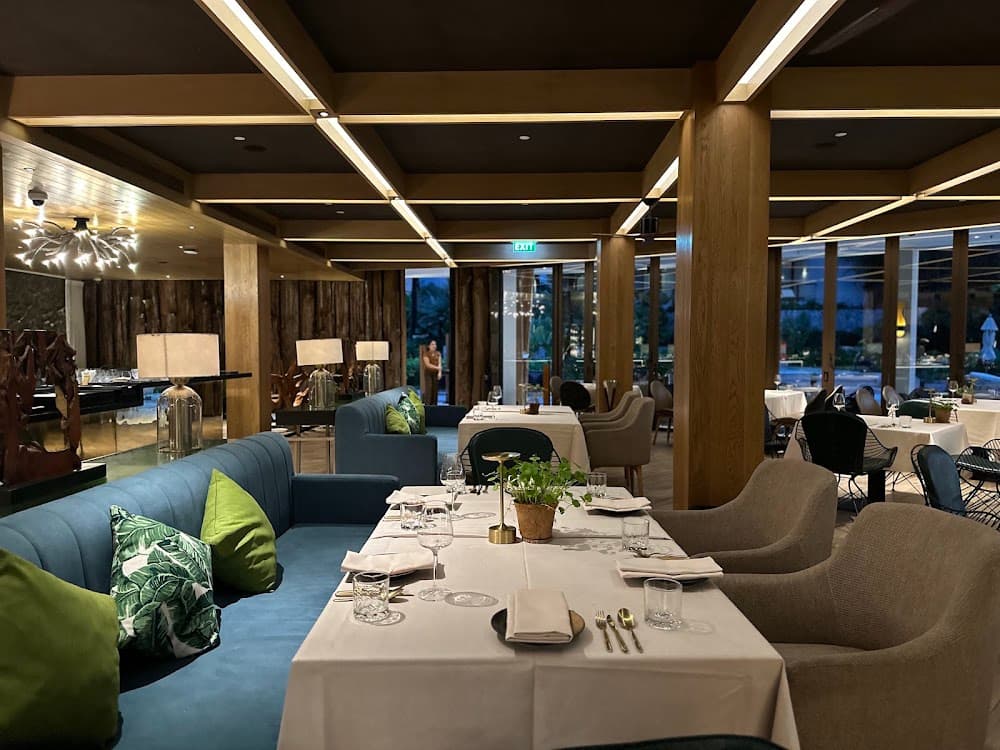
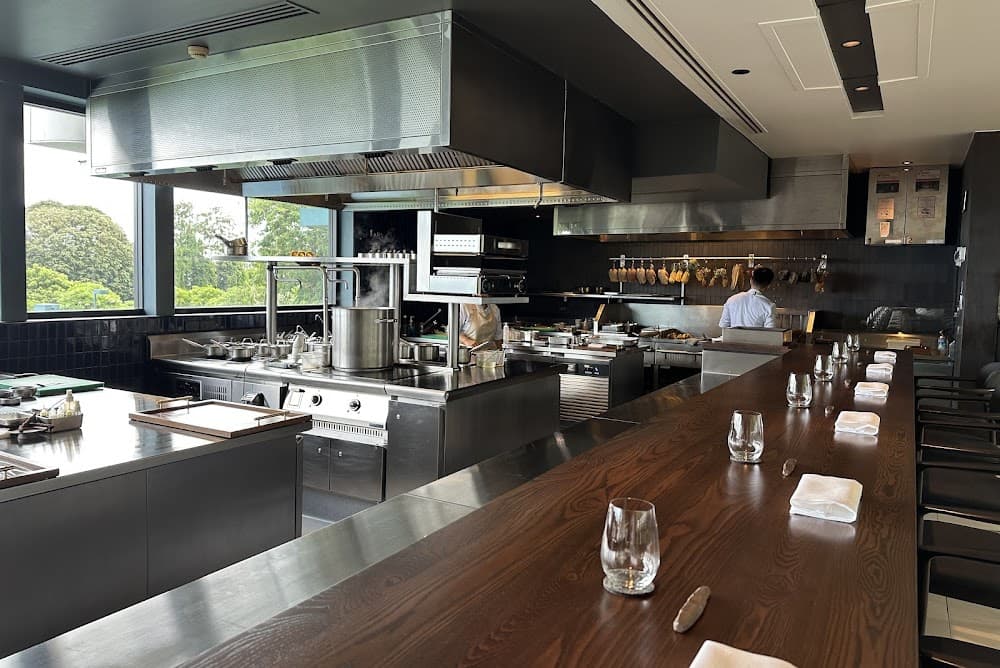
PRU is where a lot of this started, and it still sets the bar. Chef Jimmy Ophorst runs an open-theatre kitchen with no wall between the cooks and the diners, a bit like watching a kappo chef in Japan work the counter, except the backdrop is jungle instead of a quiet Kyoto alley.
Ophorst calls it “community-to-fork” rather than farm-to-table, and once you understand why, it makes sense. He’s sourcing from smallholder farmers, line-fishermen, and the 96-rai (roughly 38-acre) Pru Jampa Farm, and the whole idea is supporting the people growing and catching the food, not just the food itself. It’s a philosophy built around keeping the carbon footprint small and the relationships close.
This is also the restaurant with the paperwork to back up the hype. PRU is Phuket’s first Michelin Star restaurant, awarded in 2019, and formerly held a Michelin Green Star from 2021 until the programme was discontinued in 2025. You’ll pay for that pedigree; tasting menus start from around ฿4,000++ for lunch, with dinner running higher. What you’re getting in return is things like wild Makwaen peppercorns and native ta-ko fruit that you won’t find on a resort buffet.
JAMPA at Tri Vananda: cooking over fire, not gas
JAMPA does things differently, starting with the fact that there’s no gas burner in sight. Chef Rick Dingen cooks entirely over locally harvested wood, so the kitchen smells like a campfire crossed with a proper restaurant, in the best way.
The closed-loop agriculture here is genuinely satisfying to watch. Vegetable scraps go back to Pru Jampa Farm as chicken feed, compost returns to the soil, and the whole cycle just keeps going. Dingen’s approach comes down to three ideas: cook with what’s in season, waste nothing, keep it farm to fork. You can taste that discipline in every course.
JAMPA formerly held a Michelin Green Star and earned a nod from 50 Best Discovery. You’ve got options here too: à la carte, a 4-course Experience menu at ฿2,900++, a 6-course option, a dedicated plant-forward menu, or the weekend HiDEAWAY by JAMPA lunch out on the farm. That last one is worth the trip alone.
Jaras at InterContinental Kamala Beach: turning invasive fish into fine dining
“Invasive species tasting menu” sounded like a gimmick before we actually sat down at Jaras. It isn’t. This LEED Gold-certified restaurant partners with WWF-Thailand and the Alternative Agriculture Network to build a menu around species like broadhead catfish, black shin tilapia, and water mimosa, all of which are causing real problems in local waterways.
Eating your way through an ecological issue feels a little strange at first, then it just feels smart. Their in-house Sustainability Corner turns prawn shells into housemade prawn oil, an Oklin aerobic composter handles kitchen waste onsite, and there’s a circular partnership with Katian Farm in Phang Nga that keeps the whole supply chain tight and local.
The casual side: Project Artisan, The Vegan Table and the Rawai wellness cluster
Not every farm-to-table experience in Phuket needs a reservation weeks out. Project Artisan, tucked into the Cherng Talay and Bang Tao area, is an open-air cafe built with natural materials, serving wholesome international and Thai dishes that don’t take themselves too seriously.
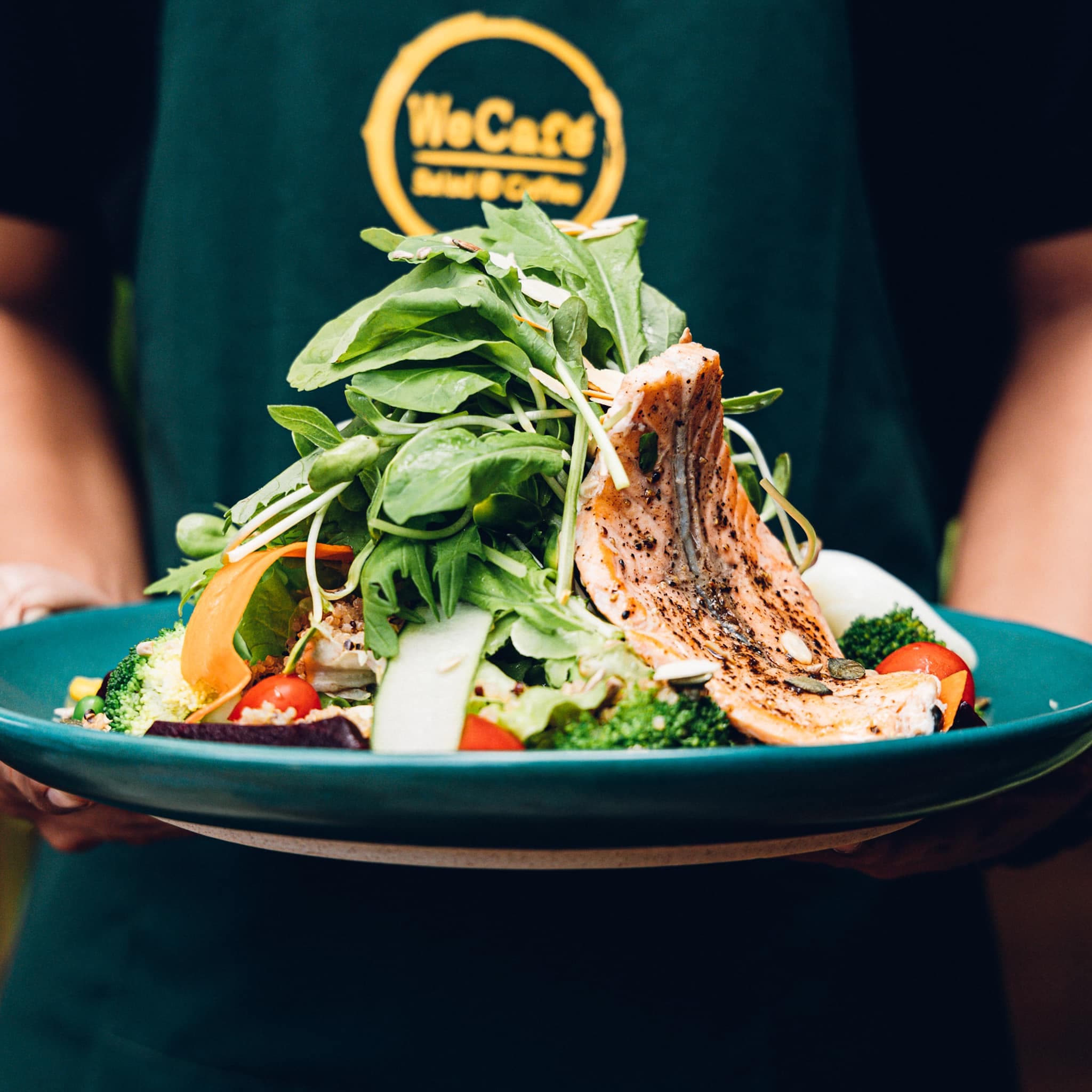
The Vegan Table, on Rassada Road in Old Town since 2018, is 100% plant-based and grows its own edible flowers to garnish sourdough bowls, wood-fired pizzas and curries. And if you head down to Rawai and Chalong, you’ll find a cluster of organic restaurants residents swear by — WeCafe, Pure Vegan Heaven, and Natural Efe Macrobiotic World among them, each worth its own visit if plant-based eating is your thing.
| Restaurant | Area | Best known for | Price feel |
|---|---|---|---|
| PRU | Cherng Talay | Tasting menus, native Thai botanicals | Splurge |
| JAMPA | Thalang | Live-fire cooking, weekend farm lunches | Mid to high |
| Jaras | Kamala Beach | Invasive species tasting menu | High |
| Project Artisan | Cherng Talay / Bang Tao | Open-air, wholesome comfort food | Moderate |
| The Vegan Table | Old Town | 100% plant-based, edible flowers | Moderate |
Meet the farms feeding Phuket’s kitchens
Restaurants get the reviews, the Michelin stars, the reservation waitlists. But none of that works without the dirt underneath it, so let’s talk about the farms actually growing this food.
Pru Jampa Farm: the 96-rai engine room
Pru Jampa Farm sits on 96 rai (roughly 38 acres) of inland terrain in Thalang, and it runs on permaculture principles rather than rows of monoculture. More than 30 crop varieties grow here — dragon fruit, young coconut, sweet basil, lemongrass, passionfruit, native root vegetables — and it’s the primary supplier keeping PRU, JAMPA and Trisara Resort stocked.
The animal side is where it gets clever. Chickens roam free and eat vegetable scraps sent back from the partner kitchens, then lay eggs that end up on those same restaurant menus. Their waste enriches the soil, which means synthetic fertiliser never enters the picture. A small, tidy loop. Once you’ve seen it in person, every other farm feels a bit lazy by comparison.
Katian Farm: from rubber plantation to circular supplier
Katian Farm has a good backstory. It used to be a single-crop rubber plantation, the kind you see all over this part of Thailand, and Khun Phrut and his family turned it into a 35-rai polyculture farm in Takua Thung, Phang Nga instead. Now it grows lemon trees, fig trees, finger lime bushes, papayas, chillies and edible flowers, alongside free-range chickens and ducks.
The partnership with InterContinental Phuket Resort is the satisfying part. The resort ships over 250 to 300 kilograms of waste seashells and organic fertiliser, Katian grinds those shells into calcium-rich grit for the poultry, and the farm sends back fresh produce, edible flowers and more than 650 eggs a week to Jaras. Three steps, no waste, everyone gets something useful out of it.
Farmer Family Organic Farm and Old Phuket Farm: the small growers behind the scenes
Not every farm here needs 96 rai to matter. Farmer Family Organic Farm in Paklok works directly with Aulis Phuket, Chef Simon Rogan’s restaurant, growing small dedicated plots of heirloom radishes, native peanuts and wild herbs built specifically around the tasting menu. Whatever’s left over goes to community markets rather than sitting unused.
Old Phuket Farm takes a different approach entirely, functioning as both a farm and a hands-on culinary classroom. Visitors pick Thai basil, galangal, kaffir lime and chillies themselves, then collect eggs before cooking with what they’ve gathered. There’s a good reason for the rush from field to pan too. The essential oils in herbs like Thai basil start dissipating within hours of harvest, so immediate preparation isn’t just a nice idea. It’s the whole point.
Between the big permaculture operations and these smaller organic farms, Phuket keeps building this kind of hyper-local sourcing into something that actually holds up. Not just a line on a menu.
What makes a closed-loop farm partnership work:
- Kitchen scraps go back to the farm as feed or compost
- Farms supply fresh eggs, herbs or produce in return
- The relationship is ongoing, not a one-off delivery
- Both sides track what’s exchanged, even informally
The chefs behind the philosophy
Every good food movement has a couple of people stubborn enough to actually build it, rather than just talk about it. In Phuket, that’s largely Jimmy Ophorst and Rick Dingen. Two chefs with different kitchens and the same basic conviction.
Jimmy Ophorst and “community-to-fork”
Ophorst doesn’t love the term farm-to-table, and once he explains why, it’s hard to argue. His version, community-to-fork, is less about one farm and more about an entire network of people — smallholder growers, line-fishermen, small producers scattered across Thailand — all of whom benefit when PRU builds its menu around them instead of an import list. Keeping the carbon footprint small isn’t a side effect of that approach. It’s the point.
He’s also become something of an advocate for ingredients most kitchens overlook entirely. Wild Makwaen peppercorns and indigenous ta-ko fruit show up on his menus not as novelty, but because they’re genuinely good and genuinely local. And that open kitchen at PRU, no wall separating cooks from diners, isn’t just a design choice. It’s Ophorst putting his sourcing and his technique on full display. Nothing hidden, nothing to second-guess.
Rick Dingen and “farm to fork, zero waste”
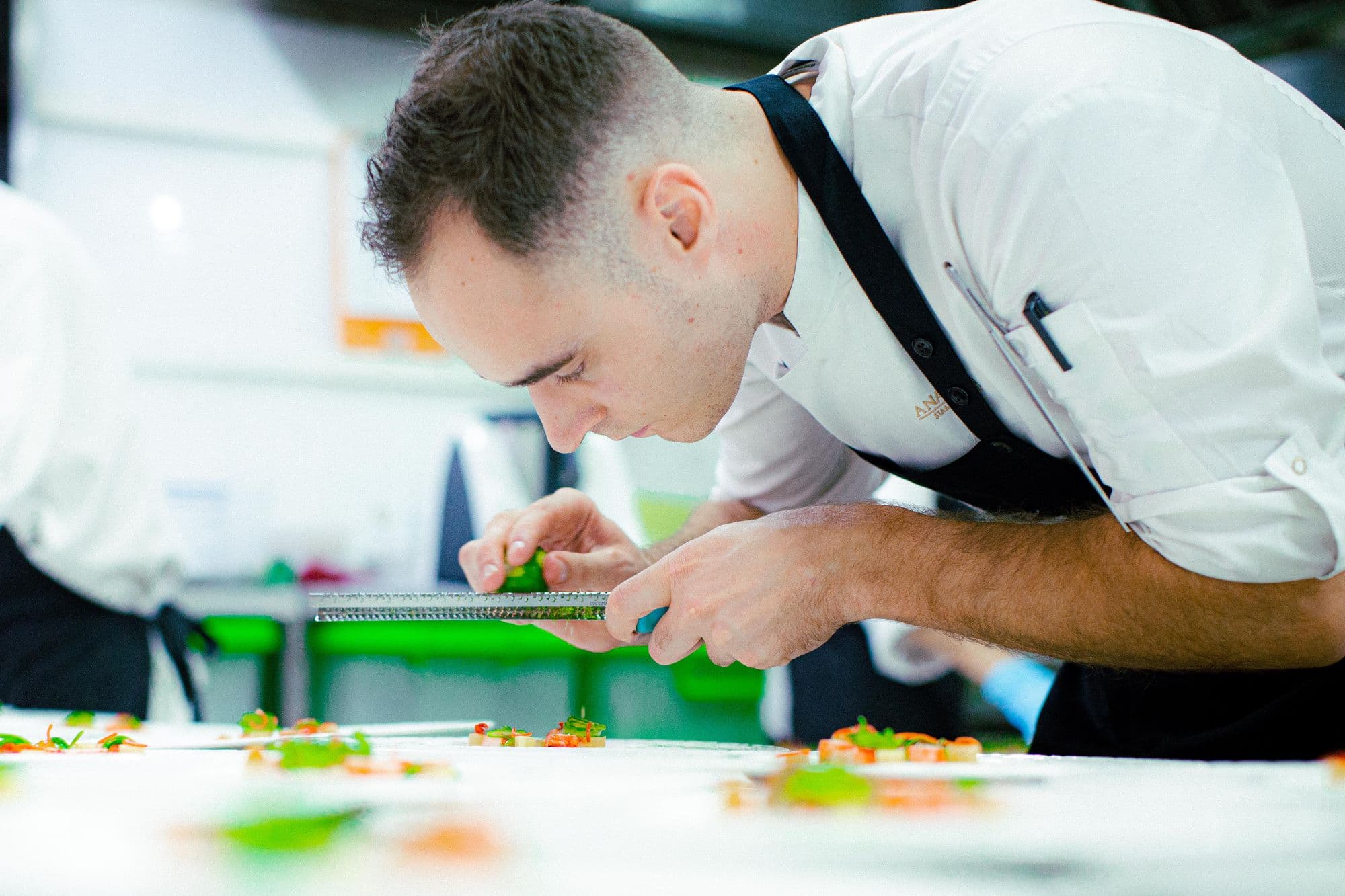
Dingen works from three simple rules: cook what’s in season, waste nothing, keep it farm to fork. Simple to say, harder to actually run a restaurant on. But he’s built JAMPA around exactly that, pairing live-fire cooking with a closed agricultural loop that sends scraps back to the farm and pulls fresh ingredients right back out.
He’s not keeping any of it to himself either. Weekend farm tours and the open-air HiDEAWAY workshops exist so guests can see how a commercial kitchen cuts single-use plastics and keeps organic waste out of landfill. It’s a working demonstration that zero-waste dining Phuket restaurants practice can stay profitable without a single imported ingredient.
What this means if you’re living in or visiting Phuket
None of this stays neatly inside a restaurant review. If you actually live here, or you’re visiting long enough to cook a meal or two, this movement changes your options in a pretty direct way. Better produce is easier to find now, and it’s not just sitting at the resort end of the island.
There’s more transparency too, which we didn’t expect to care about as much as we do. Used to just order the fish and not think twice. Now we catch ourselves asking where it came from, half out of habit, half because we actually want to know, and most places can tell us. That’s a real shift from a few years ago.
It’s also given us a reason to get off the beach road more often, which honestly needed to happen anyway. Between the farms, the markets, and the wave of eco-wellness tourism reshaping how people spend their time here, sustainable dining Phuket has quietly become something worth planning a whole afternoon around, not just a footnote to a beach day.
How to eat the Phuket farm-to-table movement on any budget:
- Splurge once on a tasting menu at PRU or JAMPA for the full experience
- Hit a weekend market for a week’s worth of organic produce
- Try one plant-based cafe you haven’t been to yet
- Ask your regular restaurant where their vegetables actually come from
Questions residents ask about the farm-to-table movement
What does farm-to-table actually mean in Phuket? It means your food comes from a farm you could actually drive to, not a shipping container. Kitchens here source directly from local growers, run closed-loop waste systems that feed scraps back to the farm, and build menus around whatever’s actually in season, not what’s easy to import.
Which Phuket restaurants have strong sustainability credentials? PRU and JAMPA both formerly held a Michelin Green Star (the programme was discontinued globally in 2025) and remain leaders in sustainable sourcing. Jaras at InterContinental holds LEED Gold certification and runs a circular partnership with Katian Farm. All three have the paperwork to back up the claims.
Are there good vegan options within the movement? The Vegan Table in Old Town is fully plant-based and grows its own edible flowers, and the Rawai and Chalong cafe cluster has a handful of spots worth working through if plant-based eating is your focus.
Where can I buy organic produce in Phuket without visiting a farm? Hit Boat Avenue Weekend Market on a Saturday morning, or Fun Friday Avenue Market if evenings suit you better. If you’d rather stay home, Organic Village Phuket delivers produce boxes island-wide.
Is farm-to-table dining in Phuket more expensive? At the top end, yes. Tasting menus at PRU and JAMPA are a genuine splurge. But markets and casual cafes make this whole movement accessible on almost any budget. You don’t need a reservation to eat this way.
Where the movement goes from here
None of this is finished, and it shouldn’t pretend to be. Getting produce from farms out in Phang Nga to kitchens on the island still involves real logistics, not just good intentions. The bigger challenge is scaling any of this past the luxury tasting rooms, into the mid-tier restaurants and high-volume resort kitchens that feed far more people on a given night. And the farms themselves need support too. Weather patterns are getting less predictable, and resilience isn’t something you build overnight.
Still, we keep coming back to that fire crackling at JAMPA, no wall between the flames and the plate. That image sticks because it’s not a gimmick. It’s a chef showing you exactly how your food got to the table, mess and all. The Phuket farm-to-table movement isn’t polished yet, and honestly, we’re not sure we’d trust it as much if it were.
What we do trust is that the sustainable gastronomy Phuket is building here has real roots now. Farms with names, chefs with actual philosophies, markets you can walk through on a Saturday morning and taste the difference. That’s not nothing.
So do something with it this week. Book the table you’ve been putting off, or just wander through a market you’ve never bothered stopping at. Either way, you’ll probably end up looking at your dinner a little differently, and honestly, that’s kind of the whole point.
For our 2026 shortlist of restaurants across the island — including the fine dining picks referenced here — see The best restaurants in Phuket.