Rawai & Nai Harn: the neighbourhood guide for south Phuket
The best beach in the south, a world-class fitness community, and food that has surpassed the north.
Phuket Community · 4 October 2026
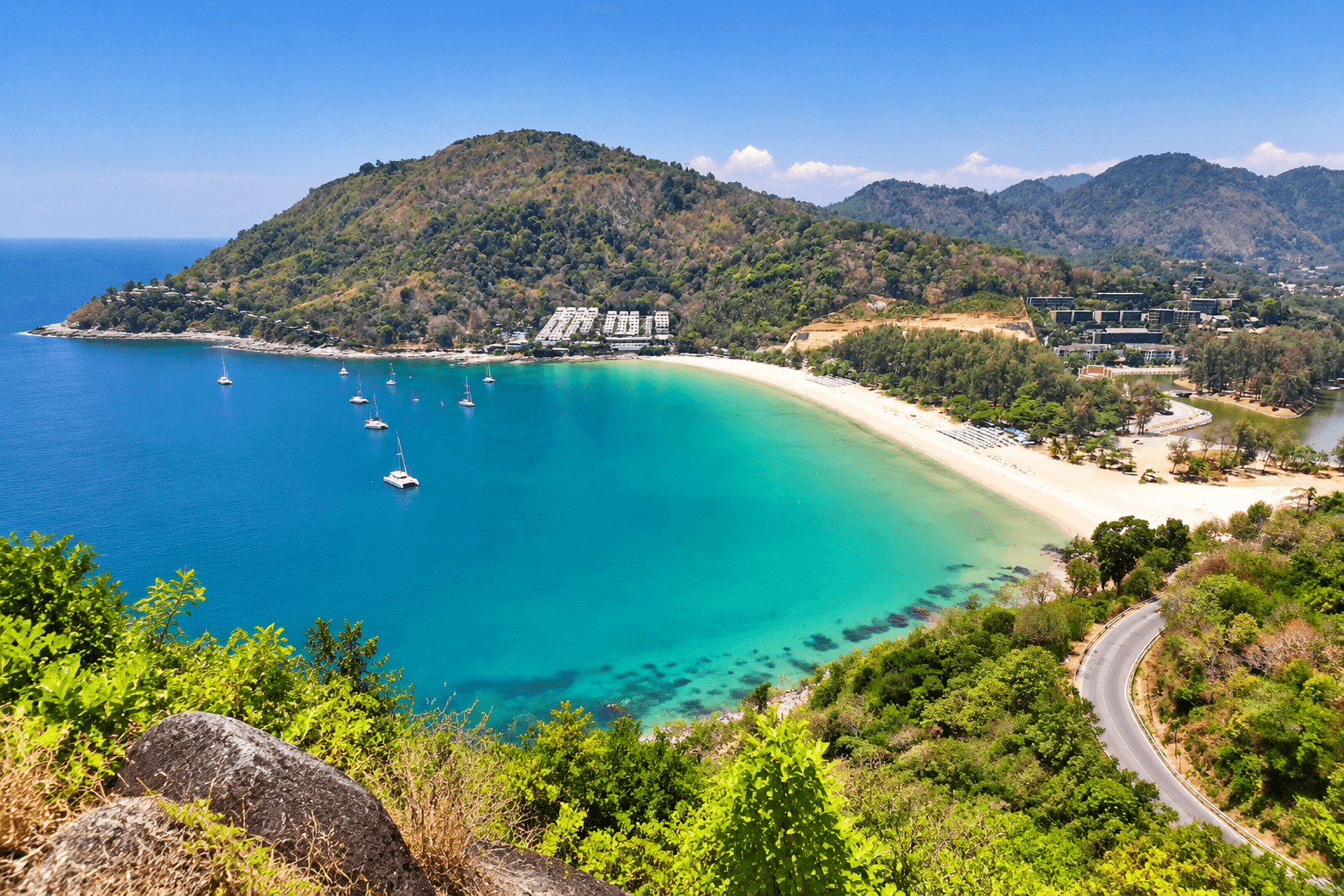
South Phuket residents have a saying about Nai Harn that you hear often enough to believe it: “I came to visit and never left.” The area is not the flashiest part of the island. It has no beach clubs, no particular nightlife, no hotel strip worth mentioning. What it has is the best beach in the south, a lake that functions as the resident town square, a world-class fitness community, and a mix of quality food that sets itself apart from other parts of the island.
The distinction from Rawai matters — but not in the way visitors expect. Rawai faces east, toward the small islands, the seafood market, the fishing pier. Nai Harn, a few kilometres further south around the headland, faces west. Together, the two areas form south Phuket’s residential core — and increasingly, one of the most complete places to live on the island. Locals treat them as one zone. This guide does the same.
The beach by the clock
Nai Harn beach sits at the bottom of a valley with a small lake between the village and the shore. The character of the beach changes completely depending on when you arrive and what time of year it is.
Visit in the early morning and it belongs to the long-term residents — beach walks, dogs, many of them stopping to talk and wave pleasantries. They do not know each other well, but they see each other every day. That is the vibe.
In low season, the waves are up and the surfers are enjoying it. No boats — too much swell.
In high season, by 9 or 10am people are coming down to secure their sun loungers for a day of baking. The bay fills with yachts and sailing boats. The beach is packed all day, so much so that the traffic in Rawai changes as the sun goes down — and it is not people knocking off work. It is the beach shutting down and people trickling home.
The Nai Harn hotel (formerly the Royal Phuket Yacht Club — locals still use both names) sits on the headland above the beach’s southern end. The property rebranded several years ago and has had a dining refresh — Cosmo Restaurant, Rock Salt, and Hansha rooftop sushi bar are the current venues. Sunday brunch has historically been a resident fixture. The view, food and drinks at Rock Salt are reliably good.
The other beaches
Ya Nui is a small sheltered cove between Nai Harn and Promthep Cape. Quieter than Nai Harn, good for snorkeling and kayaking, and genuinely used by residents as the go-to alternative when they want a swim without the scene. In high season it fills up, but nothing like the main beach.
Ao Sane is rocky, undeveloped, and easy to miss — tucked near The Nai Harn hotel. Good snorkeling, very local feel. Most tourists skip it entirely, which is the point.
The lake circuit
Nai Harn lake is directly behind the beach, separated from the sea by a narrow strip of land. Wat Nai Harn (Wat Mongkol Nimit) sits right beside it — a proper working temple with monks in residence. The lake and temple together are a local landmark.
The walking circuit takes roughly 30 minutes at an easy pace and has been one of the better morning walks on the island — though it is worth knowing that a ฿66 million renovation project (bike lane, parking, solar street lights) has been underway since 2024, hit a year-long halt, and has only recently resumed. Right now it is worse than it was before the work started. We are not holding our breath.
The construction has pushed more walkers up the hills towards the Windmill Viewpoint, which can be dangerous with traffic in high season — though mostly it is too hot for most to be walking after 9am before traffic hits. Afternoons can be messy.
At 7am you will pass fitness walkers, dog owners doing laps, Thai monks collecting alms from the roadside stalls. The food stalls on the northern side of the lake road are worth arriving early for — proper Thai breakfast at prices that reflect a Thai residential catchment rather than a tourist one. There is also a small island in the middle of the lake where local markets are held regularly. The Sunday market here runs alongside the regular walking crowd, with produce and prepared food at good value.
Rawai Beach
Rawai is the working beach. The tide comes in and out, and this is not a swimming beach — it is where you meet the longtail boats and speedboats for day trips to the islands. The strip of restaurants and bars along the beachfront is the only real walking promenade in the south. Mook Manee, which has earned Michelin recognition for its beachfront seafood, operates here.
The Rawai seafood market at the pier end is a resident fixture — buy direct from the boats and have it cooked at the restaurants behind the market. It is one of the things that anchors daily life in the south.
Fitness
A few years ago, the fitness scene in south Phuket meant holiday camps — come for two weeks and do a cleanse or a bootcamp. PhuketFit and Phuket Cleanse built that reputation, and both are still operating (Phuket Cleanse has evolved considerably, now offering everything from breathwork to biological age testing alongside the original detox programmes).
What has changed is the migration of serious, resident-oriented fitness south. Before, you had to drive to the Soi Ta-ied gym district in Chalong for anything beyond a hotel gym. Now the south has its own ecosystem.
Combat sports remain strong — Sinbi Muay Thai and Phuket Muay Thai both operate in Rawai, and the Soi Ta-ied corridor (Phuket Top Team, Tiger Muay Thai) is a 15 to 30 minute drive depending on season and traffic. But the real shift is the breadth of what is available now. Cult Fitness Society runs HIIT and Hyrox-style training and a regular run club. Nai Harn Gym is the straightforward strength-and-cardio option. Motus Cultura covers CrossFit and Olympic lifting. Action Point runs structured fitness retreat programmes.
A real community has formed around this. Run clubs, group classes, early-morning beach sessions — the south has gone from a place where fitness meant a two-week holiday camp to a place where residents train daily with people they know.
We maintain a fitness directory on this site — filter by south Phuket for current listings.
The food scene
The old version of this guide would have told you there was limited Western food in the south outside of breakfast and Italian (which have been good for 10+ years). That was partly true pre-COVID, but even then the south had some. What happened since is that a lot of the island’s best operators moved south, drawn by a strong local resident base and lower rents. The south levelled up — and in our opinion surpassed the north, especially for breakfast and lunch.
The dining culture here is casual. The only dress code is be wearing a shirt. That is not a limitation — it is the character of the place. The south now has genuine depth across cuisines: Italian, Mediterranean, Mexican, Indian, Thai seafood, health-focused cafes, proper brunch spots.
For specific starting points: Wilsons on Soi Saiyuan for breakfast, Uni’s Mexican for lunch, and Fresca Kitchens & Deli at STAY Wellbeing & Lifestyle Resort for a nice dinner out. Mook Manee on the Rawai beachfront has earned Michelin recognition for its seafood, where you can pick fresh seafood and they will prepare it the way you like.
The sticking point is gourmet home shopping. There is a Tops on the Rawai beachfront for daily essentials, but Villa Market is across the Chalong circle — though they now offer home delivery, which has taken the edge off. Makro has a branch in Rawai for bulk buying, a reliably good all-rounder but missing some obscure essentials and “like home” favourites.
We maintain a restaurant directory on this site — filter by south Phuket for current listings.
Coffee and coworking
Wilsons on Soi Saiyuan doubles as a work-friendly cafe and is one of our partners on this site. Several other cafes along Saiyuan Road serve the remote-worker crowd. Lets Work on the Rawai beachfront is a dedicated coworking space — creative hub with day passes and memberships. For the full coffee picture, see the coffee culture guide on this site.
Water activities
The south is the departure point for some of the best diving on the island. Several dive shops operate from Rawai and Chalong, running trips to Racha Yai, Racha Noi, and Coral Island. For snorkeling without a boat trip, Ya Nui and Ao Sane both have decent reef directly off the beach. Chalong Bay is the main sailing and marina hub, a short drive from Rawai. There is no jet skiing off Nai Harn beach — for that you need to head to Kata or Patong.
Getting there and living there
From the Chalong circle to Nai Harn takes roughly 15 minutes outside peak hours. The issue is if you are heading northwest through Kata — Kata traffic in high season, particularly in the evenings, can turn that into 40 minutes or more. Residents route around it instinctively.
The practical implication for anyone considering living here: if your work or social life is in the north, the drive gets old. If you need the airport regularly, the south may not be the best spot — 1.5 to 2 hours to the airport is not uncommon. The residents who settle here tend to be people whose life is in the south — daily runs to local coffee shops or breakfast spots, training at one or multiple of the gyms, work that allows them to stay local. It is a neighbourhood choice as much as a lifestyle one.
Schools
There is no major international school campus inside Rawai or Nai Harn, but there are more options closer than most people realise — particularly for younger children.
For nurseries and kindergartens in the area: ABC International Nursery and Pre-School has been operating for over 15 years and is well known with the long-standing residents. Baan Kajonkiet Nursery on Sai Yuan Road is another established local option. Kinderville International School Phuket offers a Russian-run kindergarten programme.
For primary and secondary, International School of Phuket (ISP) and Lighthouse Primary International School Phuket are the closest school-level options.
Beyond that, a lot of families drive 15 to 30 minutes north to Chalong or closer to central — HeadStart and QSI are the closest full-curriculum options. BISP, the island’s top-tier IB school, is in Koh Kaew — 40 to 45 minutes on a clear run, but that can balloon out in high season, rain, or just a bad day. Families in the south should expect a school run.
Medical
For anything beyond a clinic visit, residents drive to Chalong. Dibuk Hospital is the closest proper hospital, roughly 15 minutes from Rawai. There are several small GP and dental clinics in the area for minor consultations. For emergencies, specialist care, or surgery, Bangkok Hospital Phuket in town is the main option — 40 to 45 minutes on a clear run.
Windmill Viewpoint
Worth naming because it is one of the best views on the island and many residents drive past it without stopping: Windmill Viewpoint sits on the headland between Nai Harn and Ya Nui Beach, marked by a single wind turbine. The panorama covers both beaches and the open Andaman to the south. Every day in high season there will be people camped up there, sitting and watching the sun set on another beautiful day. It is built on the daily rituals of life down here. Promthep Cape gets the tour bus crowds; this gets the residents.
Found a coffee shop, restaurant, or gym in the area that belongs in this guide? Submit it at phuketcommunity.com/submit