Phuket Old Town: What Has Changed and What Is Worth Your Time in 2026
The resident's view of Old Town in 2026 — what is genuinely worth visiting, what has changed, and what you can skip.
Phuket Community · 5 October 2026
Phuket Old Town: What Has Changed and What Is Worth Your Time in 2026
story · draft v4 · last updated 5 Oct 2026
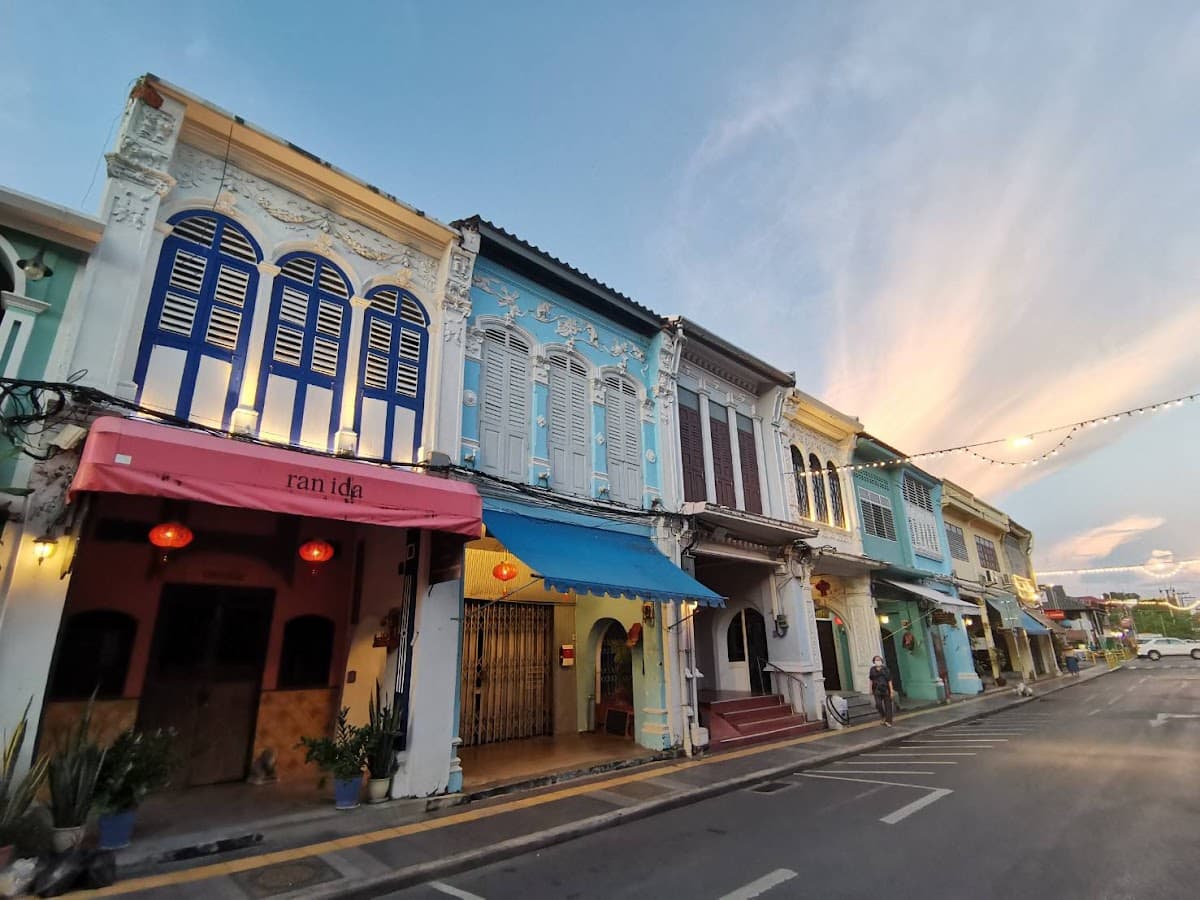
The tourist guides have known about Phuket Old Town for years. This is the problem. The Sino-Portuguese shophouses, the tiled facades, the old coppersmiths and apothecaries: all of it has been documented, Instagrammed, and routed into bus tours from the beach resorts. What the coverage misses is that Old Town is also a functioning neighbourhood for year-round residents, and that function is worth understanding separately from the heritage tourism overlay.
This is the resident’s view of Old Town in 2026. What is genuinely worth visiting, what has changed, and what you can skip.
The food scene
Old Town’s food has always been its strongest card. The concentration of Phuket-style dishes, Hokkien-influenced and specific to this part of the south, developed over a century of Straits Chinese settlement. It still exists, and in some cases still in the same shophouses that have been cooking the same dishes for two or three generations.
O-tao (pan-fried oyster and taro with pork cracklings and chilli) and Hokkien mee (thick egg noodles braised in a dense seafood gravy) are the dishes most worth seeking out. The morning market on Ranong Road is the right setting for both. Arrive before 9am, eat at the plastic-table stalls rather than the restaurants positioned for tourists, and you are in a different world from the beach corridor.
Raya Restaurant on Dibuk Road has been a standard reference for Phuket cuisine for decades and continues to earn its reputation. It is well-known and priced accordingly, but the quality has not slipped. The Charm on Krabi Road does complex Peranakan dishes (crab curry with betel leaves, slow-braised pork belly) at a similar standard and price point. For the same quality at lower prices with less of the heritage-restaurant atmosphere: look for the dai pai dong-style stalls in the back streets around Thalang Road that do not have English signage. Kanom jeen (fermented rice noodles with spicy regional curries) at these places runs a fraction of the heritage-venue price.
While the Sunday Lard Yai market on Thalang Road has become increasingly tourist-priced, the Indy Market at Limelight Avenue on Dibuk Road (Wednesday to Friday, roughly 4pm to 10.30pm) is a manageable alternative for residents who want street food without the weekend crush.
The coffee
Old Town holds the densest concentration of serious independent coffee in Phuket. The standard references:
Campus Coffee Roasters on Krabi Road. Single-origin local roasts, cold brew, structured seating with reliable high-speed WiFi. This is where most remote workers end up, and for good reason.
Bookhemian on Thalang Road. Espresso classics in a quiet gallery space with dedicated desk areas. Half indie bookstore, half laptop workspace. Good for a slow working morning.
Graph Coffee Co on Phang Nga Road. Nitro cold brews and complex signature drinks. Limited seating during peak hours, so better for a quick meeting than a full day’s work.
Asterisk Espresso on Phun Phon Road. The owner is a national barista champion, and it shows. Quieter location outside the high-density historic core. Has since expanded with a second branch in Chalong.
Dou Brew on Soi Romanee. Quality-focused micro-roaster in a compact space. High photo-tourist traffic, so timing matters.
ROÔF. Worth knowing about, worth finding.
The full picture is in the coffee culture guide on this site.
A practical note for remote workers: formal co-working spaces in Phuket run day passes between ฿350 and ฿600. Most of the cafes listed above function as an informal workspace network, provided you respect peak-hour etiquette and are not nursing a single Americano for six hours.
Lard Yai walking street
The Sunday evening walking street on Thalang Road has been a fixture of the Old Town weekend since 2013. It runs roughly 4pm to 10pm, draws a mix of residents and tourists, and fills the pedestrianised section with market stalls, street food, and live music. Worth visiting once or twice a year if you have not seen it. Worth visiting weekly: no. The food options have become increasingly tourist-priced over time, and the stall turnover means quality varies.
If you are taking someone who wants to see Phuket Old Town for the first time, a Sunday evening works well. For a regular weekend dinner, there are better choices.
What has changed in 2026
The two years from 2024 to 2026 have accelerated Old Town’s transformation faster than the previous decade.
The most visible change is the acceleration of shophouse restoration and commercial conversion. Several blocks around Thalang Road and Dibuk Road have seen long-empty or working-trade shophouses converted to boutique accommodation, restaurants, and retail. This is not new in itself. Old Town gentrification has been running for 15 years. But the pace and the commercial profile of what is opening has shifted. The businesses are more upmarket, the price points are higher, and the working-trade tenants (a goldsmith, a traditional apothecary, a paper goods shop that has been operating for 60 years) are fewer than they were.
The hotel opening pipeline continues. Boutique hotels, including Hotel Verdigris, Baan125 Stay, Isara Boutique Hotel, and Woo Gallery & Boutique Hotel, have occupied restored shophouses across the historic core. The accommodation product is good: restored heritage, thoughtful design, relatively small scale. But the density of hotel development is changing the character of several streets in ways that are more visible on a Tuesday morning than on a Saturday evening.
Neither of these changes makes Old Town less worth visiting. They do mean the neighbourhood is increasingly shaped by visitor demand rather than resident life, which affects what you find there and at what price.
Here is how the main street nodes have shifted:
Thalang Road was historically textile trade and dry goods. Now heritage retail, boutique stays, and tourist-oriented dining. Low utility for daily domestic needs; still good for weekend socialising.
Dibuk Road was residential shophouses and traditional bakeries, now trending toward high-end gastronomy and lifestyle complexes. Still useful day-to-day: hosts essential off-street parking at Limelight Avenue and modern amenities.
Phang Nga Road was banking and regional commerce, now specialty coffee, art galleries, and restored hotels. Key walking corridor with administrative hubs.
Ranong Road remains the agricultural exchange and regional transit hub. Still the primary morning produce market and the departure point for songthaew buses to the beaches. This is the street that has changed least, and it is the most useful one for residents.
Soi Romanee was a red-light district, now dessert cafes, guest houses, and a photography circuit. Heavily saturated by transient tourist foot traffic. Beautiful to walk through; not somewhere you need to go regularly.
What is overrated now
Lard Yai, if you have been more than twice. Worth knowing exists, not worth making a regular trip for.
The Blue Elephant Cooking School on Krabi Road. Functional, expensive, aimed at tourists. The food is good. For the same instruction at a fraction of the cost, there are day-class cooking schools in Chalong and Rawai that teach the same dishes without the heritage-restaurant markup.
The heritage architecture tour circuit. Worthwhile once. The buildings are interesting. After that visit, the architecture exists in the background of actually using the neighbourhood.
Getting there and getting around
Old Town was built before cars, and it shows.
Parking is a problem. On weekends it is a significant problem. The neighbourhood is small, the roads are narrow, and the infrastructure has not been designed for the volume of visitors or the size of vehicles that now use it. No new parking solutions have materialised despite years of discussion.
If you are driving, your best options for off-street parking are the multi-level structure at Limelight Avenue on Dibuk Road, the paid parking grounds at Wat Mongkol Nimit, and the dedicated garages at the major hotels (Courtyard by Marriott, Royal Phuket City Hotel). On-street parking in the central historic core (Thalang, Soi Romanee, Phang Nga) is extremely limited and strictly enforced by local traffic authorities. If you are coming from the north-west, budget 20 minutes to find a spot and build that into when you arrive.
Public transport. Phuket Town functions as the primary transit hub for the island:
- Pink songthaews (inner-city buses) run fixed routes connecting Bus Terminal 1 on Phang Nga Road to Bus Terminal 2 on Thepkasattri Road. Fixed fare: ฿15. Operating hours roughly 6.30am to 6pm, departures every 30 minutes or so.
- Blue songthaews (beach buses) depart from the central market hub on Ranong Road and link Old Town to Patong, Kata, Karon, Rawai, Nai Harn, and Surin. Fares ฿15–40 depending on distance. Same operating window: 6am to 6pm.
- Airport bus runs direct air-conditioned service between Phuket International Airport and Bus Terminal 1. Hourly departures from 5am to 7pm from town, 7.30am to 9.30pm from the airport. Fares ฿30–100.
- Ride-hailing apps (Bolt, Grab) work island-wide, 24 hours, variable pricing. The practical option for anything after 6pm or when you need a direct route.
The heat is a factor that the heritage tourism coverage reliably underplays. Old Town is inland, built for shade and airflow in the shophouse tradition, but midday in the open street is the same Phuket heat as everywhere else. Ambient temperatures peak between 11.30am and 3.30pm, amplified by dense masonry shophouses and narrow street profiles. Morning visits before 11am are substantially more comfortable. The same applies to any walking-heavy errand.
Living near Old Town
Living directly inside a historic shophouse sounds romantic but presents practical challenges: commercial lease rates, structural maintenance, high tourist noise on weekends, and limited vehicle access during market days.
The more realistic option for residents who want Old Town within reach is the condominium corridor on the perimeter (Talat Yai, Talat Nuea, and Wichit), which puts you 5 to 10 minutes from the historic core with dedicated parking, security, gym facilities, and stable internet.
Indicative pricing as of Q3 2026 (12-month lease terms):
The Base Height on Yaowarat Road (Talat Yai). 1-bed units, 29–34 sqm. Rent ฿15,000–18,000/month. Purchase ฿2.69M–3.35M. Suits remote workers and local professionals.
Centrio Condominium in Wichit (near Central). 1-bed, 30–35 sqm. Rent ฿12,000–14,000/month. Purchase ฿2.30M–2.60M. Long-term residents, budget-conscious.
The Base Downtown in Wichit. 1–2 bed, 30–55 sqm. Rent ฿14,000–22,000/month. Purchase ฿2.50M–4.20M. Digital nomads wanting proximity to retail hubs.
dcondo Reef / Creek on the Kathu border. 1-bed, 28–32 sqm. Rent ฿10,000–13,000/month. Purchase ฿1.80M–2.30M. Long-term renters with their own transport.
These are asking prices; negotiation is normal, particularly on 12-month leases signed outside high season. None of these developments are inside the heritage core itself. That is the point. You get Old Town’s food and coffee within a short ride, without inheriting its parking and noise.
The honest summary
What Old Town offers that most of Phuket does not: walkability, architectural density, a food scene that has genuine roots, and coffee that is worth leaving the beach for. None of that requires a Sunday market or a heritage-house photo. It requires being there on an ordinary morning when it is doing what it actually does.
The neighbourhood is changing. The working trades are thinning. The price points are rising. But the core of what makes Old Town worth visiting has not been replaced. It has just become harder to see behind the boutique hotel signage.
Know a restaurant, cafe, or shop in Old Town that belongs in this guide? Get in touch at hello@phuketcommunity.com or submit it at phuketcommunity.com/submit.