Phuket visa runs and border bounces: The resident reality in 2026
The visa run has been a fixture of resident life in Phuket for decades. Three developments in 2025–2026 changed the calculation: the two-per-year land border limit, the mandatory TDAC, and the reversion to 30-day stamps. Here is what you actually need to know.
Phuket Community · 18 November 2026
Immigration & visa information — Rules, fees and requirements in this guide are based on official sources and verified reporting as of October 2026. Immigration policy changes frequently. Always confirm current requirements directly with Thai immigration or a qualified visa advisor before making decisions based on this information.
The visa run has been a fixture of resident life in Phuket for decades. Leave Thailand, cross a border, come back, get a new stamp. Repeat as required. The practice has never been officially encouraged, but it has been widely tolerated.
What has changed in 2025 and 2026 is the tolerance.
Three developments have altered the calculation: the two-per-year limit on visa-exempt land border entries, the mandatory Thailand Digital Arrival Card (TDAC), and the September 2026 reversion of visa-exempt stays from 60 days back to 30. If you are running your residency on tourist stamps and regular border crossings, you need to understand all of them.
The two-per-year land border limit
Since 2025, visa-exempt entry through a land border is capped at two times per calendar year. The count resets on 1 January. A visa-exempt land entry gives you 30 days. Like any visa-exempt stay, it can be extended once for an additional 30 days at a Thai immigration office for ฿1,900 — but the extension does not reset the land entry count or give you another entry.
What this means in practice: if you are living in Phuket on tourist stamps and relying on land border crossings, you have a maximum of two entries per calendar year from that route. With extensions, that is up to 120 days (four months) from land crossings alone.
The limit applies to borders with Cambodia, Laos, Malaysia, and Myanmar. It does not apply to air entries — there is no written cap on how many times you can fly in on a visa-exempt stamp. However, immigration officers have discretion under Section 12 of the Immigration Act to deny entry to anyone they suspect is living in Thailand without an appropriate visa. Back-to-back air entries from short trips are increasingly flagged. Officers may ask for proof of onward travel or sufficient funds.
The practical effect: two land border runs per year combined with air-entry top-ups is how many long-term residents are currently managing tourist-stamp residency. This works until it does not — which is when an officer decides it does not.
The September 2026 reversion
Between June 2024 and September 2026, Thailand extended visa-exempt stays from 30 to 60 days and expanded the eligible country list from 57 to 93. As of 15 September 2026, both were rolled back: visa-exempt stays are 30 days again, and the eligible country list has been trimmed to around 60. If you arrived during the generous window and were counting on 60-day stamps going forward, recalculate.
The TDAC requirement
From 1 May 2025, all foreign nationals entering Thailand by land, air, or sea must submit a Thailand Digital Arrival Card (TDAC) online before crossing. The paper TM6 form is discontinued. The TDAC must be filed at least three days before each entry and submitted every time you cross the border, including for visa runs.
The TDAC is free and straightforward to complete at the official Thai immigration website. The main practical inconvenience for border runners is the three-day advance requirement — you cannot decide to do a run tomorrow without filing today.
What the TDAC does not do: waive the visa-exempt entry limit. You still get two land entries per year. The TDAC is an entry registration requirement, not a visa.
Your options from Phuket
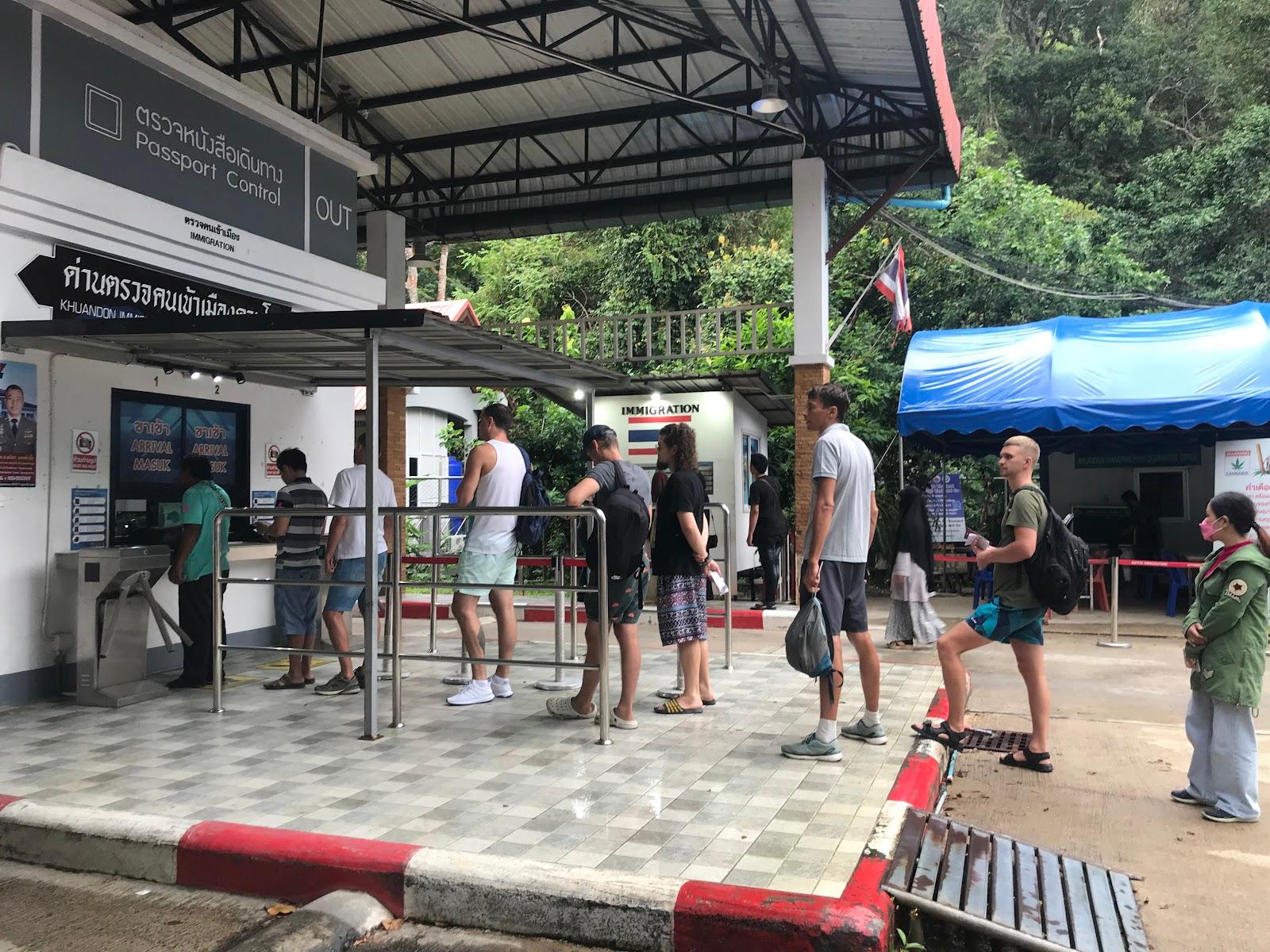
Satun border (Malaysia): The Satun Wang Prachan border crossing is the closest international land border to Phuket. It is approximately 421 kilometres by road — around 8 hours each way from central Phuket. That is a long day trip, which is why most people make it an overnight. Minivan services running the Phuket–Hat Yai–Satun route are available from Phuket Town and most tourist centres. Fares are around ฿400 to ฿600 each way.
Ranong border (Myanmar): Ranong is significantly closer to Phuket — around 200 kilometres north, roughly 3 to 4 hours by road. The crossing is by ferry to Kawthaung (Ko Song) in Myanmar. The Ranong run has historically been the most popular from Phuket for this reason. Day trips are realistic. The same two-per-year limit applies.
Penang (flight): Technically not a border run but a visa trip. Flying to Penang from Phuket, spending a day or two, and returning gets you an air-entry stamp — not counted against your land border limit. For residents who want to preserve their two land entries, Penang has the advantage of being a pleasant place to spend a couple of days. AirAsia flies the route regularly.
Langkawi and other Malaysian islands: Similar logic to Penang. Air or ferry, depending on your routing.
The honest assessment
Visa runs are not a long-term strategy.
The two-per-year land border limit has compressed what was previously an open-ended workaround into something that provides a maximum of 120 days per year with extensions. Combined with air-entry stamps and their own 30-day extensions, you might stretch to six or seven months per calendar year on tourist stamps if no one asks questions. That is not a residency — that is a significant administration overhead while staying in a legal grey area that is getting greyer.
The Thai government has made repeated statements about cracking down on people living in Thailand on tourist visas. The enforcement is uneven, but the direction is consistent.
If you are planning to stay in Phuket for the medium to long term, the more durable routes are the visa categories designed for it: the Thailand Elite Visa, the Long-Term Resident (LTR) visa (for qualified retirees, professionals, and remote workers), and the SMART Visa for qualified professionals and investors. None of these require border runs.
For people who are genuinely travelling — spending time in Thailand as part of a broader travel pattern — the current tourist stamp system plus the two annual land entries is adequate. The system is designed for you. The friction you are experiencing is intentional for the other group.
Practical notes
- File your TDAC at least 3 days before any planned crossing at the official Thai immigration portal
- Keep a record of every entry and exit stamp — the two-per-year land limit is tracked by immigration, but your own record is useful if there is ever a question
- Minivan services for Satun: available from Phuket Town and most tourist centres — around ฿400 to ฿600 each way
- Ranong ferry: book on the day at Ranong pier — typically ฿100 to ฿200 return for the ferry crossing
- For air entries: Phuket has regular direct or one-stop connections to Penang, Kuala Lumpur, and Singapore
This guide covers the position as of October 2026. Immigration rules change. Verify current requirements with Thai immigration before planning a border crossing.