How to open a Thai bank account in Phuket
Tourist visa account opening is effectively dead. You need a long-stay visa, the right documents, and the right branch. Here is what actually works.
Phuket Community · 18 November 2026
How to open a Thai bank account in Phuket
A note before we start. This is a resident’s guide to how bank account opening works on the island, not financial advice. Requirements change by branch and by month. Verify current documents with your chosen branch before you go.
Tourist visa account opening is effectively dead. If you arrived on a visa exemption or a tourist visa and walked into a bank expecting to open an account, most branches will turn you away. This changed across all major banks in late 2024, and it has not softened since.
You need a long-stay visa. Non-B, Non-O, ED, LTR, or Elite. DTV holders face inconsistent treatment: some branches approve, some refuse, and some accounts opened in 2024 were later frozen. If your visa status is not settled, the bank account question waits until it is.
Once you have the right visa, the process takes 30 to 60 minutes at a cooperative branch with correct documents. Usually you do not need to go twice. The trick is finding the right branch and having everything ready.
KBank: the one to open first
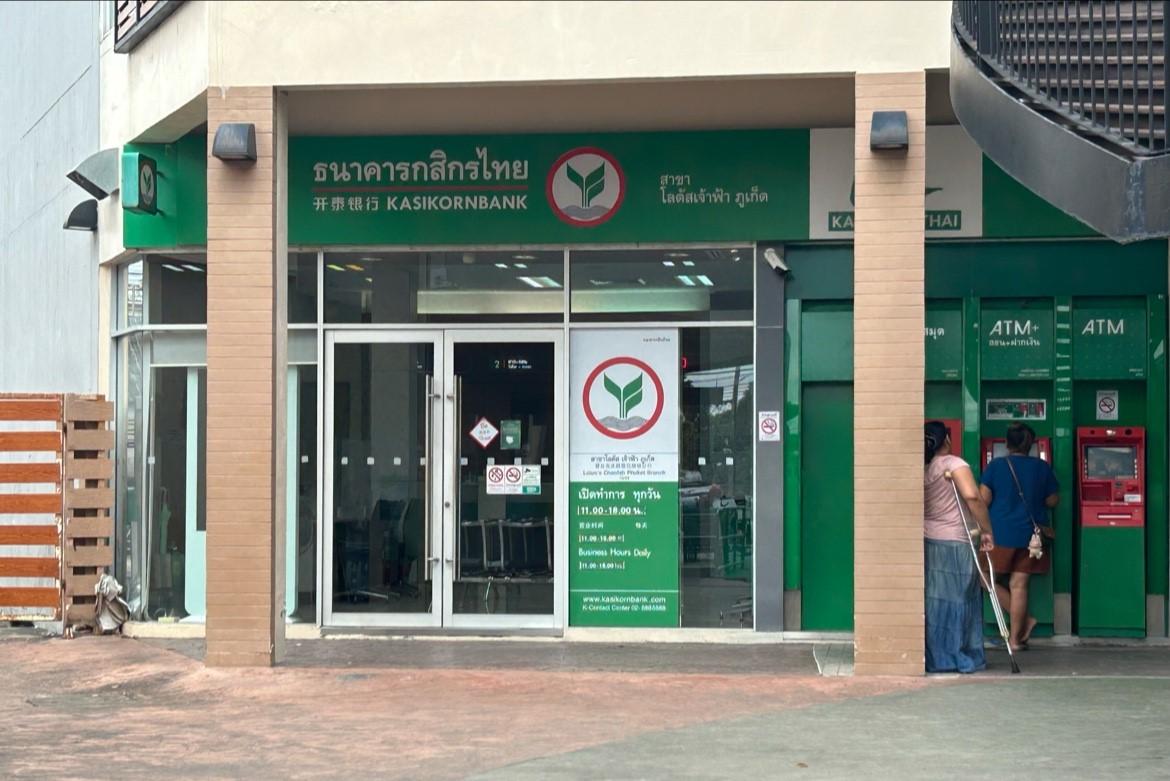
Kasikorn Bank is the default recommendation for most residents, and the one we suggest opening first. Not because of the bank itself, though it is perfectly fine. Because of the app.
The K+ app is the best mobile banking app among the major Thai banks for English speakers. Full English interface, intuitive design, fast transfers, QR payments, PromptPay registration. It handles everything you need for daily life: splitting a bill at dinner, paying your landlord, scanning the QR at a market stall, topping up your phone. Most residents who have tried multiple Thai banking apps rank K+ first by a comfortable margin.
The branch that matters in Phuket is Yaowarat Road in Phuket Town. Phuket-specific forums describe it consistently as the branch that will open an account when smaller branches refuse. This is the Phuket equivalent of the Central Festival recommendation you see for Bangkok. If you have the documents and the visa, Yaowarat Road branch says yes.
Other foreigner-friendly branches: Chalong, Kata, Kamala, Boat Avenue in Cherng Talay, and Porto de Phuket.
Documents for KBank:
- Passport with valid long-stay visa page
- Proof of Thai address (lease agreement or TM30 receipt)
- Thai phone number (active, receiving SMS)
- Minimum deposit of around ฿2,000
Before you leave the branch: Set up K+ mobile banking, register PromptPay to your Thai phone number, and complete biometric face registration. All three. At the counter. Staff at Yaowarat Road handle these routinely, and it takes a few minutes. Do not walk out planning to do this later. PromptPay is the backbone of Thai payments; without it you are stuck with cash and manual transfers. Face registration is required for higher-value transactions and app changes.
Bangkok Bank: for international transfers
Choose Bangkok Bank if you regularly receive SWIFT wires, especially in USD. Bangkok Bank has a New York correspondent bank, which makes inbound USD transfers faster and cheaper than routing through intermediaries. It is the standard choice for FET letters (Foreign Exchange Transaction forms required for property purchases) and for foreign currency deposit accounts, which it offers in USD, EUR, GBP and 11 other currencies.
Phuket branches for foreigners: Phangnga Road in Phuket Town is the primary branch. Chalong is less crowded and experienced with foreign residents. Cherng Talay is popular with property buyers.
Bangkok Bank tightened its requirements in mid-2026. Embassy letters and “living with family” letters are no longer accepted as proof of address at Phuket branches. You now need a property lease or ownership documentation. The Bualuang iBank app is functional but less polished than K+.
Short version: KBank for daily life and app experience. Bangkok Bank if your income arrives by SWIFT or you are buying property.
SCB and UOB: the other options worth knowing
SCB (Siam Commercial Bank) has eight-plus branches across Phuket and a stricter account opening process than KBank. The reason to know about it: the SCB EASY app has a genuinely functional SWIFT outward remittance feature that works around the clock. Some residents prefer SCB specifically for sending money out of Thailand. Fees run around ฿550 base plus ฿800 for USD OUR transfers.
UOB is the newer option people mention in forums. Reports confirm UOB willingly opens accounts for foreigners with a ฿50,000 initial deposit, and staff are described as refreshingly professional. The catch is real though: UOB’s Phuket branch network is small. Way behind KBank, Bangkok Bank, and SCB for branches and ATMs. Viable as a backup if the other banks refuse, but not practical as a primary daily-use bank. Reports also flag limited interoperability with US banks and inconsistent statements for immigration purposes.
The address proof hierarchy
This is where most people get stuck, and where most guides wave their hands.
The most reliable document is a residence certificate from Phuket Immigration in Chalong. It costs ฿500 for express processing (around 24 hours) or ฿300 for standard (three to five working days). Valid for 30 days. Your address on it must match your TM30 registration, and this is where the chicken-and-egg sits: you need a TM30 to get the residence certificate, and you may need the residence certificate for the bank.
If you have a lease agreement in your name, try that first. KBank branches are generally more flexible with lease agreements than Bangkok Bank. A utility bill in your name also works at some branches.
Embassy letters used to be the universal fallback. They cost ฿1,500 to ฿7,000 depending on nationality. Bangkok Bank no longer accepts them as of mid-2026. KBank branches vary. A lease is the safer document now.
What most guides miss
The TM30 matters more than you realise. Your TM30 registration confirms your address in the immigration system. If your landlord has not filed it, or if it shows an old address, your residence certificate will either be refused or show the wrong address. Sort the TM30 before anything else. Your landlord is required to file it within 24 hours of your move-in, but enforcement is inconsistent.
PromptPay is not optional. It is the national instant transfer system. Most Thai payments flow through it. Register it at the branch before you leave.
Dormant accounts get frozen. Open an account and then ignore it for several months, the bank can freeze it. Keep it active with at least one transaction every few months. Even a ฿100 transfer counts.
Rejected at one branch does not mean rejected everywhere. Branch managers have real discretion over foreign account opening. A neighbourhood branch that primarily serves Thai customers may decline because they do not want the additional paperwork. Try a larger branch the same day. This is common and widely understood.
Go on a weekday morning. Between 10am and 11am is the sweet spot. Monday mornings are busy with weekend backlog. Friday afternoons mean staff are winding down. Mid-week, mid-morning gives you the best odds of a smooth experience.
Annual gratuitous transfer ceiling. The ceiling for inbound gratuitous transfers was raised to USD 200,000 in December 2025. Relevant if you are moving savings or receiving large transfers from family overseas. For amounts above this, talk to your bank about the documentation requirements.
Prices and requirements correct as of October 2026. Branch-level policies change. Verify with your chosen branch before visiting.
Had a good experience at a specific branch? A bad one? Tell us at phuketcommunity.com/submit and we will update this guide.