Phuket is changing fast. From reclaimed beaches and ethical elephant sanctuaries to mangrove conservation and eco hotels, sustainable tourism Phuket is reshaping how travelers experience the island in 2026. Here’s what’s actually changing, what still needs work, and how visitors can support a more responsible future for Phuket.
Table of Contents
A few years ago, conversations about sustainable tourism Phuket usually stopped at reusable water bottles and hotels swapping plastic straws for paper ones.
Now the changes feel harder to ignore.
You notice it in small ways first. Beach access paths that suddenly reopen after years of feeling unofficially blocked off. Elephant sanctuaries quietly removing feeding sessions because even that’s considered too invasive now. More travelers asking where their money actually goes before booking a tour.
Phuket still has its loud corners, obviously. Patong traffic still crawls some evenings. Speedboats still pack out island tours in high season. But there’s also this slower shift happening underneath the usual tourism chaos. The island seems a little more aware of its limits than it used to be.
Part of that comes from pressure. Part of it comes from locals getting tired of watching public beaches disappear behind private businesses. And part of it comes from travelers changing what they’re willing to support.
That’s why eco tourism Phuket feels different in 2026 compared to even five years ago.
The conversation has moved beyond trendy hotel marketing. It’s now tied to reclaimed beaches, ethical elephant sanctuary Phuket standards, mangrove conservation projects, and a bigger push toward Phuket sustainable travel that actually benefits the island long term.
Whether Phuket fully pulls it off is another question. But the shift itself is very real.
Why Phuket Is Pushing for Sustainable Tourism in 2026
For a long time, Phuket’s tourism model was pretty simple. More visitors, more hotels, more speedboats, more beach clubs. If a quiet stretch of coastline suddenly became popular, development usually followed fast.
You could feel it especially during high season.
Roads around Patong and Kata turning into parking lots by sunset. Island tours packed shoulder to shoulder before 9am. Beachfront areas slowly getting more commercial every year. Even locals who rely on tourism started talking more openly about burnout after a while.
That’s a big reason sustainable tourism Phuket has become such a serious conversation recently.
The island hit a point where people started asking whether Phuket could keep growing at the same pace without damaging the very things visitors come here for in the first place.
Some of the pressure is environmental. Mangroves disappearing. Crowded marine parks. Waste problems getting harder to hide once tourist numbers exploded again after the pandemic years.
But traveler expectations have changed too.
A lot of visitors aren’t just looking for cheap package holidays anymore. They want longer stays, better experiences, and tourism that feels a little less extractive. You hear it more often now. People asking about ethical elephant sanctuary Phuket options instead of elephant rides. Travelers looking for community tours instead of party boats.
That shift lines up with Thailand’s newer “value over volume” approach.
Instead of chasing the highest possible arrival numbers, Phuket sustainable travel policies are starting to focus more on longer-stay visitors, digital nomads, wellness travelers, retirees, and travelers who spend more locally over time instead of rushing through on quick tours.
GSTC 2026 pushed that conversation further into the spotlight. Suddenly sustainability wasn’t just something boutique resorts talked about in marketing campaigns. It became part of bigger conversations around land use, wildlife tourism, beach access, and how Phuket wants to position itself moving forward.
None of this means Phuket is suddenly quiet or perfectly balanced.
You still get traffic jams near Chalong Circle. Some island tours still feel overcrowded. Plenty of businesses still throw around words like “eco” pretty loosely.
But compared to ten years ago, there’s definitely more awareness around responsible tourism Phuket than there used to be. The island feels like it’s trying to slow down just enough to protect what still makes people want to come here.
What This Means for Travelers
- More ethical wildlife experiences
- Better quality eco tourism Phuket options
- Increased focus on community tourism
- Stricter environmental rules in some areas
- Fewer openly exploitative tourist attractions
- More sustainable hotels and wellness stays
- A growing focus on longer, slower travel experiences
Freedom Beach and the Crackdown on Illegal Tourism Businesses
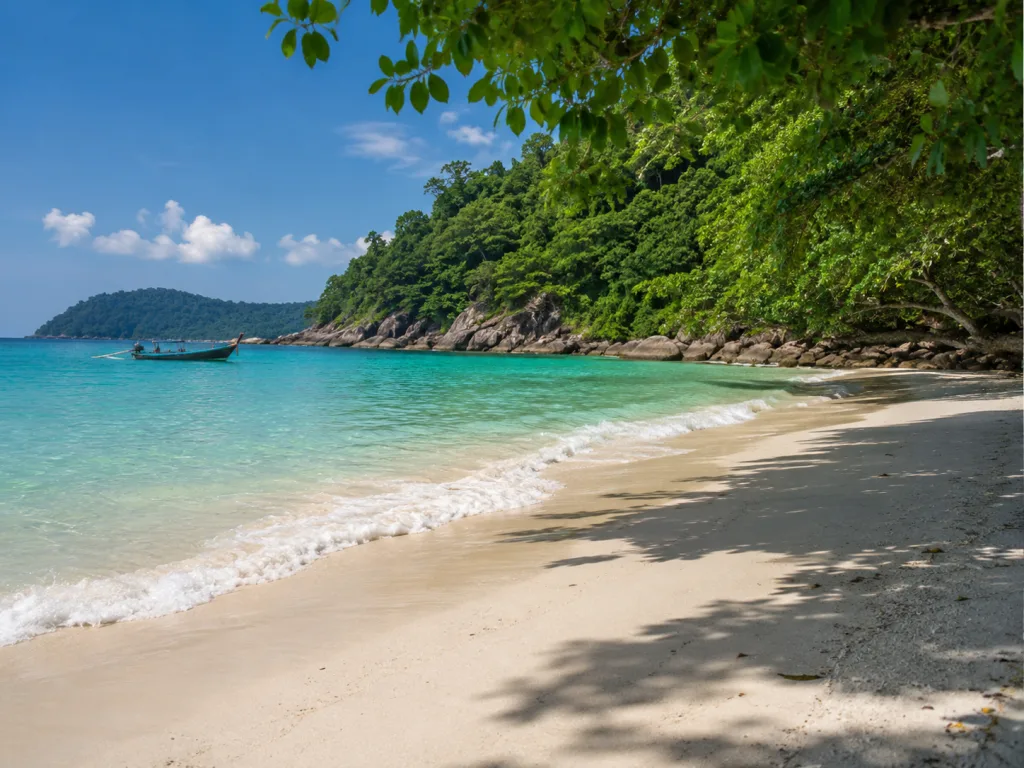
Freedom Beach Phuket has always had this strange contradiction around it.
On paper, it’s a public beach. But for years, getting there often felt like entering somebody else’s private property.
If you came down by land instead of boat, there was usually a point where someone collected an entrance fee before you could continue down the steep staircase toward the sand. A few travelers probably assumed it was normal. Phuket has plenty of beach clubs and managed areas, so people don’t always question it right away.
But locals definitely noticed.
You’d hear quiet conversations about who controlled access, which businesses operated there, and how certain Phuket beaches slowly became harder for ordinary people to use freely over time.
That’s part of why the recent cleanup around Freedom Beach feels bigger than just one beach story.
Authorities started removing illegal structures, clearing commercial clutter, and reclaiming public land around the area in 2026. Similar crackdowns also reached places like Bang Tao Beach and sections of the Nak Kerd forest area, where illegal businesses and land encroachment had reportedly been operating for years.
For travelers, this probably sounds like background political noise at first. But it actually shapes the kind of island Phuket becomes.
When public beaches slowly turn into semi-controlled spaces, access changes. The atmosphere changes too. You start getting less of a public coastline and more pockets of tourism designed around private profit first.
The interesting thing is that sustainable tourism Phuket isn’t only about coral reefs or eco hotels. Sometimes it’s also about basic public access and protecting shared spaces before they disappear quietly in the background.
Walking down to Freedom Beach now feels noticeably different compared to a few years ago. Still busy sometimes, still touristy obviously, but less controlled. Less fenced off in spirit.
That shift matters more than people think.
| Area | What Happened | Why It Matters |
| Freedom Beach Phuket | Illegal structures removed and public access restored | Better access to public coastline |
| Bang Tao Beach | Illegal beachfront businesses dismantled | Reduced commercial encroachment |
| Nak Kerd Forest | Land reclamation and enforcement operations | Protection of forest land and public resources |
There’s still a long way to go across Phuket beaches overall. Development pressure hasn’t disappeared overnight. But these crackdowns feel like part of a wider attempt to draw clearer boundaries around what tourism can and can’t take from the island anymore.
And honestly, after years of watching parts of Phuket slowly become more commercialized, that shift feels noticeable.
Ethical Elephant Sanctuaries in Phuket Are Changing Fast
Elephant tourism in Thailand has changed a lot over the last decade, and Phuket has quietly become one of the places where that shift feels most obvious.
Years ago, most tourists didn’t really question elephant rides or bathing experiences. It was just part of the standard Thailand holiday checklist. You’d see photos everywhere of people sitting on elephants in the jungle or scrubbing them in muddy pools.
Now the conversation feels very different.
A lot of travelers are paying closer attention to how elephants are treated, and ethical elephant tourism Thailand has slowly moved toward something much less interactive.
That’s where the idea of “hands-off” tourism comes in.
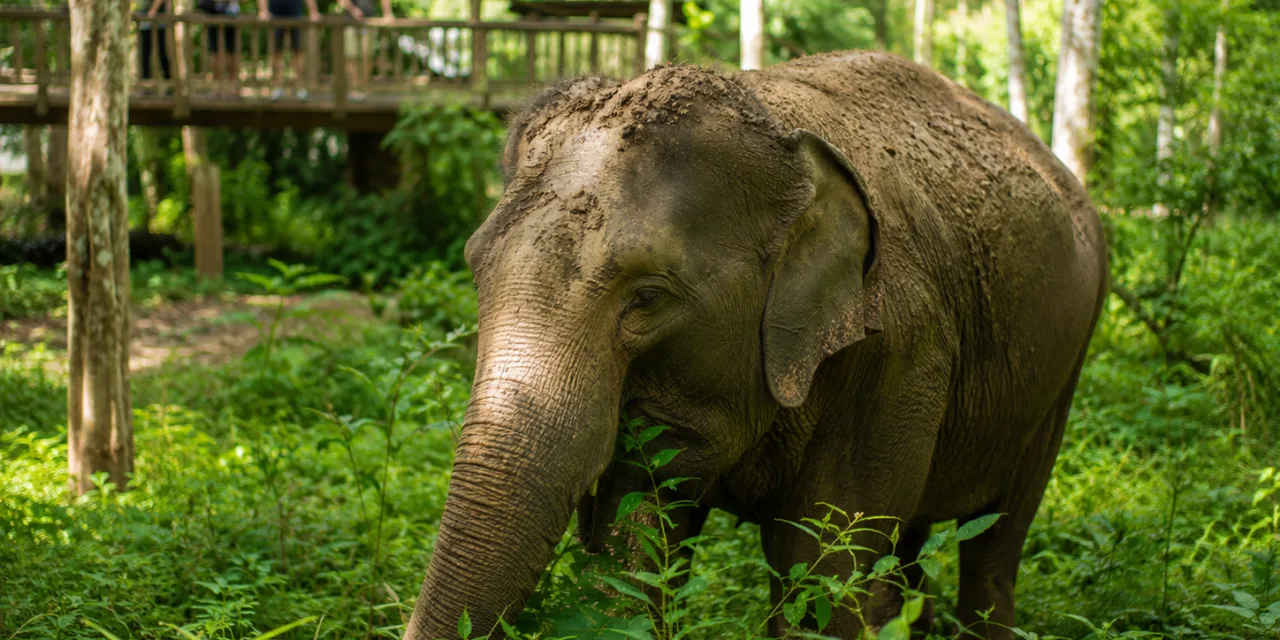
At an ethical elephant sanctuary Phuket visitors don’t ride elephants, bathe them, or pose for close-contact photos. In some places, visitors don’t even feed them anymore. The focus shifts toward observation instead of interaction.
At first, that can feel a little underwhelming if you’re expecting a highly curated tourist activity. But honestly, watching elephants behave naturally is usually more interesting anyway.
You notice small things you’d probably miss in a more controlled environment. Elephants wandering slowly through trees. Mud drying across their backs in the afternoon heat. The way they communicate quietly with each other when nobody’s directing them around for photos.
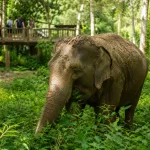
Phuket Elephant Sanctuary is probably the clearest example of this newer approach. Their long canopy walkway lets visitors observe rescued elephants from a distance while the animals move around more freely through the forest below. They’ve even phased out feeding interactions to reduce human involvement further.
Phuket Elephant Nature Reserve takes a similar approach. The atmosphere feels calmer compared to older tourist camps because the experience isn’t built around constant activity. Visitors mostly walk quietly, observe, and learn about the elephants’ histories rather than trying to interact with them directly.
Then there’s Hidden Forest Elephant Reserve in Chalong, which focuses on rescued elephants from logging and riding backgrounds. Smaller visitor groups there tend to create a quieter experience overall.
The interesting thing is that responsible wildlife tourism often looks less exciting on social media than older tourism models. No circus tricks. No dramatic bathing photos. No riding shots.
But that’s kind of the point.
The less elephants perform for tourists, the more natural their behavior becomes.
That doesn’t mean every elephant experience in Phuket is suddenly ethical, obviously. Some places still market themselves as “sanctuaries” while offering activities that keep elephants heavily managed for tourism schedules.
So for travelers trying to support ethical elephant sanctuary Phuket experiences, the details matter more than the branding.
| Experience Type | Common Activities | Ethical Standard |
| Traditional Riding Camps | Riding, tricks, performances | Low |
| Low-Impact Camps | Feeding, mud baths, limited interaction | Mixed |
| Hands-Off Sanctuaries | Observation only, no touching, no bathing | High |
How to Spot a Truly Ethical Elephant Sanctuary
- No elephant riding
- No circus-style performances
- No forced bathing sessions
- No chains during visitor hours
- Observation-focused experiences
- Smaller visitor groups
- Clear rescue or rehabilitation focus
- Elephants allowed to roam naturally
- Staff focused on education rather than entertainment
One thing Phuket has done well recently is making these ethical standards easier for travelers to recognize. A few years ago, it was genuinely difficult to tell the difference between responsible wildlife tourism and clever marketing.
Now the gap feels much clearer.
And honestly, once you’ve seen elephants simply existing without constantly performing for people, the older style of elephant tourism starts feeling strangely outdated.
Mangrove Conservation and Phuket’s Blue Carbon Projects
Most visitors come to Phuket looking outward.
West coast sunsets. Island hopping tours. Beach clubs. Longtail boats floating in turquoise water.
Very few people come here thinking about mangroves.
Which is funny, because some of the island’s most important ecosystems sit quietly along the calmer eastern coastline, away from most tourist itineraries.
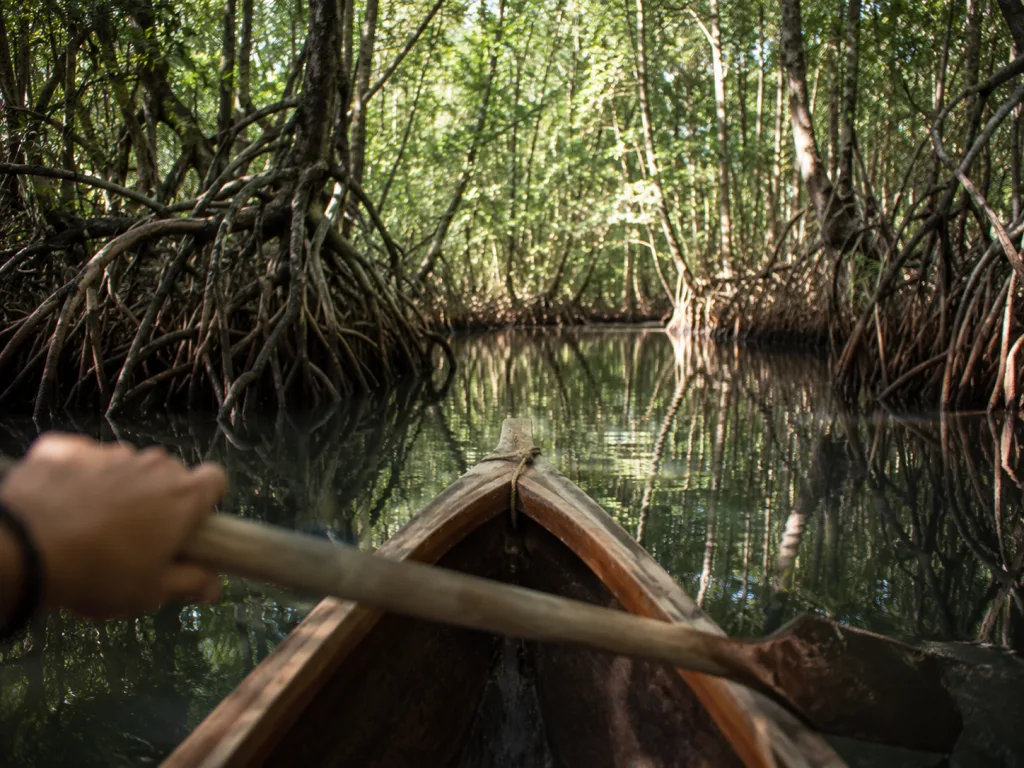
If you’ve ever joined one of the Phuket mangrove tours around Bang Rong, you’ll know the atmosphere feels completely different from the busy beach areas. The water slows down. The air feels thicker and saltier. You hear birds moving through the trees and the soft splash of paddles cutting through shallow channels instead of speedboats roaring past.
It’s not the version of Phuket most people imagine first.
That’s partly why community tourism Phuket projects in places like Bang Rong matter so much. They bring attention to parts of the island that tourism largely ignored for years.
Bang Rong has become one of the stronger examples of eco tourism Phuket done in a more local, grounded way. Instead of building another polished attraction, the community focuses on smaller experiences like mangrove kayaking, conservation workshops, and local food projects that directly support residents living there.
Some tours even include mangrove planting activities alongside local guides explaining how these coastal forests protect the shoreline and support marine life.
And honestly, once you spend time in a mangrove area, you start realizing how much work these ecosystems quietly do in the background.
That’s where the whole blue carbon Thailand conversation comes in.
The term sounds more complicated than it actually is.
Basically, mangroves absorb and store large amounts of carbon naturally. More than most people realize. So protecting mangrove forests doesn’t just help wildlife or prevent coastal erosion. It also helps slow down climate damage over time.
The important part is that locals here increasingly see mangroves as something worth protecting economically too, not just environmentally.
For years, coastal development often felt like the faster path to profit. But now some communities are making money through conservation-focused tourism instead of removing these ecosystems altogether.
That shift feels small when you’re kayaking quietly through muddy channels under tangled tree roots. But it’s actually a pretty significant change in how parts of Phuket are thinking about tourism long term.
| Activity | Why It Matters |
| Mangrove kayaking | Low-impact way to explore sensitive ecosystems |
| Mangrove planting | Helps restore coastal protection |
| Community-led tours | Supports local income directly |
| Local workshops | Encourages slower, more responsible tourism |
One thing I’ve noticed is that travelers who visit these areas often end up slowing down naturally.
Nobody’s rushing through mangroves trying to tick off ten attractions before lunch.
You move slower. You notice more.
That feels connected to the bigger direction Phuket seems to be heading lately. Less volume. More awareness. More attention to places that used to sit quietly in the background while mass tourism focused somewhere else entirely.
Are Phuket Hotels Finally Getting More Sustainable?
Sustainability has become one of the biggest marketing words in Phuket hospitality lately.
You see it everywhere now. Hotels talking about eco programs, towel reuse cards hanging in bathrooms, bamboo toothbrushes lined up beside the sink.
Some of it is genuinely useful. Some of it is mostly decoration.
The difference usually becomes obvious pretty quickly once you spend a few nights somewhere.
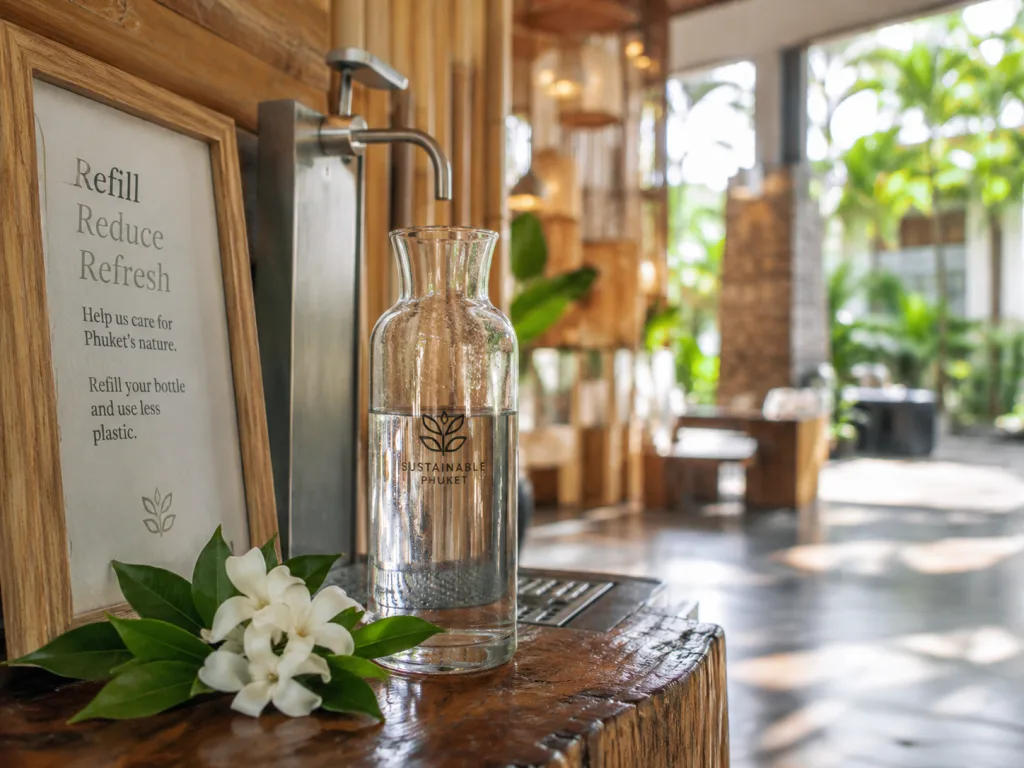
A lot of sustainable hotels Phuket are starting to focus on operational changes that guests barely notice at first. Food waste tracking in kitchens. Solar panels powering parts of the property. Water refill stations replacing hundreds of plastic bottles every week. Some resorts are also partnering with local farms or reducing oversized buffet setups that used to generate ridiculous amounts of wasted food by the end of breakfast service.
That side of sustainability feels a lot more meaningful than simply swapping plastic straws for paper ones while everything else stays exactly the same.
You can see the shift more clearly in some higher-end eco resorts Phuket, especially wellness-focused properties and resorts leaning into longer-stay travelers. A few are investing properly in energy systems, waste reduction programs, and local conservation partnerships because guests are actively asking more questions now.
At the same time, greenwashing definitely still exists.
Some hotels advertise themselves as “eco” simply because they ask guests to reuse towels while serving imported bottled water all day and running oversized buffet operations that throw away huge amounts of food every evening.
And honestly, Phuket travelers are getting better at spotting that disconnect.
A genuinely sustainable hotel usually talks less about being “luxury eco paradise” and more about practical things they’re actually doing behind the scenes.
That’s probably the biggest change in the Phuket eco travel guide conversation lately. Travelers are starting to care less about the branding and more about the details.
Questions like:
Where does the hotel’s waste go?
Do they support local businesses?
Are they reducing single-use plastic properly?
Do they partner with ethical tour operators?
Those small details say a lot more than polished sustainability slogans in a booking description.
What to Look For Before Booking an Eco Hotel
- Refillable water stations instead of endless plastic bottles
- Visible waste reduction efforts
- Reduced buffet food waste
- Solar energy or energy-saving systems
- Reef-safe bathroom products
- Partnerships with local businesses
- Ethical excursion recommendations
- Less emphasis on performative “eco” branding
- Transparent sustainability information on their website
One thing I’ve noticed is that responsible tourism Phuket often looks quieter than people expect.
Sometimes it’s just a hotel making dozens of small operational changes that guests barely notice individually. But across thousands of visitors every month, those decisions add up pretty quickly.
Phuket still has plenty of resorts focused purely on volume and convenience. That probably won’t disappear anytime soon.
But there’s definitely a growing section of the hospitality industry realizing that Phuket sustainable travel isn’t just good PR anymore. Travelers increasingly expect it.
Is Phuket Actually Becoming a Sustainable Travel Destination?
So, is Phuket actually becoming sustainable?
Honestly, yes and no.
The island is definitely changing. You can see real improvements happening in certain areas. Ethical elephant sanctuary Phuket standards are much clearer than they used to be. Some public beach areas are finally being reclaimed. Community tourism projects are getting more attention. Travelers are asking smarter questions about where their money goes.
That part feels genuine.
At the same time, Phuket still struggles with a lot of the same problems it’s had for years.
Traffic around Chalong, Patong, and Kata can still feel exhausting during high season. Some island tours remain overcrowded to the point where they barely feel enjoyable anymore. You still see speedboats packed tightly together near popular snorkeling spots while people talk about eco tourism Phuket a few meters away.
And greenwashing definitely hasn’t disappeared.
There are still businesses using sustainability language because they know travelers respond to it, not necessarily because they’ve changed much operationally. Sometimes “eco” still just means a bamboo straw and a few plants in the lobby.
That’s why sustainable tourism Phuket feels less like a finished success story and more like an ongoing negotiation between tourism growth and the island’s limits.
The interesting thing is that awareness has shifted noticeably though.
A few years ago, conversations around responsible tourism Phuket mostly stayed within smaller travel communities. Now even casual visitors are paying more attention to things like wildlife ethics, waste reduction, and whether public beaches actually stay public.
That shift matters because tourism businesses tend to follow demand eventually.
If travelers continue prioritizing ethical elephant experiences, smaller-scale tours, local businesses, and Phuket eco travel experiences that feel more responsible overall, the industry keeps adjusting around those choices.
Not perfectly. Not evenly. And definitely not overnight.
But Phuket does feel more self-aware now than it used to.
There’s a growing understanding that the island can’t endlessly scale tourism without protecting the natural spaces, coastlines, and communities that made people fall in love with Phuket in the first place.
And in the end, travelers play a bigger role in that direction than they probably realize.
How Travelers Can Support Sustainable Tourism in Phuket
One thing Phuket teaches you pretty quickly is that tourism shapes almost everything on the island.
The restaurants that survive. The tours that expand. The beaches that stay protected. Even the kinds of wildlife experiences that continue operating.
That sounds heavy, but it’s actually pretty practical when you break it down.
A lot of responsible tourism Phuket simply comes down to small choices repeated thousands of times by different travelers.
Choosing an ethical elephant sanctuary Phuket instead of a riding camp. Booking a locally run mangrove tour instead of another overcrowded speedboat trip. Carrying a refillable water bottle because Phuket still goes through an enormous amount of plastic every day, especially during high season.
None of these things make somebody a perfect traveler obviously. Phuket is still a tourism-heavy island and always will be. But the direction of Phuket sustainable travel does slowly shift depending on what visitors support financially.
You can already see that happening with elephant tourism.
Ten years ago, riding camps were everywhere because that’s what most tourists booked. Now more travelers actively search for ethical experiences instead, and businesses have started adapting around that demand.
The same thing applies to community tourism and local businesses.
Some of the best eco tourism Phuket experiences right now are actually smaller and quieter than the big commercial tours. Mangrove kayaking around Bang Rong. Locally run food spots using regional ingredients. Community workshops that keep tourism income circulating within neighborhoods instead of flowing entirely into large tourism operators.
And honestly, these experiences usually feel more memorable too.
Not because they’re marketed as “authentic,” but because they feel less manufactured.
Simple Ways to Travel More Responsibly in Phuket
- Choose observation-only elephant sanctuaries
- Avoid wildlife attractions offering performances or forced interaction
- Carry a reusable water bottle
- Support locally owned restaurants and businesses
- Join community-based tours when possible
- Respect protected beaches and marine areas
- Avoid littering, especially on islands and beaches
- Use reef-safe sunscreen for snorkeling and diving trips
- Stay longer instead of rushing through multiple destinations
- Ask questions about sustainability before booking tours or hotels
One thing I’ve noticed is that travelers often underestimate how quickly tourism businesses respond to demand.
If enough visitors stop supporting exploitative wildlife tourism, those businesses struggle. If travelers actively look for better alternatives, more operators start moving in that direction instead.
That doesn’t mean every tourism problem in Phuket suddenly disappears. But it does mean visitors have more influence over the island’s future than they sometimes realize.
Phuket still carries a lot of contradictions.
You can spend the morning stuck in traffic behind tour vans and the afternoon kayaking quietly through mangroves with barely another person around. You can still find overcrowded island tours, but you can also find ethical elephant sanctuary Phuket experiences that look completely different from the tourism model that dominated here years ago.
That’s probably the most honest way to look at where the island is right now.
Sustainable tourism Phuket isn’t arriving all at once in some perfectly organized rollout. It’s happening unevenly, in pieces. Through reclaimed beaches. Through local conservation projects. Through hotels slowly reducing waste because guests now expect better. Through travelers choosing community tourism over the fastest or cheapest option available.
Some of the changes feel small on their own.
But when you spend enough time around Phuket, you start noticing the direction things are moving in. More conversations about protecting public spaces. More awareness around responsible wildlife tourism. More people questioning what tourism should actually look like long term.
The island still depends heavily on tourism, and probably always will.
The difference now is that more people seem aware that Phuket’s future depends on how that tourism evolves, not just how much of it arrives every year.
FAQs About Sustainable Tourism in Phuket
Is Phuket good for eco tourism?
Yes, especially compared to where the island was a few years ago. Eco tourism Phuket has grown a lot through ethical wildlife experiences, mangrove conservation tours, and more community-based tourism projects. It’s still a busy tourism destination overall, but there are now far more responsible travel options available if you know where to look.
What is the most ethical elephant sanctuary in Phuket?
Phuket Elephant Sanctuary and Phuket Elephant Nature Reserve are two of the better-known ethical options. Both focus on observation rather than entertainment. That means no riding, no performances, and very limited human interaction. The overall experience feels quieter and more respectful compared to older elephant tourism models.
What does “hands-off” elephant tourism mean?
Hands-off elephant tourism means visitors observe elephants without touching, bathing, feeding, or riding them. The idea is to let elephants behave as naturally as possible without constantly interacting with tourists. It’s become one of the clearest standards for responsible wildlife tourism in Thailand.
Is Freedom Beach Phuket public now?
Freedom Beach Phuket has always legally been public, but access became heavily controlled for years through unofficial entrance systems and private operations nearby. Recent government crackdowns removed several illegal structures and reopened public access more clearly, although the area still remains busy during peak season.
What is blue carbon?
Blue carbon refers to carbon stored in coastal ecosystems like mangroves and seagrass beds. In simple terms, mangroves naturally absorb and hold large amounts of carbon while also protecting coastlines and supporting marine life. That’s why blue carbon Thailand projects are becoming a bigger part of conservation conversations around Phuket.
Are eco hotels in Phuket actually sustainable?
Some are making real improvements, while others mainly use sustainability as marketing. The better sustainable hotels Phuket usually focus on practical changes like reducing food waste, cutting single-use plastic, using refill stations, or supporting local conservation projects. Looking beyond the branding usually tells you a lot.
How can travelers support sustainable tourism Phuket?
Small decisions genuinely help. Choosing an ethical elephant sanctuary Phuket experience, supporting local businesses, joining community tours, reducing plastic use, and respecting beaches all contribute to Phuket sustainable travel. Tourism businesses pay attention to what travelers choose to spend money on.
Is Phuket becoming more sustainable overall?
Slowly, yes. There are visible improvements in wildlife tourism, public beach access, and community conservation projects. But Phuket still deals with overtourism, traffic, pollution, and greenwashing too. The island feels more aware of these issues now, even if the transition is still uneven.