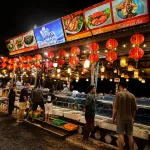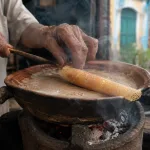
The halal food Phuket locals actually eat is not on most visitor itineraries. This guide covers seven resident-loved spots - from early-morning roti shophouses in Old Phuket Town's Muslim quarter to a Bang Tao village stall that sells out before 11am. If you are looking for halal restaurants Phuket communities have trusted for generations, rather than the ones the hotel concierge knows about, start here.
Table of Contents
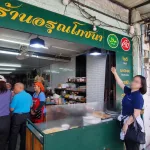
The griddle on Soi Talingchan is already hot at seven in the morning. A man out front lifts a long copper ladle of tea high above the cup and drops it twice until the froth looks right. The queue moves without anyone saying much.
Nobody here is looking at their phone to find this place. They already know it.
Aroon Restaurant has been doing this – the roti, the Massaman, the pulled teh tarik – since long before Phuket Old Town became something people added to itineraries. The halal food Phuket residents eat every morning is not on those itineraries. The Southern Thai Muslim food scene here is older than the tourist trail and, on a good morning, a lot better.
The Part of Phuket’s Food Story That Doesn’t Make the Brochures
The Sino-Portuguese shophouses, the Baba-Peranakan kopitiam culture, the dim sum on Sunday mornings – that side of Phuket food culture is well documented and worth every word written about it.
But there is another layer that does not get nearly the same coverage.
Southern Thai Muslim communities have been settled here since Phuket was a stop on Indian Ocean and Malay Peninsula trading routes. Traders from Kedah and coastal Malay principalities put down permanent roots in sheltered bays centuries ago. Their descendants are still here – in the Muslim quarter of Phuket Town’s Talat Yai, out in Rawai, along the Bang Tao and Kamala coastline, through the Cherngtalay corridor.
The mosques mark the neighbourhoods. The food has stayed with them.
What Makes Southern Thai Muslim Food Worth Seeking Out
It’s Spicier, Deeper and More Aromatic Than You Expect
If your reference point for Thai food is Central Thai cooking – the bright green chilies, the quick fish sauce hit, the sugar rounding everything off – Southern Thai Muslim cuisine is going to recalibrate things.
The heat here is not thrown in at the end. It is built into the paste. Yellow turmeric (khamin) comes first, earthy and golden, layered with galangal, lemongrass, dried smoky chilies, then the dry spices: cumin, cardamom, star anise, cinnamon. That last group did not grow here. It arrived with Indian and Arab traders centuries ago and stayed.
The technique that separates a serious kitchen from a shortcut one is the coconut milk reduction. Cooks heat fresh coconut cream slowly until the oils split and then pull back together with the spice paste – no starch, no shortcuts. The sauce that comes out of that is glossy and coats everything it touches.
Fresh wild pepper leaves (bai cha-plu) and torch ginger blossoms finish the dish. Stink beans (sataw) if you are ready for them.
The Dishes You Need to Know Before You Order
Khao Mok Gai Phuket’s take on chicken biryani – jasmine rice cooked directly in a broth of turmeric, cardamom, cinnamon and ghee, served with bone-in chicken, fried shallots, cucumber and a green chili-mint dipping sauce on the side. If you have only eaten Indian biryani, the Southern Thai version is lighter and sharper. Different dish, same lineage.
Roti and Roti Nam Kaeng The dough gets stretched thin, folded and fried on a flat griddle until it is golden and layered through. Order it sweet with condensed milk for breakfast or alongside a bowl of beef or chicken curry gravy (Nam Kaeng) if you want something that will actually hold you until lunch. The two versions are not really interchangeable – decide before you sit down.
Massaman Curry (Kaeng Matsaman) Slow-cooked beef or goat with toasted spices, coconut cream, tamarind, palm sugar, peanuts and potato. Persian and Malay traders brought the spice profile to this part of the world and it has been refined here ever since. The best versions in Phuket take time. You can taste when one did not.
Kanom Jeen Fresh fermented rice noodles served with southern curry gravies poured over the top. The Nam Ya Poo – yellow coconut curry loaded with lump crab meat and roe – is the one to order. The Nam Ya Tai Pla, made from fermented fish viscera, is genuinely intense and not a gentle introduction to the cuisine. Start with the crab.
Khao Yam A breakfast rice salad that sounds like a lot of components and tastes like none of them are accidental. Blue butterfly-pea rice, shredded wild pepper leaves, torch ginger, lemongrass, bean sprouts, toasted coconut, peanuts and dried shrimp, all dressed in Budu – a fermented fish sauce that is sweet and sharp without being heavy. It is cleaner on the palate than the ingredient list suggests.
How Halal Works Here – And Why You Don’t Always Need a Certificate
The Two Systems Running Side by Side
There are two ways halal food gets verified in Phuket and most visitors only know about one of them.
The first is formal CICOT halal certification – an external audit run by the Central Islamic Council of Thailand, with a registered logo displayed on the premises. This is what you will find at hotel restaurants, shopping mall dining venues and larger commercial operations targeting Muslim travellers. It is a legitimate system and for certified halal Phuket dining it does what it is supposed to do.
The second system is older and runs on community trust. Muslim-owned restaurants operated by practising families within established mosque neighbourhoods carry no pork and no alcohol as a matter of who they are, not because an inspector signed off on it. For local residents, an eatery sitting steps from Masjid Yameay on Soi Talingchan – run by the same family for decades – does not need paperwork on the wall. The neighbourhood is the verification.
Here is how the two systems compare side by side.
| Formal CICOT Certification | Community-Trusted Halal | |
| Verification Mechanism | Official institutional audit, fee-based registration, displayed CICOT logo | Neighbourhood proximity to mosques, multi-generational Muslim family ownership, community reputation |
| Where You’ll Find It | Commercial restaurants, hotel dining rooms, shopping mall venues | Historic family shophouses, early-morning roti carts, village market stalls |
| Pork and Alcohol | Audited by external inspectors, strictly prohibited on site | Absent by default, operated exclusively by practising local Muslim families |
| Menu Style | Fixed menus tied to audited, certified ingredient suppliers | Seasonal, market-driven daily specials – often communicated verbally or via hand-written Thai signs |
| Primary Customer Base | Tour groups, corporate travellers, international tourists | Neighbourhood residents, daily commuters, local mosque congregations |
Both are valid. If you need the formal stamp confirmed before you sit down, Nomjeen Na Phuket in Srisoonthorn carries full CICOT certification and it is in this article. For everyone else, the community-trust spots tend to have the better food anyway.
The Phuket Town Morning Run – Three Spots Worth Setting an Alarm For
If you are planning to eat your way through Old Phuket Town’s halal food scene, plan around the morning. Most of these places are done by early afternoon. The ones worth going to are done sooner than that.
Aroon Restaurant – Soi Talingchan, Old Phuket Town
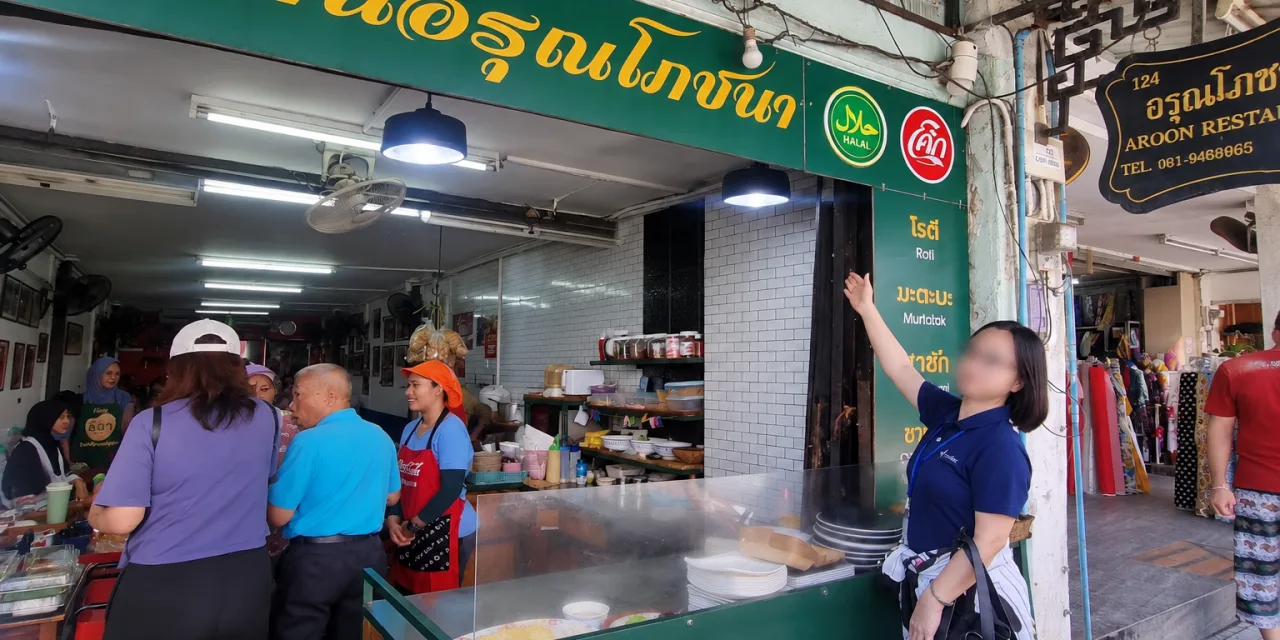
This is the spot mentioned in the opening of this piece, so let’s be more specific about it.
Aroon Restaurant sits at 264 Soi Talingchan, a few steps from Masjid Yameay, in a Sino-Portuguese shophouse with the griddle facing the street. It opens at 6:30am daily and the crowd at that hour is municipal workers, neighbourhood residents and people walking back from morning prayers. Cash only. Thai and Southern Malay spoken.
The Roti Krop is light and properly layered – not dense, not greasy. The Massaman beef (Kaeng Nuea) that comes alongside it has a broth that is balanced rather than heavy, which is harder to pull off than it sounds. Out front, the Cha Chak teh tarik gets poured from a height until the froth is right. It is the kind of small performance that tells you the kitchen cares about the whole experience, not just what is on the plate.
Worth arriving early. Worth coming back to.
Roti Chaofa – Chaofa Road, Phuket Town
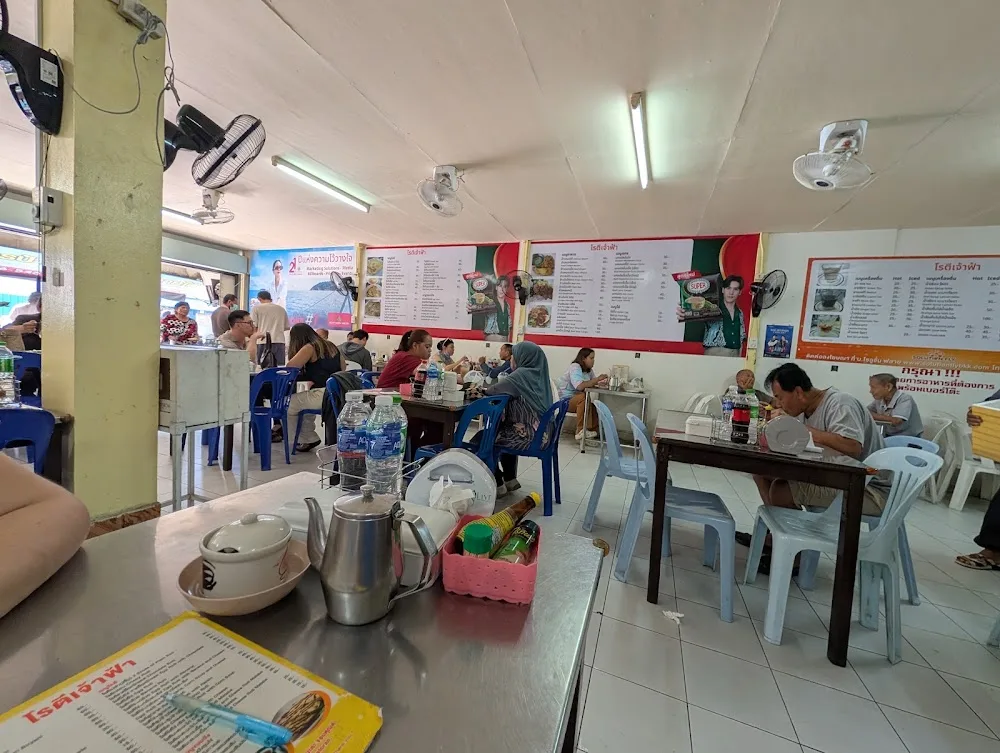
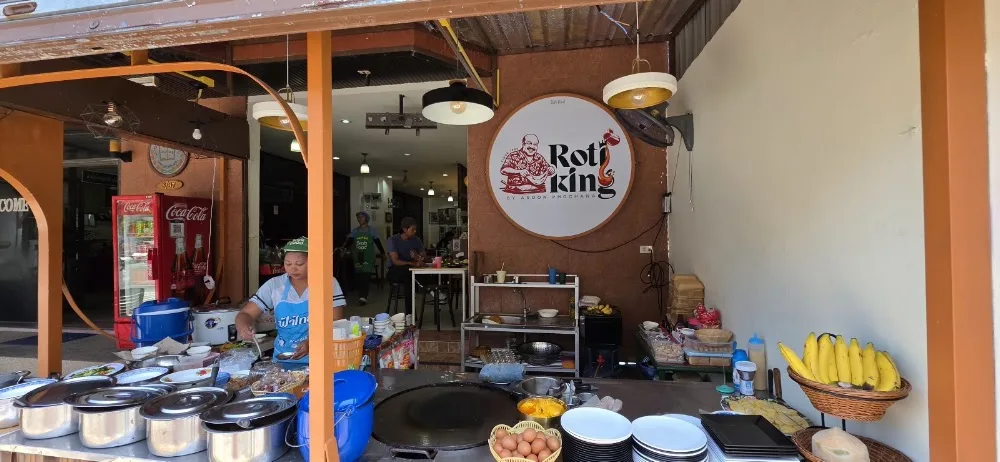
Roti Chaofa on Chaofa Road, next to the SCB Bank, runs on volume. It has for a long time. The covered shophouse is built for morning crowds and the service moves at a pace that reflects it. Tuesday to Sunday, 6am to 1:30pm. Cash only.
The Roti Nam Kaeng is the thing to order – crispy roti alongside a bowl of chicken or beef curry gravy. But the detail that stays with you is the ox-tail soup (Sup Nuea). Sour from lime juice, sharp from birds-eye chilies, finished with fried shallots. It cuts straight through the richness of everything else on the table. That contrast is not accidental.
Good halal street food Phuket residents have been relying on for years. No fuss about it.
Krua Do-Ar Roti – Pattana Road, Phuket Town
Krua Do-Ar opens at 5am, which tells you who it is for. Early-shift workers, commuters, people who need to eat before the rest of the island has decided what to have for breakfast.
It sits on Pattana Road next to the Phuket Muslim Cemetery. If you know the Muslim quarter Phuket Town well, you already know the street. If you do not, the location will orient you quickly.
The roti Phuket Town regulars come here for comes in whatever style you want – thin and crispy, soft and folded, sweet with condensed milk or filled with mataba. Order the tuna mataba. It is spiced properly and cheaper than it has any right to be. The Achar on the side, cucumber pickled with vinegar and shallots, is there because someone thought about the whole plate.
The Bang Tao and Cherngtalay Circuit – Village Halal Done Right
Head north from Old Town and the energy shifts. Bang Tao [internal link: PCN Bang Tao / Cherngtalay neighbourhood feature] is a residential Muslim village corridor – quieter, less foot traffic, a different pace entirely. The mosque still anchors it. The food is built around the community in the same way. Two spots worth knowing here: one runs from dusk, one disappears before late morning.
Bang Don Fried Chicken and Khao Mok – Srisoonthorn Road, Bang Tao
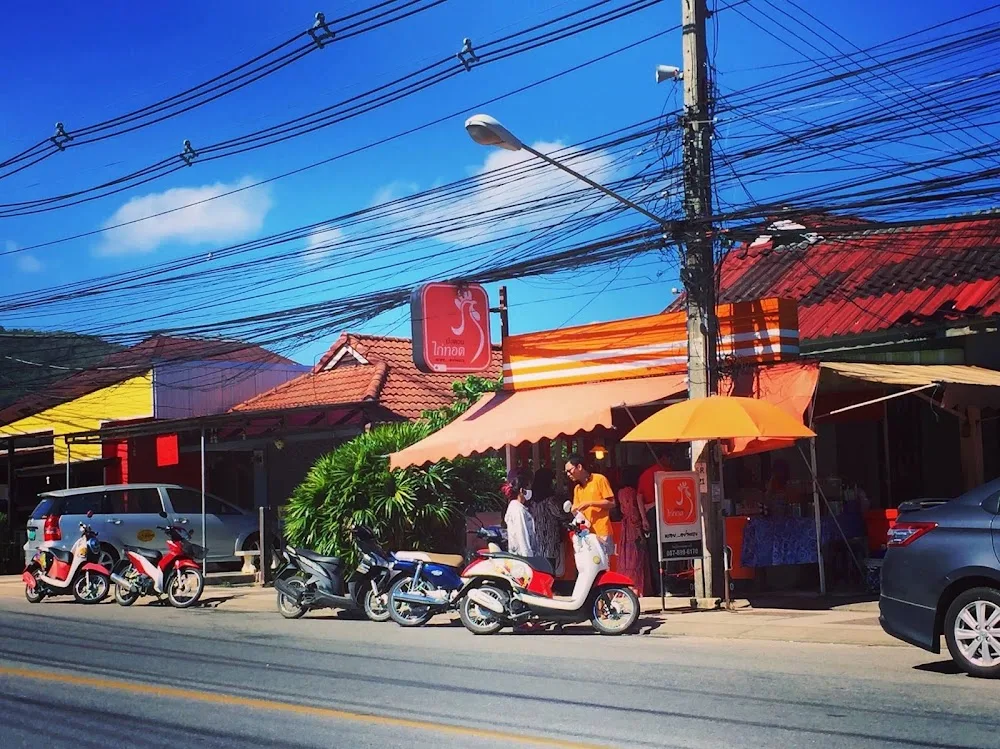
The orange shopfront on Srisoonthorn Road is hard to miss at dusk. The open frying stations face the road and the smell reaches you before the sign does. About 100 metres past Supercheap Bang Tao. Daily, 11am to 11pm. Cash and PromptPay.
The Khao Mok Gai Thod is what Bang Tao halal food regulars come for – turmeric-braised biryani rice paired with double-dredged southern fried chicken, finished with sweet fried shallots. The detail that keeps people coming back is the oil. Fresh every time. The chicken holds its texture without the greasy weight that follows you home from places cutting corners on that front. That is the difference between good halal street food Phuket has plenty of and a spot that has its standards sorted.
The Khao Mok Gai Phuket locals rank this version highly. That is worth something.
When You Want a Proper Sit-Down – Two Spots That Deliver
Not every meal needs to happen at a counter. These two are for when you want to sit down properly, order from a menu and take your time. Both are worth the trip out.
Nomjeen Na Phuket – Srisoonthorn, Thalang
People drive out to Ban Don-Ban Ya Road in Srisoonthorn specifically for the Kanom Jeen Nam Ya Poo. Fresh rice noodles under a golden coconut curry packed with lump crab meat and roe, served with pickled papaya, fresh vegetables, boiled egg and crispy anchovies on the side. That is the dish. Everything else on the menu is solid, but that is why the carpark fills up.
Nomjeen Na Phuket carries full CICOT halal certification, which makes it the straightforward choice for anyone who needs certified halal Phuket dining confirmed before sitting down, or for larger family groups who want the practicalities sorted. Garden dining, air-conditioned rooms inside, a musalla on site, cards accepted.
Closed Fridays for Jumu’ah prayers. Open daily 9am to 8pm otherwise.
The CICOT halal stamp and the Kanom Jeen Phuket regulars rate it highly. Both things can be true at once.
Kalim Rimlay – Kalim Beach, Kathu
Kalim Rimlay sits on the waterfront at Thaweewong Road, just north of Patong on the Kalim Beach stretch. The deck is open-air timber, directly on the water. The view is the Andaman. It is a good place to sit.
What separates it from the stretch of restaurants further south is straightforward: no pork, no alcohol, enforced. For halal restaurants Phuket families and Muslim travellers are actively looking for near the west coast, this is the most reliable option at the beach.
The Som Tam Poo Ma – papaya salad with fresh blue crab – is the dish to order. The char-grilled beef (Nuea Yang) holds up well too. Halal seafood Phuket diners who make the trip tend to come back.
Daily 10am to 10pm. Cash and PromptPay. Multilingual staff. Good for groups.
All Seven Spots at a Glance
If you want to plan before you go, here it is.
| Eatery | Area | Must-Order | Hours | Price | Halal Status |
| Aroon Restaurant | Old Phuket Town – Soi Talingchan | Roti Krop, Massaman Beef, Teh Tarik | Daily 6:30am – 5:30pm | Under 100 THB | Muslim-owned, community-trusted |
| Roti Chaofa | Phuket Town – Chaofa Road | Roti Nam Kaeng, Ox-tail Soup | Tue-Sun 6am – 1:30pm | Under 100 THB | Multi-generational Muslim family |
| Krua Do-Ar Roti | Phuket Town – Pattana Road | Tuna Mataba, Crispy Roti | Daily 5am – 2pm | Under 100 THB | Muslim-owned, neighbourhood staple |
| Bang Don Fried Chicken | Bang Tao – Srisoonthorn Road | Khao Mok Gai Thod | Daily 11am – 11pm | Under 100 THB | Muslim-owned, halal signage |
| Khao Yam Ka Nuch | Bang Tao Village – Cherngtalay | Blue Khao Yam, Kanom Jeen | Daily 6:30am until sold out (before 11am) | Under 100 THB | Muslim-owned village stall |
| Nomjeen Na Phuket | Srisoonthorn – Thalang | Kanom Jeen Nam Ya Poo | Daily 9am – 8pm (closed Fridays) | 80-250 THB | CICOT certified halal |
| Kalim Rimlay | Kalim Beach – Kathu | Nuea Yang, Som Tam Poo Ma | Daily 10am – 10pm | 100-300 THB | Strictly halal, no alcohol |
Before You Go – A Few Things Worth Knowing
A few things that will save you a wasted trip.
- The morning hours are not approximate. Roti and khao yam stalls open at dawn and by 10am several of them are already winding down or sold out entirely. Aim to be there between 7am and 8:30am if you want the full menu.
- Fridays need a check before you go. Some spots close during midday for Jumu’ah prayers and Nomjeen Na Phuket closes the full day. It is easy to confirm in advance and less fun to find out in the carpark.
- Cash is the default. Most of these places are cash-only. Nomjeen Na Phuket and Kalim Rimlay are the exceptions – cards and PromptPay work there. For everything else, bring Thai Baht in smaller notes.
- The Soi Talingchan and Pattana Road spots sit inside active mosque neighbourhoods. Dress accordingly. Nobody is going to turn you away from a roti counter but it is the kind of consideration that costs nothing.
- A hand-written specials board in Thai is a good indicator. It usually means the menu follows the season and the market rather than a laminated sheet that hasn’t changed in three years. Point at something and ask. The staff at these places are well used to it.
Common Questions About Halal Food in Phuket
Is it easy to find halal food in Phuket?
More accessible than most people expect, but you need to know which parts of the island to look at. The Muslim quarter around Talat Yai in Phuket Town, Bang Tao village and the Cherngtalay corridor are where the halal food Phuket residents eat is concentrated. Rawai has an established Muslim community with local options too. In Patong and Karon the picture is thinner – if you are in those areas, look for the CICOT certification logo in the window before you sit down.
Do halal restaurants in Phuket need to display a certificate?
Commercial venues and hotel restaurants marketing to Muslim travellers need formal CICOT halal certification. Many of the best local spots operate differently – Muslim-owned families within mosque neighbourhoods, where no pork and no alcohol is simply how things are. Both systems are legitimate. The earlier section of this article covers the distinction properly if you want the full picture. The short version: certified halal Phuket dining and community-trusted CICOT halal spots are not the same thing, and both are worth understanding.
What is the best halal dish to try in Phuket?
Khao Mok Gai Phuket style – the Southern Thai chicken biryani. It carries more of the island’s Muslim culinary history in one bowl than almost anything else on a local menu, and Bang Don Fried Chicken in Bang Tao does a version that holds up well against any comparison. That said, if seafood is the preference, the Kanom Jeen Phuket diners keep returning to is the Nam Ya Poo at Nomjeen Na Phuket. Different dish, equally worth the trip.
Are there halal options near the main beach areas?
Kalim Rimlay on Kalim Beach, just north of Patong, is the most reliable option on the west coast – halal restaurants Phuket beach visitors can count on, no alcohol, halal seafood Phuket standards maintained consistently, right on the water. For Kata and Karon the options are limited. Kamala village [internal link: PCN Kamala neighbourhood feature] has a local Muslim community with some eateries but the consistency is variable. The spots in this article are the ones we can stand behind.
Do these restaurants close on Fridays?
Some do. Nomjeen Na Phuket closes the full day on Fridays for Jumu’ah prayers. A few of the Old Town spots scale back during the midday prayer window, roughly noon to 2pm. The morning stalls and Bang Don Fried Chicken in Bang Tao generally run normal hours on Fridays. If you are making a dedicated trip on a Friday, particularly out to Srisoonthorn, check before you go.
The kitchens in this piece were not waiting for anyone to write about them. They opened early this morning and they will open early tomorrow, for the same people they have been feeding for years.
If you have been walking past Aroon on Soi Talingchan without going in, or driving through Bang Tao without stopping at the orange shopfront on Srisoonthorn Road, consider this the nudge.
Get there before 8am for the morning spots. Bring cash. Let whoever is working the griddle tell you what is good today.