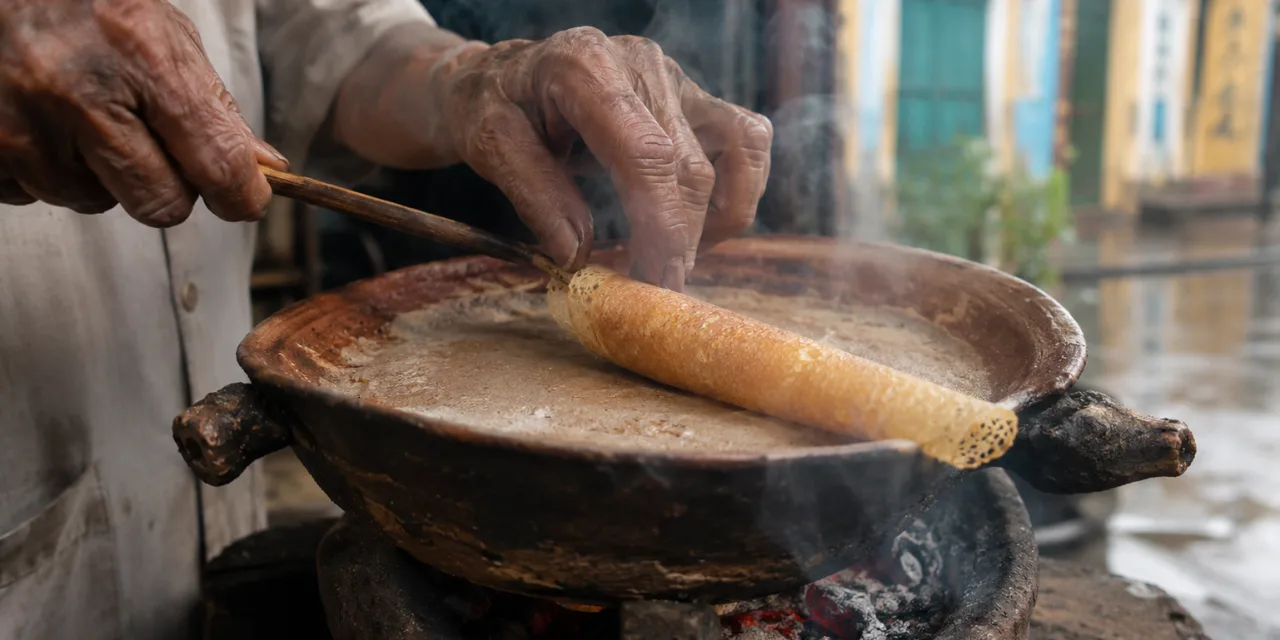
Skip the beach when the skies turn grey and discover a different side of the island. This guide to Phuket Street Food explores the comforting noodle shops, Michelin-recognised favourites, and family-run stalls that locals flock to on a rainy day. From crispy Apong cooked over charcoal to steaming bowls of Hokkien noodles, you'll find the best places to eat, what to order, and how to enjoy a self-guided food walk through Phuket Old Town when the rain rolls in.
Table of Contents
When the rain settles in over Phuket, plans have a habit of changing. Beach towels stay folded, the sea turns grey, and those long afternoons by the water suddenly don’t seem so tempting. But if you’ve lived here for a while, or even visited during the wet season, you’ll know that’s usually when the island quietly shifts into a different rhythm.
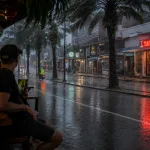
A rainy day in Phuket has a way of leading you towards Phuket Old Town. The colourful streets glisten after a downpour, old shophouse awnings offer a little shelter, and the smell of charcoal smoke and simmering broth drifts through narrow lanes. It’s the sort of weather that makes slowing down feel like the right decision.
That’s also when Phuket street food really comes into its own. While visitors often associate the island with seafood restaurants and beachfront cafés, locals are lining up for bowls of hot noodles, freshly made Apong, and family recipes that have been served for generations. Some of these humble stalls have even earned Michelin recognition, while the island itself became Thailand’s first UNESCO Creative City of Gastronomy thanks to its rich food heritage.
If you’re looking for the best Phuket Old Town food or wondering what to do on a rainy day Phuket, this guide is a good place to start. From crispy coconut pancakes cooked over charcoal to steaming bowls of comfort food Phuket locals return to every wet season, these are the dishes that make rainy days feel less like a setback and more like an excuse to eat well.
Why Rainy Days Are Perfect for Exploring Phuket’s Food Culture
Most people look at the weather forecast and hope the rain passes quickly. Locals tend to do something different. They grab an umbrella and start thinking about where to eat.
When the beaches are quiet, Phuket Old Town comes alive in a different way. The narrow streets feel a little calmer, the covered walkways offer welcome shelter between stops, and there’s no rush to be anywhere. Instead of planning around the weather, it’s easy to let the next bowl of noodles become the destination.
This is when Phuket’s food culture really shines. You might notice steam rising from bowls of pork broth as people settle in for lunch, or catch the smell of charcoal drifting from a small stall making fresh Apong one piece at a time. Inside old shophouses, families gather around simple tables while regulars greet owners who’ve been serving the same recipes for decades.
Rain also changes the way the food feels. A bowl of Hokkien noodles seems a little richer, herbal broth warms you up after a short walk through a shower, and a crispy coconut pancake tastes even better when it’s eaten fresh beside a rain-speckled street. It’s not that the recipes change. The weather simply makes you slow down enough to appreciate them.
One of the nicest things about exploring Phuket Old Town in the wet season is the slower pace. Queues still form at the most popular noodle shops, but people aren’t hurrying. Lunch becomes something to enjoy rather than squeeze into a busy day.
What to bring
- An umbrella for the short walks between food stops
- Cash, as many long-running local stalls don’t accept cards
- Comfortable shoes with good grip for wet pavements
- A healthy appetite, because one stop usually turns into three
Start With Phuket’s Famous Apong
If there’s one snack that captures the flavour of old Phuket, it’s Apong.
At first glance, it doesn’t look like much. It’s thin, golden and rolled into a tube that fits neatly in your hand. But one bite explains why people have been queueing for it for generations. It’s light, slightly sweet and full of coconut, making it the sort of snack that’s easy to keep eating without noticing how many you’ve finished.
Unlike many street foods you’ll find across Thailand, Apong is deeply connected to Phuket’s own history. It’s a simple treat, but it tells the story of the island’s trading past and the Baba-Nyonya community that helped shape the local food culture.
What is Apong?
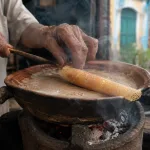
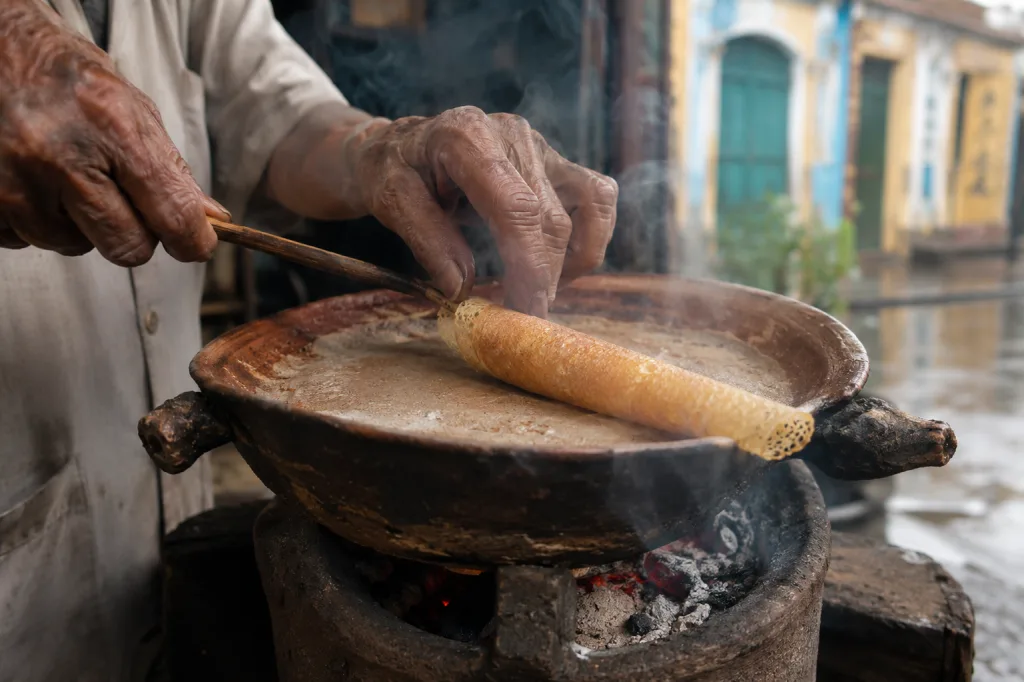
Apong is a delicate coconut pancake made from rice flour, coconut milk, eggs, sugar and yeast. The batter is left to ferment before being poured into small rounded woks, where it’s cooked until the edges become crisp while the centre stays soft and airy.
Its roots can be traced back to South Indian appam, which arrived through historic trade routes across the Straits of Malacca. Over time, Phuket’s Baba-Nyonya community adapted the recipe into the rolled street snack you’ll find today. Instead of serving it with curries, they turned it into something lightly sweet that could be eaten while walking through the markets or streets of Old Town.
One of the biggest reasons Apong tastes different from ordinary pancakes is the way it’s cooked. Many traditional vendors still use charcoal-fired clay stoves rather than gas burners. The dry heat helps create the signature crisp edges while adding a gentle smoky aroma that’s difficult to replicate any other way.
Freshness also matters. Apong is best eaten straight from the stall while it’s still warm. The crisp outer layer begins to soften once it sits in Phuket’s humid air, so most locals don’t carry it around for long. They simply eat it while standing nearby before moving on to the next stop.
Where to Eat the Best Apong
There are several places to find Apong around Phuket, but two names come up again and again when locals talk about the real thing.
| Stall | Why locals like it | Best time to visit |
| A Pong Mae Sunee | A family-run stall with more than 50 years of history, recognised with a Michelin Bib Gourmand. The charcoal cooking and consistent recipe have earned a loyal following. | Early morning to late morning. It often sells out before lunchtime. |
| Apong Konyo Samkong | A long-time local favourite known for staying true to the traditional recipe. It’s a little less busy with visitors and popular with regulars from the neighbourhood. | Earlier in the day for the freshest batches. |
Both stalls produce Apong one piece at a time, which is part of the experience. You’ll often see people waiting patiently while each pancake is spread by hand, cooked over charcoal and rolled while it’s still hot. The queue usually moves steadily, and the aroma alone makes the wait feel worthwhile.
You won’t find fancy toppings or modern twists here. The appeal is that very little has changed. The recipe is simple, the cooking method is traditional, and that’s exactly why people keep coming back.
Lara’s local tip: Buy enough for everyone, but don’t save them for later. Apong is at its best within minutes of leaving the charcoal stove.
Four Bowls of Comfort Every Rainy Day Needs
When the rain starts falling across Phuket, you’ll notice something about lunchtime. The queues outside noodle shops get a little longer.
Instead of looking for a table overlooking the beach, locals head somewhere warm, dry and familiar. A steaming bowl of noodles has a way of making a wet afternoon feel a little brighter. Whether it’s a rich stir-fry kissed by charcoal smoke or a light herbal broth that gently warms you up, these are the dishes many people in Phuket grow up eating.
If you’re exploring Phuket Old Town during the rainy season, these four bowls are a great place to begin.
Mee Pad Hokkien
If Phuket has a signature noodle dish, this is probably it.
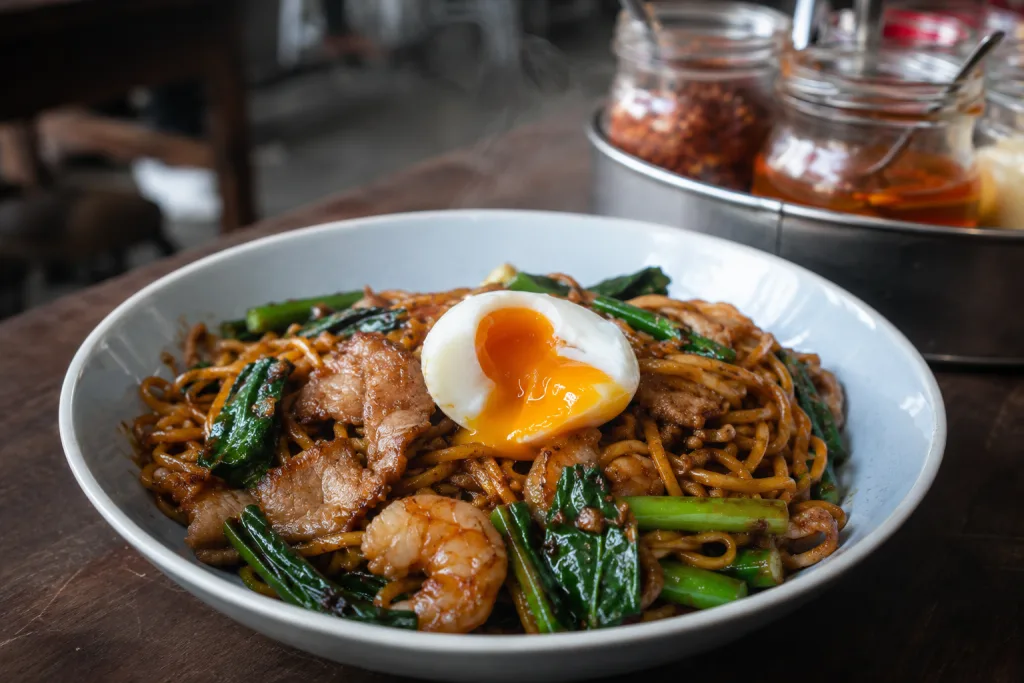
Mee Pad Hokkien features thick yellow egg noodles stir-fried over high heat with pork, seafood, Chinese kale and a glossy dark soy sauce. Many versions arrive with a soft egg on top, ready to be broken so the yolk coats every strand.
The first thing you’ll notice is the texture. The noodles are chewy without being heavy, while the rich sauce clings to each bite. The slight smokiness from the wok gives the dish extra depth, especially when it’s cooked over charcoal.
It’s easy to understand why people crave it on rainy days. The noodles are filling, served piping hot and packed with savoury flavours that feel especially satisfying after walking through damp streets.
If you’re trying Phuket’s local food for the first time, Mee Pad Hokkien is an easy introduction. It’s familiar enough for most visitors while still feeling distinctly local.
Where to try it
Mee Ton Poe has been serving Hokkien noodles since 1946 and remains one of Phuket’s best-known institutions. Located near the Surin Clock Tower, it’s famous for cooking over traditional charcoal stoves, giving the noodles the smoky flavour locals call wok hei.
Go La Hokkien Fried Noodles offers a slightly quieter experience in Phuket Town. This family-run restaurant has earned recognition from the Michelin Guide and is loved for its consistently excellent noodles and relaxed atmosphere.
Mee Hoon Kraduk Moo
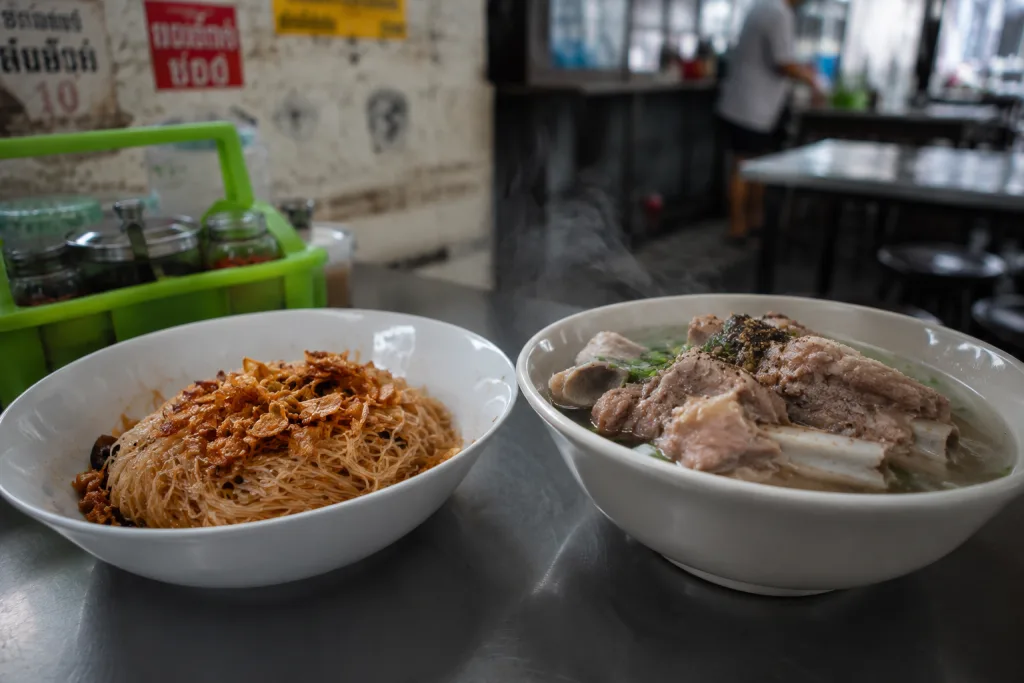
At first glance, this dish looks unusual because it arrives as two separate bowls.
One contains delicate rice vermicelli tossed with sweet soy sauce and topped with crispy fried shallots. The second holds a steaming pork rib soup seasoned generously with black pepper.
It works because each bowl balances the other. The noodles are light, slightly sweet and fragrant, while the broth is rich, savoury and warming. Many locals alternate between the two, taking a few bites of noodles before sipping the hot soup.
On a wet afternoon, it’s exactly the sort of meal that helps shake off the chill after walking around Old Town.
This dish suits anyone who enjoys lighter noodles without giving up the comfort of a hearty soup. It also feels less heavy than richer stir-fried options, making it a popular lunch choice.
Where to try it
Jeepang Mee Hoon Kraduk Moo is tucked inside Soon Utis Alley, where generations of customers have come for the same recipe. The freshly fried shallots add plenty of crunch and aroma, while the peppery broth has earned a loyal following among locals.
Lock Tien Local Food Center is another excellent place to sample Mee Hoon Kraduk Moo alongside several other Phuket classics. It’s a convenient stop if you’re hoping to try more than one local dish during your visit.
Mee Sua
Some rainy days call for something gentler.
Mee Sua uses incredibly thin wheat noodles served in a clear herbal broth that has been slowly simmered with pork ribs and Chinese herbs. Egg strands float through the soup, adding extra richness without making it feel heavy.
The noodles themselves are wonderfully soft. They almost melt in your mouth, creating a completely different experience from the chewy texture of Hokkien noodles.
It’s the sort of meal people often choose for breakfast or a quiet lunch. The herbal broth feels nourishing rather than rich, making it especially comforting during cool, wet weather.
If you’re looking for something lighter or you’re not particularly hungry after a morning exploring Phuket Old Town, Mee Sua is a lovely choice.
Where to try it
Chuan Heang Dim Sum has been welcoming diners for more than a century. While many people arrive for dim sum, the Mee Sua deserves just as much attention. The restaurant’s long history and traditional recipes make it one of Phuket’s most respected breakfast spots.
Chuan Hiang Branch 2 is another favourite among residents. Alongside its herbal soups, the silky Mee Sua has become a dependable choice for anyone seeking a simple, comforting meal without unnecessary fuss.
Kari Mai Fan
If you enjoy coconut curry, don’t overlook this local favourite.
Kari Mai Fan combines delicate rice vermicelli with a creamy chicken curry made from coconut milk and mild spices. Bean sprouts add freshness, while pieces of fried tofu soak up the fragrant curry.
Compared with some Thai curries, the flavours are gentle rather than fiery. The coconut milk creates a smooth, velvety broth that’s warming without overwhelming the noodles.
Rainy weather somehow makes this dish even more satisfying. The curry stays hot for longer than you’d expect, and each spoonful feels rich enough to be comforting while remaining surprisingly light.
It’s a great option for readers who enjoy curries but want something a little different from the better-known Thai classics.
Where to try it
Juan Hieng Noodle Shop is one of the best-known places for Kari Mai Fan. It’s particularly popular at weekends, when many locals stop by specifically for this dish. Arriving earlier in the day gives you the best chance of getting a bowl before it’s gone.
Jee Nguad has built its reputation on traditional Phuket noodle dishes, including an excellent version of Kari Mai Fan. It’s the sort of neighbourhood restaurant where regulars know exactly what they’re ordering before they even sit down.
Whether you prefer rich stir-fried noodles, silky herbal soups or creamy coconut curry, these dishes show another side of Phuket’s food culture. They aren’t elaborate or expensive. They’re simply the meals people return to whenever the skies turn grey, proving that sometimes the best rainy day plans begin with finding the nearest bowl of noodles.
Quick Comparison: Which Phuket Noodle Should You Try?
Not sure where to start? It really depends on what you’re in the mood for. Here’s a simple guide to help you choose your first bowl.
| If you’re craving… | Order… | Why you’ll love it |
| A rich, filling lunch | Mee Pad Hokkien | Thick egg noodles, smoky wok flavour and a savoury sauce that feels especially satisfying on a rainy day. |
| Something light but warming | Mee Sua | Silky noodles in a gentle herbal broth that’s comforting without feeling heavy. |
| Soup with a bit of variety | Mee Hoon Kraduk Moo | You get both seasoned rice noodles and a peppery pork rib soup, so every bite feels a little different. |
| Creamy coconut flavours | Kari Mai Fan | Delicate vermicelli in a mild coconut curry with tofu and bean sprouts for plenty of texture. |
If you only have time for one meal, it’s hard to go past Mee Pad Hokkien. It’s one of Phuket’s signature dishes, easy to enjoy even if it’s your first visit, and you’ll find excellent versions at some of the island’s most respected local restaurants. If you’ve already tried it before, Mee Hoon Kraduk Moo is a great second choice and offers a completely different take on Phuket’s comfort food.
More Rainy Day Local Foods Worth Trying
Noodles might be the first thing that comes to mind on a wet day, but they’re not the only reason people head into Phuket Old Town when the rain arrives. A few other local favourites deserve a place on your list, especially if you’ve got time to wander between showers.
Oh Tao
Oh Tao is one of those dishes that surprises people the first time they see it.
It’s made by stir-frying small oysters with taro, egg, flour and crispy pork crackling until everything comes together into a soft, slightly crispy pancake. The texture is quite different from a typical oyster omelette. The outside has a little crunch, while the middle stays rich and almost chewy.
It isn’t a dish everyone orders on their first visit, but locals have loved it for generations. The combination of seafood, savoury egg and crispy pork makes it deeply satisfying, particularly when the weather is cool and damp outside.
If you’re curious about traditional Phuket food that’s difficult to find elsewhere in Thailand, Oh Tao is well worth trying while you’re exploring the Old Town.
Dim Sum Breakfast
Rainy mornings and dim sum seem to go hand in hand.
Across Phuket, many families begin the day by gathering around bamboo steamers filled with dumplings, pork buns, siu mai and other small bites. There’s no need to rush. You simply order a few plates, pour some hot tea and take your time.
One of the best-known places is Chuan Heang Dim Sum, which has been welcoming diners for generations. Alongside its dim sum, it’s also known for comforting bowls of Mee Sua, making it an easy stop if you can’t decide between noodles and steamed favourites.
When the rain is tapping gently on the roof outside, a leisurely dim sum breakfast feels like exactly the right pace to start the day.
Local Coffee and Kopitiams
Not every rainy day needs a full meal straight away.
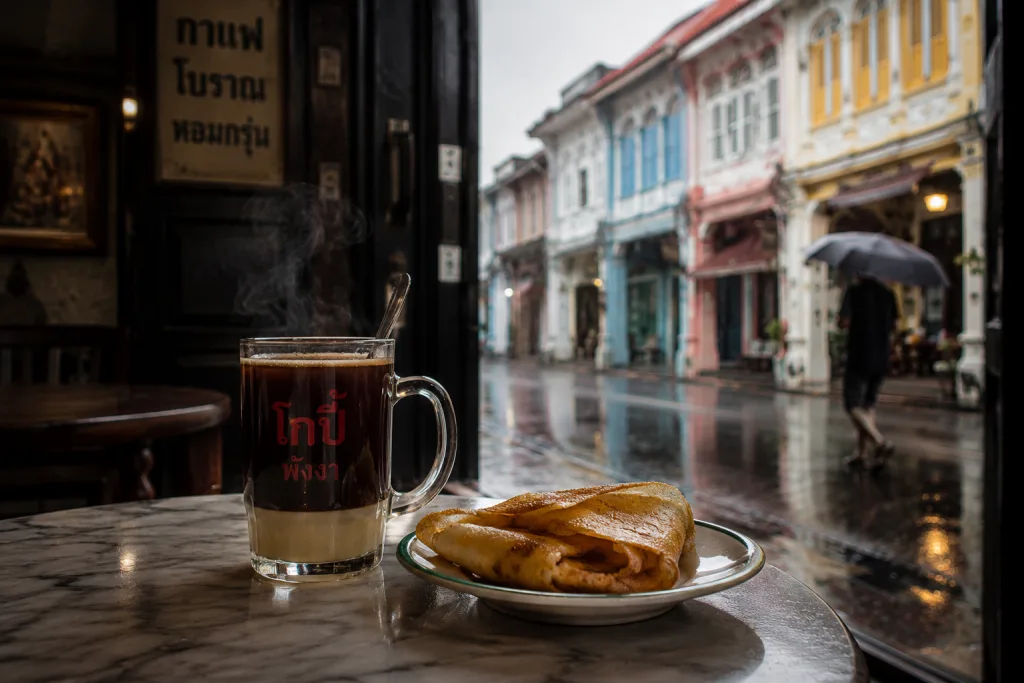
Sometimes all you want is a strong local coffee and somewhere dry to watch Phuket slow down for a while. That’s where the island’s kopitiams come in. These traditional coffee shops have been part of everyday life for decades, serving freshly brewed coffee alongside simple breakfasts and local snacks.
They’re the kind of places where regulars read the morning news, neighbours stop for a quick chat and nobody seems bothered if the rain keeps falling for another half hour.
If you’ve just picked up a warm Apong from a nearby stall, pairing it with a cup of local coffee makes for a simple but memorable break. Find a seat by the window, listen to the rain outside and enjoy a quieter side of Phuket that many visitors never get to experience.
Phuket Is Thailand’s UNESCO City of Gastronomy
One of the things that makes eating in Phuket so interesting is that the island’s food tells the story of the people who’ve called it home.
In 2015, Phuket became Thailand’s first UNESCO Creative City of Gastronomy. It sounds like a grand title, but it really comes down to something quite simple. UNESCO recognised that food isn’t just part of daily life here. It’s part of the island’s identity, with recipes and cooking traditions passed from one generation to the next.
You can taste that history without even realising it.
A bowl of Hokkien noodles reflects the influence of Chinese settlers who arrived during Phuket’s tin mining days. Apong has roots connected to South Indian cooking before being adapted by Phuket’s Baba-Nyonya community into the sweet rolled snack you’ll find today. Dishes like Kari Mai Fan blend Chinese cooking techniques with Malay spices, coconut milk and local Thai ingredients. Over time, these influences became something completely unique to Phuket.
That’s why Phuket’s local food feels different from what you might find elsewhere in Thailand. The flavours are familiar in places, but the combinations have their own character, shaped by centuries of trade, migration and family traditions.
Perhaps the nicest part is that this heritage isn’t locked away in museums or special events. It’s still part of everyday life. The recipes are cooked in neighbourhood noodle shops, family-run restaurants and small street stalls where regular customers have been stopping for years.
One fact that’s always worth remembering is this: Phuket wasn’t just the first city in Thailand to receive UNESCO’s gastronomy recognition. It was also the first in Southeast Asia. For an island better known internationally for beaches, that’s quite an achievement, and a good reminder that some of Phuket’s best experiences are found around a simple table with a bowl of noodles in front of you.
Build Your Own Rainy Day Food Walk in Phuket Old Town
If the forecast looks wet, don’t cancel your plans. Just swap the beach for a pair of comfortable shoes and spend a few hours wandering Phuket Old Town. Everything on this route is within walking distance, so it’s easy to duck under an awning whenever another shower rolls through.
Morning
Start the day with breakfast at Chuan Heang Dim Sum.
Order a few bamboo steamers, a bowl of Mee Sua if you’re feeling hungry, and a cup of local coffee. It’s a gentle way to ease into the morning, especially if the rain is still falling outside.
From here, it’s only about a 5 to 8 minute walk towards Yaowarat Road. Along the way you’ll pass old Sino-Portuguese shophouses, neighbourhood cafés opening their doors and locals stopping for breakfast before work.
Late Morning
Your next stop is A Pong Mae Sunee for freshly made Apong.
Try it while it’s still warm from the charcoal stove. The crisp edges and soft coconut centre are exactly what make this snack so memorable, and it’s best enjoyed within minutes of being cooked.
This is also a good time to wander around the surrounding streets. Browse a few independent shops, admire the colourful buildings and take your time. Rain often keeps the crowds smaller, making it easier to appreciate the details, from faded wooden shutters to tiny family businesses that have been here for decades.
Lunch
By now you’ll probably be ready for something more substantial.
Walk around 10 minutes towards either Mee Ton Poe or Go La Hokkien Fried Noodles, depending on which direction you’re exploring.
If it’s your first visit, order the Mee Pad Hokkien. The thick noodles, smoky wok flavour and rich sauce make it one of Phuket’s classic comfort meals.
If you’re after something lighter, head instead to Jeepang Mee Hoon Kraduk Moo, where the dry rice noodles and peppery pork rib soup make a satisfying combination without feeling too heavy.
Don’t be surprised if there’s a queue. Most locals are happy to wait because they know the food is worth it.
Afternoon
After lunch, slow the pace even further.
Walk through Soi Romanee and the surrounding streets, popping into small galleries, bookshops or coffee shops whenever another shower arrives. If you didn’t stop for coffee earlier, this is a great excuse to settle into a traditional kopitiam with a cup of local coffee.
If you’ve still got room, finish the afternoon with another Apong or try a plate of Oh Tao before heading home.
The entire walk covers roughly 1.5 to 2 kilometres, depending on which noodle shop you choose, making it comfortable even with a few rainy interruptions.
Lara’s recommendation: Don’t try to tick off every famous place in one afternoon. Pick a handful of stops, linger over lunch, watch the rain come and go, and let the day unfold at Phuket’s pace. That’s usually when the best moments happen.
Local Tips Before You Go
A little planning goes a long way when you’re exploring Phuket’s food scene in the rain.
- Arrive early for the popular stalls. Places like A Pong Mae Sunee often sell out before lunchtime, while the busiest noodle shops are at their liveliest between 12 pm and 1 pm.
- Carry cash. Many long-running family stalls and neighbourhood eateries still prefer cash, especially for smaller purchases.
- Expect a short wait. If you see a queue of locals, that’s usually a good sign. Most lines move steadily, so it’s worth being patient rather than moving on too quickly.
- Double-check opening days and hours. Some shops close earlier than expected, while others only serve certain dishes on weekends or specific days of the week.
- Wear shoes with good grip. Old Town’s pavements can become slippery after heavy rain, particularly on older tiled walkways.
- Think about parking before you arrive. Street parking can fill up quickly around lunchtime. If you’re driving, you may need to park a few streets away and enjoy a short walk.
- Weekdays are generally quieter. If your schedule is flexible, you’ll usually find fewer crowds and shorter queues than at weekends.
- Support local businesses thoughtfully. Order only what you’ll finish, return trays or dishes if requested, and remember that many of these shops are family-run businesses that have been serving the community for generations.
Frequently Asked Questions
Is Phuket Old Town worth visiting when it rains?
Absolutely. In fact, many locals would say it’s one of the best times to visit. The streets are quieter, the covered walkways provide shelter, and it’s much easier to enjoy Phuket Old Town’s cafés, noodle shops and street food without the heat of the afternoon sun. Rainy weather also makes a bowl of local noodles or a freshly cooked Apong even more satisfying.
What is the most famous street food in Phuket?
Phuket is known for several signature dishes, but Mee Pad Hokkien and Apong are among the most recognisable. Mee Pad Hokkien is a rich stir-fried egg noodle dish with Chinese influences, while Apong is a thin coconut pancake cooked over charcoal. Both have become favourites with locals and visitors looking to experience authentic Phuket street food.
Where can I eat Michelin-recognised street food in Phuket?
One of the best-known Michelin-recognised street food stalls is A Pong Mae Sunee in Phuket Old Town, which has earned a Michelin Bib Gourmand for its traditional Apong. Go La Hokkien Fried Noodles is another Michelin-recognised favourite, known for serving excellent Hokkien noodles cooked using traditional methods.
What noodles is Phuket famous for?
Phuket is best known for Mee Pad Hokkien, but it’s far from the only local favourite. Mee Hoon Kraduk Moo combines rice vermicelli with peppery pork rib soup, Mee Sua features delicate wheat noodles in a herbal broth, and Kari Mai Fan pairs rice vermicelli with a mild coconut curry. Each dish reflects the island’s unique food heritage.
What is Apong?
Apong is a traditional Phuket street snack made from rice flour, coconut milk, eggs, sugar and yeast. The batter is cooked in small charcoal-heated woks until the edges become crisp while the centre stays soft. It has roots in South Indian appam and was adapted over time by Phuket’s Baba-Nyonya community into the rolled coconut pancake enjoyed today.
Is Phuket street food expensive?
Generally, no. One of the best things about Phuket street food is that it’s affordable while still offering plenty of quality and flavour. Snacks like Apong cost only a few baht each, while generous bowls of local noodles are usually much cheaper than meals at tourist-focused restaurants, making them excellent value.
What time should I visit popular noodle shops?
Earlier is usually better. Many well-known noodle shops become busiest between 12 pm and 1 pm, and some popular stalls sell out before the afternoon. Visiting between 10:30 am and 11:30 am often means shorter queues, fresher batches and a more relaxed experience.
Can I do a self-guided Phuket food tour?
Yes. Phuket Old Town is compact enough to explore on foot, making it ideal for a self-guided food tour. Many of the island’s best noodle shops, coffee houses and street food stalls are within a comfortable walking distance of each other. Take your time, bring an umbrella during the rainy season, and enjoy discovering local favourites at your own pace.
Final Thoughts
Rain has a way of changing your plans in Phuket, but it doesn’t have to spoil them. More often than not, it simply points you in a different direction.
Instead of spending the day watching the weather forecast, head into Phuket Old Town and see where your appetite takes you. Wander through the old streets, step inside a family-run noodle shop, pause for a coffee in a traditional kopitiam, or pick up a warm Apong straight from the charcoal stove. These are the everyday moments that locals enjoy all year round, whether the sun is shining or the rain is falling.
Some of the island’s most memorable meals aren’t served with a sea view. They’re found under old awnings, inside well-loved shophouses and at small stalls where the recipes haven’t changed much in decades.
So the next time dark clouds roll across the island, don’t think of it as a day lost. Think of it as a chance to experience a quieter, more local side of Phuket. You might arrive looking for somewhere dry to wait out the rain, but there’s every chance you’ll leave with a new favourite dish and a different way of seeing the island.