International schools in Phuket are booming, with campus expansions, new openings, and shifting waitlists. A local mom breaks down what parents need to know.
Table of Contents
I noticed the school run got worse around Cherng Talay a few months back, then it clicked why. Three separate WhatsApp groups I’m in started buzzing about the same thing within a week of each other: waitlists moving, campus construction, a friend texting to say her daughter finally got a spot at BISP after over a year of waiting.
Turns out it’s not just in my head. HeadStart, BISP, and Lighthouse are all mid-expansion right now, at the same time. Glenalmond is opening its doors for the first time this August. NLCS has already locked in a launch a few years out. That’s five schools moving at once, which is not normal for this island.
So I went and found out what’s actually going on, why it’s happening now, and what it means if you’re raising kids here or thinking about making the move.
So What’s Actually Happening?
Here’s the short version, before we get into the details on each school.
Phuket’s international education scene is going through its biggest growth spurt in years, and it’s happening across the board, not just at one campus. Established schools are adding space because they’ve run out of it. A brand new school is opening its doors for the first time. And another has already put a date on the calendar for a few years from now.
If you’re a parent trying to keep track of all this, here’s the quick version before we dig into each one:
- HeadStart: expanding both campuses, with a new sports pitch due to open in January 2026
- BISP: adding extra primary class sections to work through its waitlist
- Lighthouse: its Rawai secondary campus is now fully up and running
- Glenalmond Phuket: brand new campus, opening this August
- NLCS Phuket: confirmed to open in 2028
Five schools, five different stages of growth, all happening at once. Let’s get into what each one actually means.
Meet the Schools Behind the Boom
Now let’s get into the actual detail, because “expanding” can mean a lot of different things depending on which school you’re talking about. Some of this is long overdue relief for waitlisted families. Some of it is a genuinely new option on the island. Here’s what’s really going on at each one.
HeadStart International School – Building Up in Wichit and Cherngtalay
HeadStart International School Phuket runs two campuses, and both are growing, just in different directions.
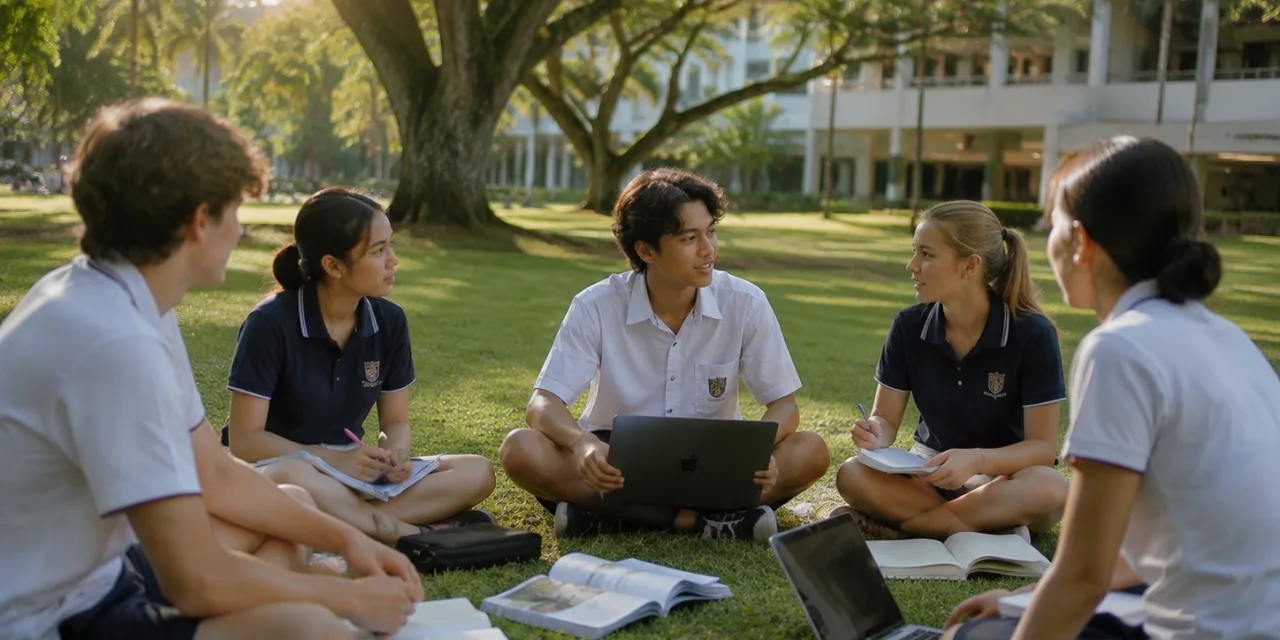
Over at Chaofah City in Wichit, the new Skypitch classroom block is already up, giving Humanities, English and Business their own dedicated space and freeing up room for Maths and Science to spread out. There’s a new multi-sport pitch due to open in January 2026 too. Between the building work, the school is pushing capacity past 1,400 students, with kids from around 60 different nationalities on that one campus. That’s a genuinely big, mixed community, not a small international bubble.
Cherngtalay is taking a different route. Instead of adding buildings, it’s adding a third entry class from Reception right through to Year 6, which basically means more seats opening up each year as that cohort moves through.
If you’re weighing the two campuses, know that fees run from THB 347,000 up to THB 540,000 depending on year group, and both hold Cambridge International and ONESQA accreditation, so you’re not sacrificing on the academic side either way. What the expansion doesn’t fix is the wait for a spot right now, that’s still catching up.
British International School Phuket (BISP) – Room to Grow in Koh Kaew
British International School Phuket sits on 44 acres in Koh Kaew, and it’s long been one of those schools everyone mentions first when you say you’re moving here with kids. Which is exactly why getting in hasn’t always been easy.
BISP is adding parallel class sections right across Years 3 through 6, and bringing in more primary teaching staff and learning resources to go with it. That’s not just a paper announcement either, it’s a direct response to genuine waitlist pressure. If you’ve ever been on one of these lists, you know the feeling: checking your email a little too often, wondering if this is the year a spot opens up. This expansion is aimed squarely at that problem, without ballooning class sizes to do it.
Academically, BISP follows the English National Curriculum through to IGCSEs and then the IB Diploma Programme in Sixth Form, backed by CIS and IB accreditation. Fees range from THB 470,000 in the early years up to over THB 935,000 for senior secondary. It’s a serious investment, and one a lot of families here plan years in advance for.
Lighthouse International School – Rawai’s Secondary Campus Comes Into Its Own
Lighthouse International School Phuket split its operations a while back: early years stayed in Chalong, and secondary got its own dedicated campus in Rawai. That Rawai campus opened in August 2024, and by this school year it’s fully up and running, not just open in name.
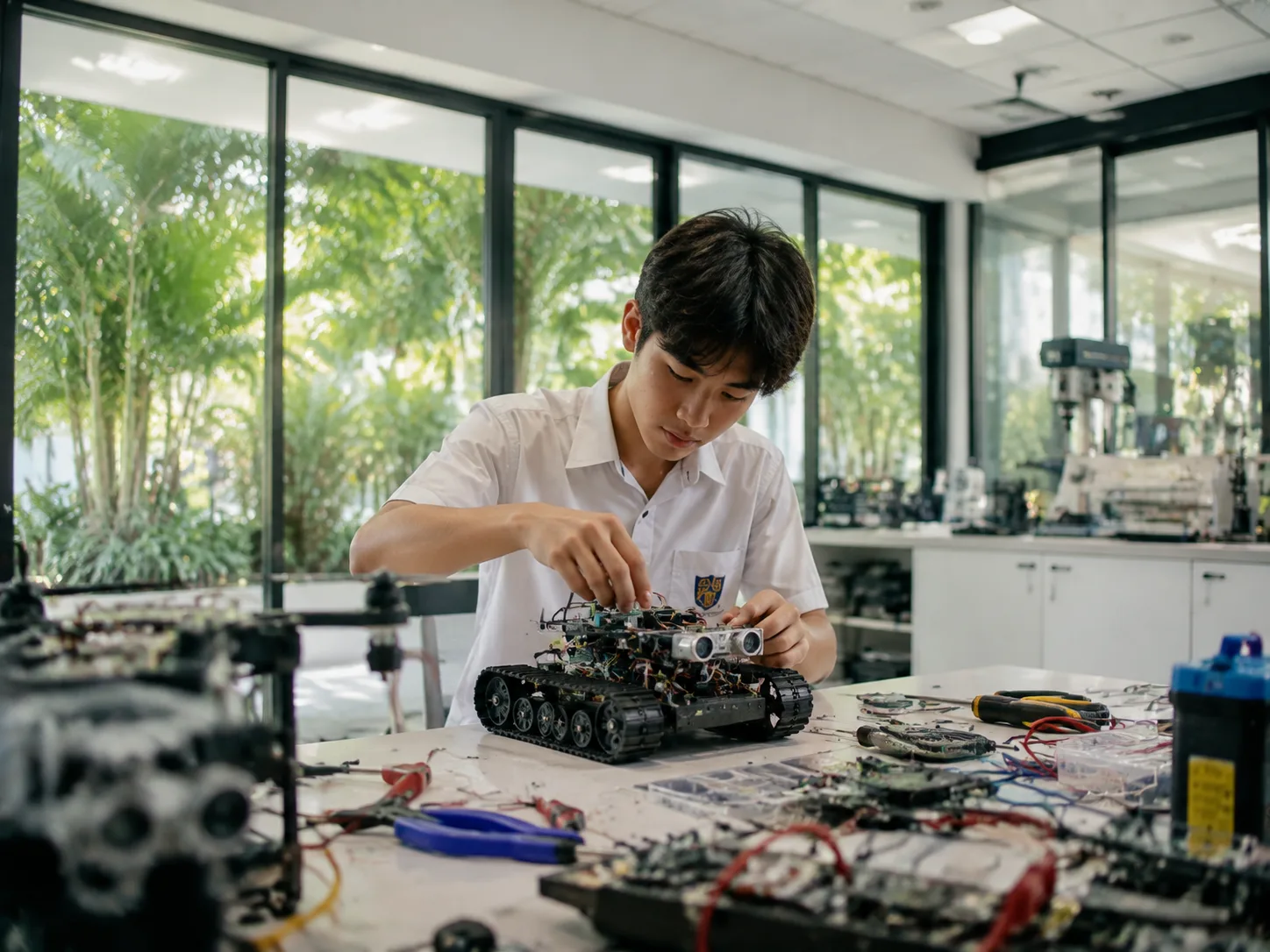
It covers Grades 7 through 12, so ages 11 to 18, and it runs on the Canadian Alberta Curriculum alongside Cambridge International IGCSE options. What’s new on campus is worth knowing about too: proper STEM chemistry and physics labs, an AI and robotics suite, an entrepreneurship center, and the APEX Lions Football Academy for kids who want sport built into their week rather than bolted on.
Here’s the part I think gets overlooked. Lighthouse sits in the THB 288,000 to 297,000 range for secondary, which puts it firmly in the mid-tier bracket next to some of the pricier northern campuses. If you’re a family trying to make the numbers work without giving up on solid facilities or a proper secondary pathway, this is the kind of option worth putting on your list, not just a fallback.
Glenalmond Phuket – A Scottish Heritage Brand Lands at Thanyapura
This one isn’t an expansion, it’s a brand new school, and it’s the name everyone’s been asking me about lately.
Glenalmond Phuket opens this August as the first overseas campus of Glenalmond College, a school founded in Perthshire, Scotland, all the way back in 1847. That’s a genuinely old institution putting down roots here for the first time, which is a different kind of story than the campuses simply adding classrooms.
It’s set up inside the Thanyapura Sports and Health Resort in Thalang, opening for Early Years and Primary, Years 1 through 6. Key Stage 3, Years 7 through 9, has already been added on top of the original plan, apparently because local demand for it was stronger than expected before the doors even opened.
The curriculum blends the English National Curriculum with Singapore Mathematics, compulsory Mandarin, and digital literacy covering AI and coding, so it’s not a straightforward British import. On facilities, you’re looking at STEM labs, a mindfulness room, a lecture theatre, a 450-seat auditorium, and full access to Thanyapura’s 50-metre pool, athletics tracks and tennis courts.
Fees run THB 750,000 for Years 1-6 and THB 950,000 for Years 7-9, plus a THB 200,000 placement fee. Not a small number, and worth budgeting for properly.
And Watch This Space – NLCS Phuket in 2028
Nothing to sign up for yet, but worth knowing about. NLCS Phuket, North London Collegiate School, is confirmed to open in Cherng Talay in August 2028, so we’ve got a few years before it’s a real option, not just a name on a press release.
When it does open, it’s set to be purpose-built for around 1,000 day and boarding students, from Early Years right through to Year 13. Plans include a 50-metre swimming pool, a performing arts center, and a university counseling center, so it’s clearly aiming to sit alongside the island’s bigger K-12 campuses rather than start small.
If you’ve got a toddler right now, this one might genuinely be on your timeline. Worth a mental bookmark.
If you’re the type who wants it all in one place before you start comparing on paper, here’s the cheat sheet.
| School | Area | Curriculum | Annual Fees (approx) | What’s New |
| HeadStart | Wichit / Cherngtalay | Cambridge, ONESQA | THB 347,000-540,000 | New sports pitch, extra primary stream |
| BISP | Koh Kaew | English National, IB, IGCSE | THB 470,000-935,000 | Expanded primary classes |
| Lighthouse | Chalong / Rawai | Alberta, Cambridge IGCSE | THB 288,000-297,000 | Rawai secondary fully operational |
| Glenalmond | Thalang (Thanyapura) | English National, Singapore Maths | THB 750,000-950,000 | New campus, opens August 2026 |
| NLCS | Cherng Talay | TBC | TBC | Opens 2028 |
Why Is This Happening Now?
Families Are Moving Here to Stay, Not Just to Visit
Phuket used to be a place foreign families visited, or maybe retired to once the kids were grown. That’s shifted. The families I meet now are younger, working, and here full time, not just for a few months a year.
A lot of that comes down to visas. The Destination Thailand Visa, introduced back in 2024, opened the door for digital nomads and remote workers to live here legally for up to five years, and it brought in a wave of younger families with primary-school-age kids. Then there’s the Long-Term Resident visa, which offers a full ten years of residency along with a flat 17% personal income tax rate, and tends to attract more established professionals and higher earners.
I get asked constantly which route makes sense for a given family’s situation, honestly enough questions that it probably deserves its own guide (and it has one, if you want the full breakdown). But the short version is: these visa options are a big part of why school demand has shifted from occasional enrolments to genuine long-term planning.
Geopolitics Is Playing a Role Too
It’s not just visas pulling people here, it’s what’s pushing them out of somewhere else. Ongoing instability across parts of Eastern Europe, Western Europe, the UK, China and East Asia has sent a fair amount of capital, and families, looking for somewhere more stable to settle.
Russian families have become a visible presence in both the northern villa communities and the more relaxed southern pockets of the island. Alongside them, Western European, British and mainland Chinese families continue to make up a strong share of enrolment at the more established tier-one schools. It’s less a single trend and more several different push factors landing on the same island at the same time.
What This Means If You’re House Hunting Too
Here’s the part that actually affects your day to day life, not just your kid’s classroom. Where you choose to live and which school you choose are no longer separate decisions on this island, they’re basically the same decision. Once you know which campus your kids are headed to, your housing search narrows fast, whether you like it or not. Let’s get into what that actually looks like on the ground.
The North vs the South – Two Very Different School Runs
Once you start looking at Phuket school catchment areas, you notice the island basically splits into two very different worlds.
The north and central corridor, think Cherng Talay, Thalang, and Koh Kaew, has become the big-campus zone. BISP, UWC Thailand, Glenalmond, HeadStart Cherngtalay, and eventually NLCS are all clustered here, and the housing around them follows suit. Developments in Laguna, Layan, and Pasak tend to draw corporate executives and higher-income expat families who want the full package: large campus, boarding options, sports facilities, the lot.
Head south to Rawai, Chalong, and Wichit, and the picture changes. This is where HeadStart Chaofah City, BCIS, and Lighthouse Secondary sit, and it’s a genuinely different market, more mid-tier pricing, more flexible curricula, less about sprawling grounds and more about finding the right fit for your budget and your kid.
Neither side is objectively better. It really comes down to what your family needs and what you’re willing to pay for it.
The 10 to 15 Minute Rule
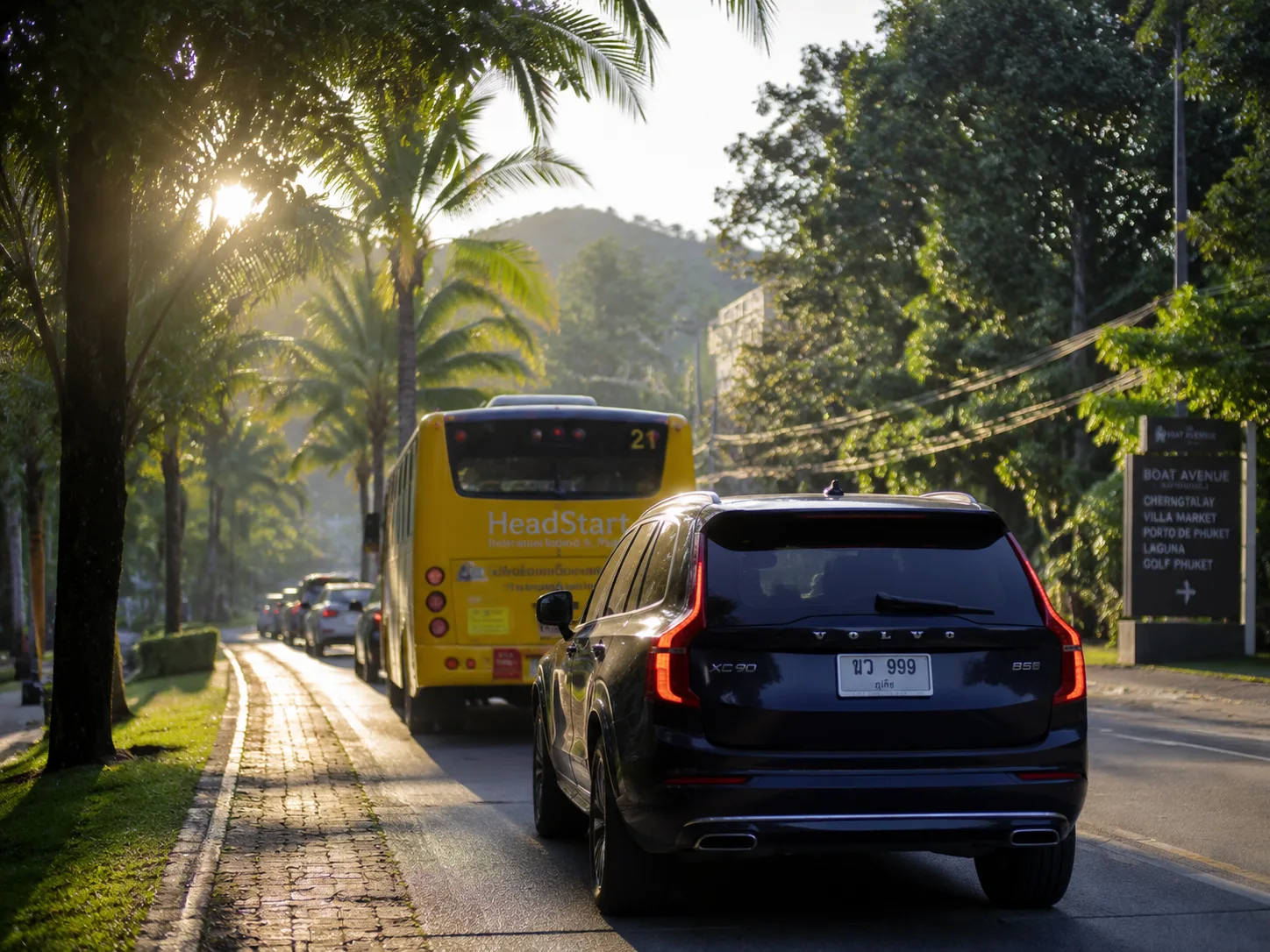
Phuket doesn’t have a train or a metro to fall back on, so everything runs on the road network, and that network was not built for how many of us are on it now. Thep Krasattri Road, Highway 402, and the Chalong to Kathu corridor are the worst offenders. I’ve sat through a 12 kilometre stretch that took nearly 45 minutes at 7:30 in the morning, and I know I’m not the only one.
That’s why the map distance to a school stops mattering much once you’ve actually lived here. What matters is the drive time at the exact hour you’ll be doing it, every single school day. Most families I know end up settling on a strict 10 to 15 minute radius from their chosen school, not because it looks neat on paper, but because anything further turns your mornings into a genuine ordeal.
What Rent Looks Like Near Each School
If you’re trying to actually budget this out, here’s roughly what you’re looking at. Phuket villa rental prices near schools vary a lot depending on which corridor you’re in, so it’s worth knowing the range before you start scrolling listings.
Around Cherng Talay, Bang Tao, and Layan, family pool villas typically run THB 80,000 to 150,000 a month, and a high-end 4-bedroom can push up to THB 180,000. This is the price of being close to BISP, Glenalmond, and the future NLCS campus, so you’re paying for proximity and for the surrounding infrastructure that comes with it.
The Koh Kaew corridor, right next to BISP, sits even higher again, with luxury 5-bedroom villas averaging around THB 300,000 a month. That’s a serious number, and it tells you a lot about how tight demand is in that specific pocket.
Head south to Rawai and Chalong, near Lighthouse and BCIS, and multi-bedroom pool villas come down to a more manageable THB 50,000 to 110,000. Go further inland toward Thalang and Pa Khlok, near Glenalmond and UWC, and you’ll find detached homes and eco-villas from THB 45,000 to 90,000, often with more land and fewer neighbours.
The pattern is pretty consistent: the closer and more central you get, the more you pay for it. Inland and southern options buy you breathing room instead.
Before you sign anything, do a few of these checks first. They’ll save you a lot of second-guessing later.
Before You Sign a Lease Near a School
- Drive the route yourself at actual drop-off time, not midday when the roads are empty
- Ask the school directly whether there’s a waitlist for the year group you need
- Find out if tuition is locked in for multiple years or reviewed annually
- Match the curriculum to where your child might head for university later on
- Consider a 2 to 3 year lease if you want price stability near the tier-one schools
How Phuket Compares to Bangkok, Chiang Mai and Koh Samui
We looked at other parts of Thailand before settling here, so I get why people ask about this.
Bangkok has the most schools by far, and it’s built for corporate expats and embassy families who want everything close by. Campuses tend to be high-density and vertical, plugged straight into the mass transit system, which is genuinely convenient. What you’re trading for that convenience is city living: higher costs across the board and traffic that rivals anything Phuket throws at you.
Chiang Mai comes up a lot too, mostly because tuition is noticeably lower, typically THB 150,000 to 400,000. The lifestyle is slower, which appeals to some families. But it’s landlocked, and the seasonal air quality issues, what everyone up there calls “smoky season,” are a real consideration if you’ve got young kids. The school facilities also tend to be smaller than what you’d find here.
Koh Samui is the newer story, an island market on the rise, with residential real estate valued at THB 30.3 billion. But its education sector hasn’t caught up yet, it’s mostly small, boutique primary schools without the scale or sports facilities Phuket now has.
Which brings me to Phuket’s actual edge: schools here are increasingly built around wellness and athletics as much as academics, campuses inside resorts, proper sports facilities, that whole package. It’s a different kind of trade-off, and for a lot of families, it’s the one that fits.
What’s Coming Next
This isn’t a one-off wave that settles down once the current building work finishes. HeadStart Cherngtalay is still working through adding secondary year groups, Key Stages 4 and 5 included, and Glenalmond is planning to grow year by year into a full secondary school rather than launching complete from day one. Add NLCS bringing 1,000 students into the northern corridor by 2028, and competition among the bigger schools is only going to get tighter, not looser.
Underneath all of it, the capacity pressure hasn’t actually gone away. Tier-one schools still carry real waitlists, and applying 6 to 12 months ahead is becoming the norm rather than the exception. As today’s primary kids move up, that pressure is shifting toward secondary places too, which is where I’d expect the next real bottleneck to show up.
Then there’s the road situation. Srisoonthorn Road and Highway 402 are already strained, and without real infrastructure investment, that could genuinely limit how much more these campuses can grow, no matter how much demand there is.
As a parent with kids still working through this system myself, that’s the piece I’m watching most closely: not which school opens next, but whether the roads and the secondary spots can actually keep up.
FAQs
Which international school in Phuket has the best reputation?
Honestly, there isn’t a single “best,” it depends what you’re after. BISP and HeadStart both carry strong dual accreditation and solid academic results. Lighthouse and Glenalmond bring their own strengths in curriculum and facilities. Look at accreditation, then match the curriculum to your family’s plans, that matters more than any ranking.
How much does an international school in Phuket cost per year?
Across the schools covered here, fees run roughly from THB 288,000 up to over 950,000 a year, before extras like placement fees. What actually moves the number is the age group (secondary costs more than early years), whether boarding is involved, and one-time entry or endowment fees on top.
Is it hard to get a place at a Phuket international school?
At the tier-one schools, yes, it can be. BISP in particular has active waitlists for entry-level primary grades. My advice, and what I tell other parents, is to apply 6 to 12 months ahead of when you actually need the spot, not when the move is already happening.
Where should I live if my kids go to school in the north of Phuket?
Cherng Talay, Pasak, and Layan are the obvious clusters, close to BISP, Glenalmond, and the future NLCS campus. If you want more space and a quieter setting, inland Thalang is worth a look too, still within a reasonable drive of the same schools.
Where should I live if my kids go to school in the south?
Rawai, Nai Harn, and Chalong are your main options down south, all within easy reach of Lighthouse and BCIS. It’s a more relaxed, less built-up part of the island, and generally kinder on the budget than the northern corridor.
Do I need a visa to move to Phuket with my family?
Yes, and the two most relevant options right now are the Destination Thailand Visa (DTV) for remote workers and digital nomads, and the Long-Term Resident (LTR) visa for skilled professionals wanting a longer runway. I’ve written a full breakdown of both if you want the details: Phuket visa guide
Five schools moving at once isn’t just school news, it’s a decent snapshot of where Phuket itself is headed. Whether you’ve got kids in the system already or you’re still weighing the move, this is worth keeping an eye on over the next couple of years.
I’d love to hear what you’ve noticed too, a new build near your regular route, a waitlist that finally moved, anything. Drop it in the comments. And if you’re still sorting out the bigger picture of settling here, our Moving to Phuket guide is a good place to start.
If you want to keep exploring the island without the noise, we share one smart, local roundup each week in Phuket Community.
It’s focused on life in Phuket, written for residents, expats, and visitors who want the real island intel, not tourist clichés.
- Local knowledge that actually matters
- Delivered every week
- Because living well here starts with knowing what’s really going on
You can subscribe here: https://phuketcommunity.beehiiv.com or check out our app here: https://app.phuketcommunity.com