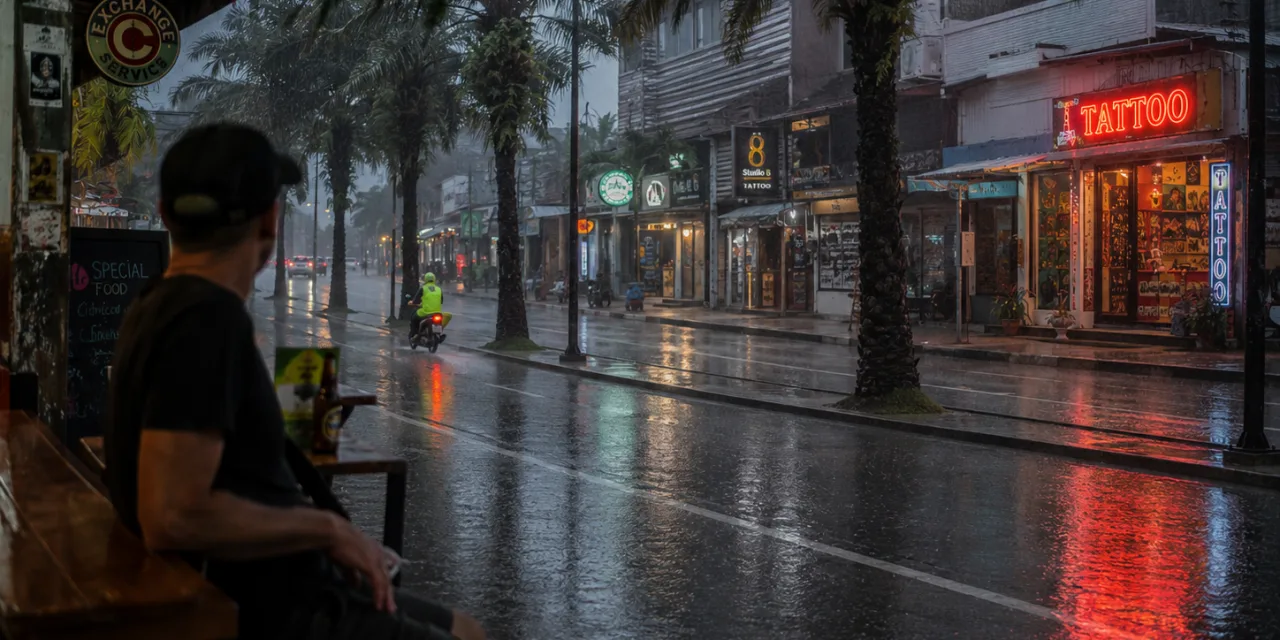
Thinking about spending your first Phuket Rainy Season on the island? Don't believe the myths. This practical guide for expats, digital nomads, and long-term residents reveals what life in Phuket is really like during monsoon season. Learn how to avoid flooding hotspots, deal with humidity and mold, find safe beaches, stay productive while working remotely, and discover the hidden advantages of Phuket's low season. From local survival tips to insider recommendations, here's how experienced residents don't just survive the Phuket Rainy Season, they learn to love it.
Table of Contents
Picture this.
It’s your first June in Phuket.
You’ve just settled into your condo, the beach photos on Instagram still look incredible, and then suddenly your Facebook feed starts filling up with flood videos from Patong, dramatic weather warnings, and posts from nervous newcomers asking if they should stock up on supplies.
A few minutes later, someone in an expat group shares a video of a scooter pushing through knee-deep water. Another person claims it rains for months without stopping. Before long, you’re staring out the window wondering if you’ve accidentally moved to the wrong tropical island.
I get it.
Almost every long-term expat I know had the same reaction during their first Phuket rainy season.
The funny thing is that most of those fears disappear pretty quickly once you experience the Phuket monsoon season for yourself.
Yes, it rains. Sometimes hard.
Yes, certain roads flood, traffic gets messy, and you’ll probably learn the value of a good weather app faster than expected.
But the reality rarely matches the horror stories.
Many mornings are still perfect for a workout, a coffee run, or a trip across the island. The beaches are quieter. The hills turn a deep shade of green. Restaurants that normally need reservations suddenly have empty tables. Life slows down in a way many residents come to appreciate.
In fact, ask enough long-term expats about their favourite time of year in Phuket and you’ll hear a surprising answer.
For plenty of them, it’s low season.
The crowds disappear, the island breathes again, and Phuket starts feeling a lot more like a community than a tourist destination.
The trick is knowing how to adapt.
Here’s what locals and long-term residents actually do to thrive during Phuket’s rainy season.
The Biggest Myth About Phuket’s Rainy Season
It Doesn’t Rain All Day, Every Day
If you’ve never experienced the rainy season in Phuket before, there’s a good chance you’ve got a pretty dramatic picture in your head.
Dark skies. Endless rain. Flooded streets. Weeks spent trapped indoors wondering why you moved to a tropical island in the first place.
That was certainly my expectation during my first Phuket monsoon season.
I remember arriving in June and treating every weather forecast like a natural disaster warning. I carried an umbrella everywhere. Not just in my backpack. Actually in my hand. Every day.
I’d walk into coffee shops with it. Take it to the gym. Bring it on quick trips to 7-Eleven. Looking back, I probably spent more time carrying that umbrella around than actually using it.
The biggest surprise?
Most days weren’t anything like I expected.
One of the most common misconceptions about the rainy season in Phuket is that it rains continuously for months. People imagine grey skies from sunrise to sunset, interrupted only by heavier rain.
The reality is much more interesting.
A typical day in Phuket weather June often starts fairly normally. You wake up to warm temperatures, maybe a few clouds hanging around the hills, and enough dry weather to get on with your day. Many mornings are perfectly usable for a beach walk, gym session, market run, or coffee meeting.
Then the humidity starts building.
Locals can usually feel it before they see it.
The air gets heavier. The clouds begin stacking up over the island. By afternoon, the atmosphere feels like it’s holding its breath.
That’s when the rain often arrives.
Not as a gentle drizzle, but as one of those classic tropical downpours that seems determined to empty half the Andaman Sea onto your street in thirty minutes.
The first time you experience one, it’s impressive.
Palm trees start swaying. Rain bounces off rooftops. Roads briefly turn into streams. Then, almost as quickly as it arrived, the storm moves through.
An hour later, people are back outside ordering iced coffees.
Understanding the difference between cloud cover and rainfall is where many newcomers get caught out.
During the Phuket monsoon season, you’ll often see cloudy forecasts stretching across entire weeks. New arrivals interpret that as seven days of non-stop rain.
That’s rarely what happens.
Cloud cover is a major feature of the rainy season in Phuket. The sky can remain overcast for large parts of the day while barely producing any rain at all. You might spend hours under grey skies and never open an umbrella. Then a short but intense storm arrives late in the afternoon before clearing again.
It’s one reason why experienced residents don’t automatically cancel plans just because the forecast looks terrible.
They know a rainy icon on a weather app doesn’t tell the whole story.
Of course, there are days when the weather settles in and rain hangs around longer than expected. This is still monsoon season, after all. But the image of endless rainfall simply doesn’t match daily life for most people living here.
What catches newcomers off guard isn’t the amount of rain.
It’s where the rain falls.
Because here’s something many people don’t realise during their first year on the island: Phuket doesn’t experience weather evenly.
Someone sitting in a cafe in Rawai can be having a completely different day from someone living in Kamala. One side of the island might be dealing with strong winds and heavy squalls while another barely gets more than a passing shower.
Once you understand Phuket’s geography and the island’s surprisingly distinct microclimates, the rainy season starts making a lot more sense.
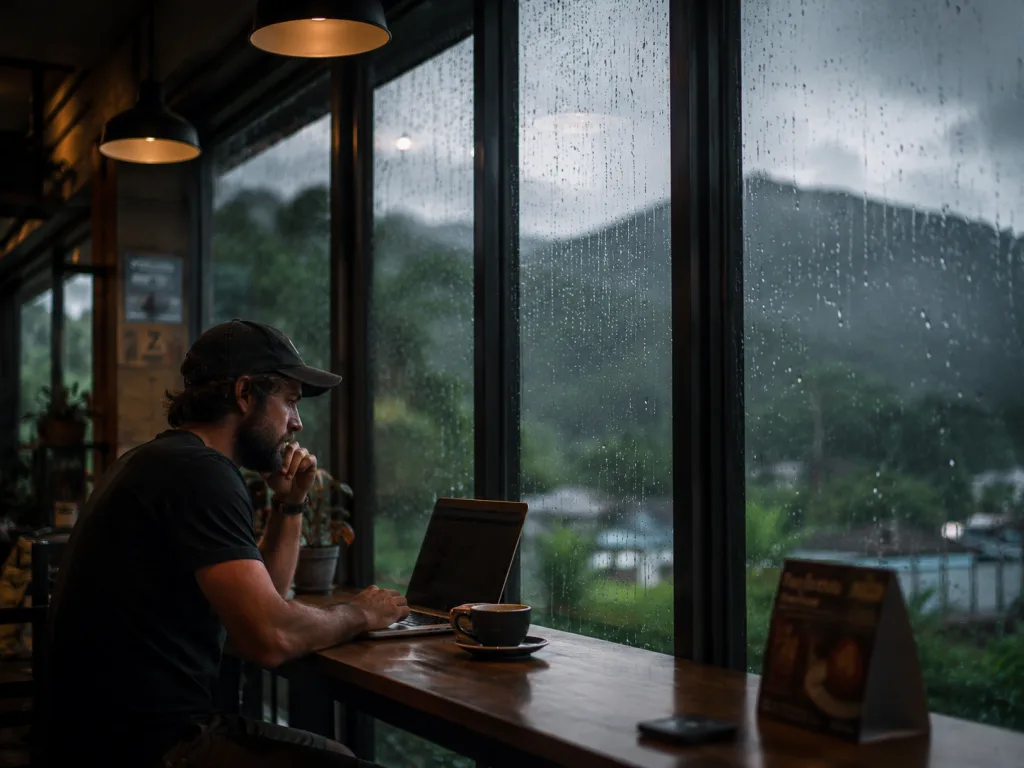
Understanding Phuket’s Microclimates Could Save You a Lot of Frustration
One of the biggest mistakes newcomers make is assuming Phuket experiences the same weather everywhere.
It doesn’t.
In fact, two expats can live just 20 minutes apart and come away with completely different opinions about living in Phuket during rainy season.
I’ve seen it happen countless times.
One friend living in Bang Tao will message the group chat complaining about horizontal rain, rough seas, and another afternoon stuck indoors. Meanwhile, someone in Chalong replies with a photo of a dry road and an iced coffee sitting in the sunshine.
Neither of them is exaggerating.
They’re simply experiencing different versions of the same storm.
Understanding Phuket’s geography is one of those local insights that can make your first monsoon season significantly easier.
Why the West Coast Feels Like a Different Island
If you’ve spent any time researching Phuket before moving here, chances are you’ve looked at places like Patong, Kata, Karon, or Bang Tao.
It makes sense.
These are some of the island’s most famous beach destinations. They’re beautiful, lively, and packed with everything newcomers need.
The catch is that they sit directly on Phuket’s west coast.
During the Phuket monsoon season, that’s exactly where the weather arrives first.
The southwest monsoon pushes moisture across the Andaman Sea before slamming straight into Phuket’s western shoreline. That means areas like Patong, Kata, Karon, and Bang Tao often experience stronger winds, rougher seas, and more dramatic storms than other parts of the island.
You feel it immediately.
The waves are bigger.
The beaches become rougher.
The wind has a habit of turning umbrellas into modern art projects.
I remember meeting a newly arrived expat in Kata during one particularly stormy June. He’d been on the island for two weeks and was convinced the entire rainy season was going to be relentless.
His evidence?
The weather outside his apartment.
A few days later he drove to Phuket Town for lunch and couldn’t believe how different the conditions were.
The sky was still cloudy, but the atmosphere felt calmer. Less wind. Less chaos. A completely different mood.
That’s because Phuket’s central mountain range quietly changes the game.
Why Many Long-Term Expats Prefer the East Coast During Monsoon
As you spend more time on the island, you’ll notice many long-term residents gravitate toward areas like Phuket Town, Chalong, Rawai, and Cape Panwa.
Part of that comes down to lifestyle.
Part of it comes down to weather.
The mountains running through the middle of Phuket act like a natural shield. By the time storms move across the island, some of their intensity has already been absorbed by the higher terrain.
The result is a noticeably different rainy-season experience.
Phuket Town often feels more predictable than the west coast. You’ll still get heavy rain, but the strong coastal winds are usually less aggressive.
Chalong tends to be calmer as well. For many expats, it’s a practical base with good access to schools, gyms, coworking spaces, and shopping centres. During monsoon season, that convenience becomes even more valuable.
Rawai has developed a loyal following among long-term residents for similar reasons. The atmosphere feels more local, the pace is slightly slower, and many people find the weather easier to live with compared to some west coast locations.
Then there’s Cape Panwa.
Ask longtime residents where they escape when the west coast gets particularly rough and Cape Panwa comes up surprisingly often. While the rest of the island is watching red flags flap violently on the beaches, Panwa can feel remarkably sheltered.
This doesn’t mean the east coast stays dry.
Far from it.
Rain still arrives. Storms still pass through. Roads can still flood after particularly heavy downpours.
The difference is often in how the weather feels day to day.
Less wind.
Calmer water.
Fewer afternoons spent watching furniture slide across balconies.
For anyone building a life here rather than spending a two-week holiday on the beach, those differences matter more than people realise.
It’s one reason many experienced residents give very different advice from first-time visitors when discussing the Best Areas to Live in Phuket.
The conversation changes once you’ve experienced a full year on the island.
The beach view that looked perfect in January might feel very different during a windy week in June.
And that’s really the lesson here.
The rainy season in Phuket isn’t just about understanding weather forecasts.
It’s about understanding where you are on the island.
Once you realise Phuket has its own collection of microclimates, many of the frustrations newcomers experience suddenly start making sense. The storm isn’t necessarily following you around.
You might just be standing on the side of the island that gets hit first.
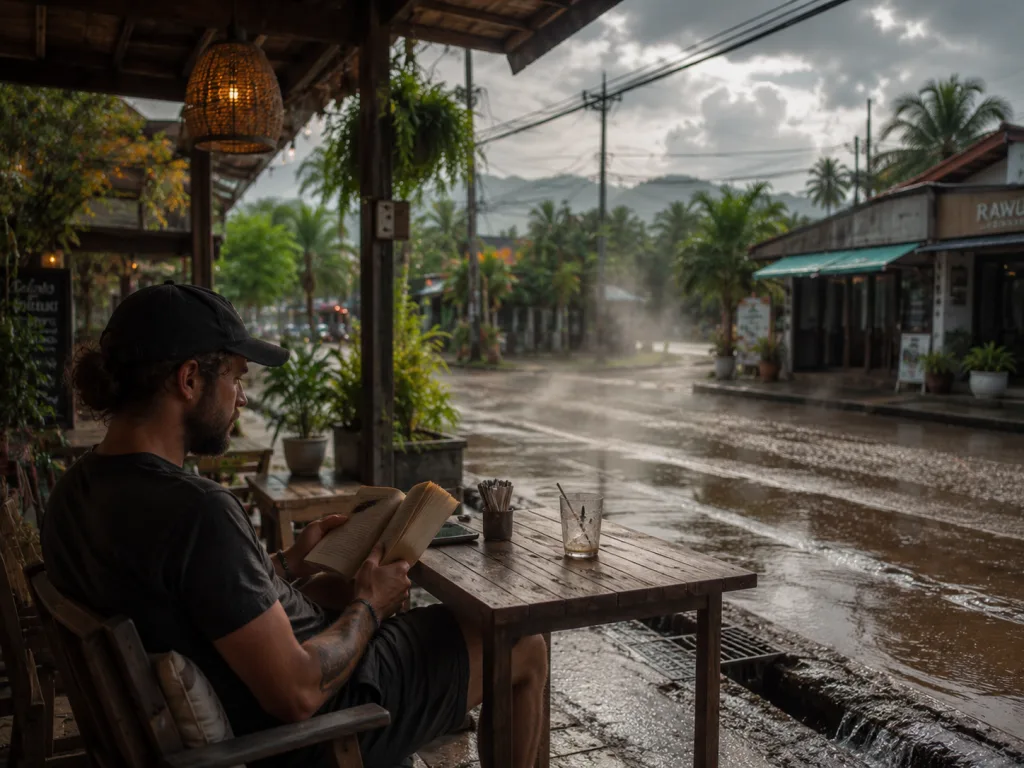
Phuket Flooding Hotspots Every New Expat Should Know
Every expat in Phuket has a flood story.
Some are mild. A wet foot outside 7-Eleven. A Grab driver cancelling because the road ahead looks more like a canal. A pair of shoes sacrificed to the monsoon gods.
Others are more expensive.
Scooters that cut out in knee-deep water. Cars that need towing after someone confidently drove into a brown puddle that turned out to be much deeper than expected. Laptop bags held above heads while people wade across a road they really should have avoided.
This is where the Phuket rainy season gets practical very quickly.
The rain itself is manageable. The real headache is what happens when a heavy tropical downpour lands on roads, drains, construction zones, hillsides, and low-lying neighbourhoods that were not exactly designed for perfect monsoon drainage.
That is why knowing the main Phuket flooding areas can save you a lot of stress, time, and money.
Why Flooding Happens So Fast in Phuket
Phuket is hilly in the middle and heavily developed around the edges.
During heavy rain, water runs quickly down from higher ground into towns, junctions, beach roads, and residential areas. Add blocked drains, construction runoff, narrow canals, high tides, and traffic that has nowhere to go, and you get the classic flash floods Phuket residents know too well.
The water can rise fast.
It can also disappear surprisingly fast.
That is the strange thing newcomers often miss. Phuket flooding is usually not a slow, week-long disaster. More often, it is a sudden burst of chaos after a serious downpour. A road that looks impossible at 3:30pm might be passable again by 5pm.
Not always.
But often enough that locals have built an entire lifestyle around waiting it out.
Srisoonthorn and Koh Kaew
Srisoonthorn and Koh Kaew are two areas worth treating with respect during heavy rain, especially if you are moving between the north of the island, Laguna, Boat Avenue, Phuket Town, or the airport.
Parts of Thepkrasattri Road can turn into a proper headache after a storm. This is one of the island’s main arteries, so when it slows down, half the island seems to feel it.
Srisoonthorn can get messy because of runoff from surrounding developments and higher ground. Koh Kaew also has low-lying pockets where water collects quickly. If you have school runs, airport transfers, or meetings across the island, this is where timing matters.
A mistake I see newcomers make is trusting travel time from Google Maps during perfect weather.
Big mistake.
A 35-minute drive can turn into a slow-motion documentary about regret once rain hits the northern roads.
Patong
Patong is beautiful, busy, chaotic, and during heavy rain, very capable of turning into a shallow lake with neon signs.
The town sits in a bowl-like setting between hills and the sea. Water comes down from the slopes, traffic backs up, drains struggle, and suddenly streets like Sai Nam Yen, Na Nai, and areas around the lower parts of town start collecting water.
Patong Hill is its own beast.
After heavy rain, the road between Kathu and Patong needs extra caution. Landslides, fallen trees, slick corners, and slow traffic are all part of the rainy-season reality.
If you live in Patong or commute there for work, do not wait until the storm is directly above you to start thinking about your route. By then, everyone else has had the same idea.
Kamala
Kamala is another spot where newcomers can get surprised.
On a sunny day, it feels calm and easy. During a serious downpour, certain roads around the canal and low-lying parts of town can flood quickly.
The issue in Kamala is not just rain falling from the sky. It is water trying to move through town and out toward the sea while drains and canals are already under pressure.
That is why one street can be fine while another nearby road becomes a brown, slow-moving soup.
If you are living in Kamala during the rainy season, learn your side roads before you need them. Do not discover your backup route while already ankle-deep in water.
Chalong Circle
Chalong Circle deserves its own little warning label.
Anyone living in the south knows this junction can become a bottleneck at the best of times. Add heavy rain and suddenly the circle feels like the island’s entire traffic system has paused to reconsider its life choices.
Water can pool around nearby roads, especially along sections leading toward Chao Fa roads, Rawai, and Kata. Because Chalong connects so many parts of the south, problems here ripple outward quickly.
For expats living in Rawai, Nai Harn, Chalong, or heading toward schools and gyms, this area can decide your whole afternoon.
If the sky looks angry and you have a meeting on the other side of Chalong Circle, leave early or wait. Those are usually the only two intelligent options.
Rawai Routes
Rawai is popular with long-term expats for good reason. It has community, restaurants, gyms, quieter beaches nearby, and a more lived-in feel than the main tourist strips.
But Rawai routes can still flood.
Roads around low-lying sections, back routes toward Nai Harn, and stretches connecting Rawai to Chalong or Kata can collect water during heavy rain. The issue is rarely the whole area shutting down. It is usually one awkward stretch of road that blocks the route everyone wants to use.
That is how rainy-season traffic works here.
One bad patch creates a queue. The queue creates impatient drivers. The impatient drivers create a new problem.
Very Phuket.
The Drain-Off Principle
This is the rule I wish someone had explained to me earlier.
During the rainy season, experienced residents do not always try to beat the flood.
They wait it out.
I call it the Drain-Off Principle.
If heavy rain has just smashed through your area and the roads are flooding, do not automatically jump on your scooter or force your car through it. Stop somewhere dry. Order a coffee. Answer a few messages. Let the drains do their work.
Many flash floods in Phuket ease within an hour or two after the rain stops. Not every time, but often enough that waiting is usually smarter than gambling with your engine, your phone, or your ankles.
This is why you will see locals sitting calmly in cafes during absolute chaos outside.
They are not lazy.
They are experienced.
Practical Advice for Scooter Riders
Scooters are convenient in Phuket, but the rainy season changes the equation.
Floodwater hides everything.
Potholes. Loose drain covers. Gravel. Oil. Broken glass. Random bits of construction debris that somehow appear from nowhere.
If water is covering the road and you cannot see the surface, do not ride through it unless you know the road well and the water is clearly shallow.
Also, remember that painted road lines become slippery when wet. So do metal drain covers. So do those shiny patches near intersections that look harmless until your back wheel decides to dance.
Keep a rain poncho under your seat. Keep your phone in a waterproof pouch. And if the storm is properly heavy, accept defeat for 30 minutes.
Your ego dries faster than your medical bill.
Practical Advice for Car Drivers
Cars feel safer, and they usually are, but they are not invincible.
The big danger is assuming your car can handle water just because the pickup truck in front of you did.
Different vehicles have different clearance and air intake positions. Drive through deep water too confidently and you risk engine trouble that will ruin your week.
If you must cross a flooded section, go slowly and steadily. Do not create a big wave. Do not stop in the middle. Watch what happens to vehicles ahead of you.
And if you are unsure?
Do not do it.
There is no shame in turning around. There is plenty of shame in standing beside your stalled car while traffic squeezes past and everyone knows exactly what happened.
Practical Advice for Remote Workers
Remote workers need a rainy-season backup plan.
If your work depends on stable internet, do not assume your condo Wi-Fi will behave during storms. Power cuts, router issues, and flooded access roads can all derail your day.
Have a second place ready before you need it.
A coworking space. A reliable cafe. A friend’s place with better backup power. Anywhere you can get online if your building suddenly becomes a humid cave with no signal.
Also, avoid scheduling tight cross-island travel during stormy afternoons. That 4pm Zoom call will not care that Chalong Circle became a swimming pool.
The big lesson with Phuket flooding is simple.
Do not panic.
Do not rush.
Do not copy the bravest person on the road.
Learn the hotspots, respect the rain, and build a little flexibility into your day. Once you do that, the Phuket rainy season becomes much easier to manage.
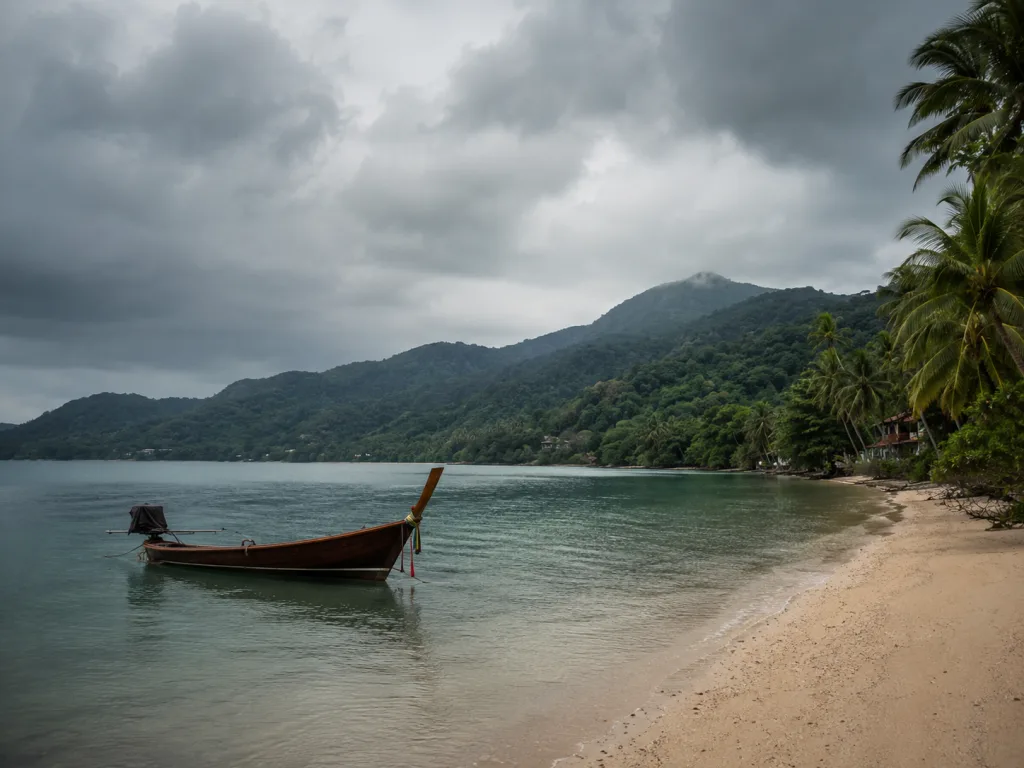
The Rainy Season Survival Kit Every Phuket Resident Needs
Most newcomers think the biggest challenge during the Phuket rainy season is the rain itself.
It isn’t.
The real battle happens after you close your front door.
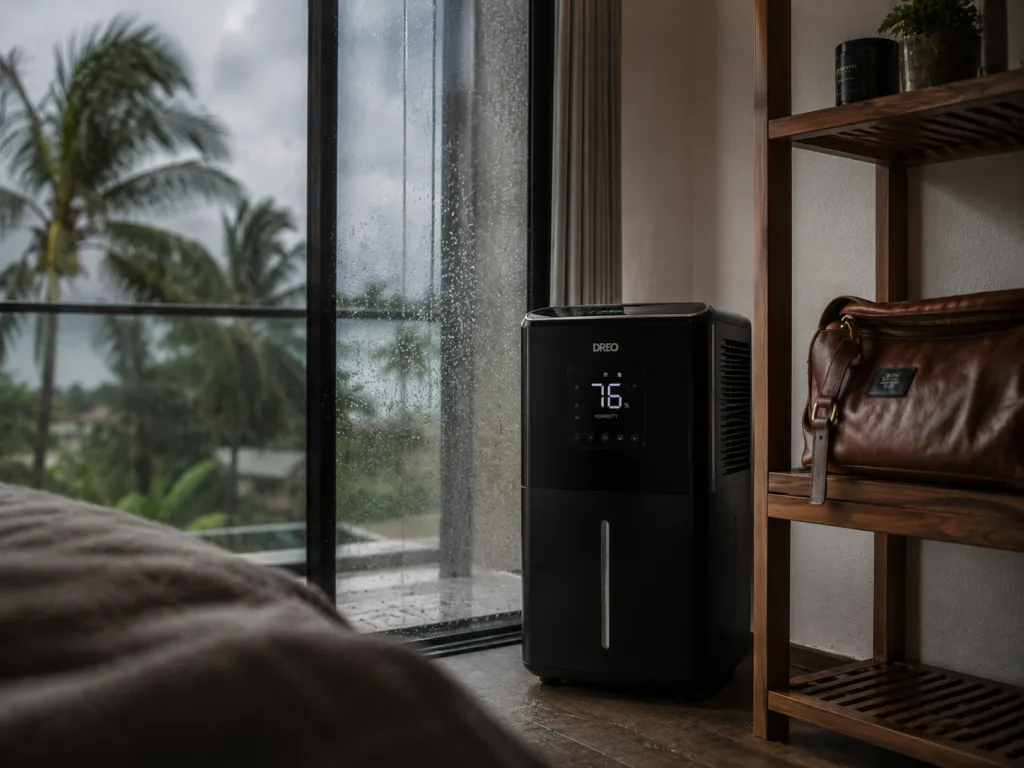
Humidity creeps into places you didn’t know humidity could reach. Clothes refuse to dry. Towels stay damp for days. Leather starts behaving strangely. Electronics feel sticky. And if you’re unlucky, mold quietly starts moving into your condo without paying rent.
Ask almost any long-term resident about their first rainy season and you’ll hear some version of the same story.
Mine involved a wardrobe.
Home Essentials
A few years ago, after a particularly wet stretch of weather, I opened my wardrobe to grab a jacket I hadn’t worn for a few weeks.
Something looked off.
At first I thought it was dust.
It wasn’t.
Small patches of mold had started appearing on a leather belt, a pair of shoes, and part of a jacket hanging in the back corner. The worst part? Everything looked completely normal just days earlier.
That was my introduction to tropical humidity.
It’s also the moment I stopped treating moisture as a minor inconvenience and started treating it like a household management issue.
If you’re living in Phuket during rainy season, there are a few essentials that make life dramatically easier:
A quality dehumidifier
Probably the single best investment you can make.
Many newcomers spend thousands of baht furnishing a condo but hesitate when it comes to buying a dehumidifier. Then they spend months fighting musty smells and damp clothes.
Don’t make that mistake.
Moisture absorbers
Those small containers filled with moisture-absorbing crystals might not look impressive, but they work surprisingly well inside wardrobes, shoe cabinets, storage boxes, and bathroom corners.
Quick-dry clothing
Cotton can take forever to dry during humid weather. Many long-term residents gradually switch to lightweight fabrics that dry faster and stay fresher.
A decent laundry strategy
At some point you’ll realise hanging clothes on a balcony during rainy season is more wishful thinking than an actual drying method.
Portable fans
Air movement is your friend. Even small amounts of airflow can help reduce moisture build-up inside a condo.
Fighting Mold Before It Takes Over Your Condo
One of the least glamorous parts of condo living in tropical Thailand is learning that mold prevention is not something you deal with after you find mold.
You deal with it before it appears.
The combination of warmth, humidity, moisture, and limited ventilation creates ideal conditions for mold growth.
Think about it from mold’s perspective.
A closed wardrobe.
Warm air.
A slightly damp leather bag.
A dark corner that hasn’t been disturbed for weeks.
It’s basically a five-star resort.
That’s why mold prevention Thailand discussions come up constantly in expat groups every rainy season.
The people who stay ahead of the problem tend to follow a few simple habits.
Invest in a Proper Dehumidifier
If you ask long-term residents where to find a good dehumidifier Phuket residents trust, HomePro is usually one of the first recommendations.
Walk into any HomePro branch during rainy season and you’ll notice you’re not the only person shopping for moisture control.
Brands come and go, but the principle remains the same.
A dedicated dehumidifier removes moisture from the air before it settles into walls, furniture, clothing, and soft furnishings.
The difference can be remarkable.
A room that feels sticky and damp can feel noticeably fresher within a day or two of regular use.
Create Better Airflow
One of the biggest problems in condo living is stagnant air.
Many Phuket condos are designed with limited natural airflow. If windows stay closed all day, moisture simply hangs around looking for somewhere to settle.
Whenever weather allows, open windows and encourage air movement through the property.
Even ten minutes of fresh airflow can help.
Fans also make a bigger difference than people realise. They’re not removing moisture directly, but they help prevent damp air from lingering in corners and enclosed spaces.
Keep Wardrobes and Storage Areas Dry
Wardrobes are often the first places mold appears.
The reason is simple.
They’re dark, enclosed, and rarely ventilated.
Leave a little space between clothing items. Avoid stuffing wardrobes completely full. Use moisture absorbers where needed and occasionally leave doors open to allow fresh air to circulate.
This becomes especially important for:
- Leather bags
- Leather shoes
- Jackets
- Suitcases
- Sports equipment
Basically, anything expensive that you don’t want covered in fuzzy surprises.
Don’t Ignore Small Warning Signs
Most mold problems don’t appear overnight.
There are usually clues.
A musty smell when you enter a room.
Condensation on glass doors.
Clothes that never quite feel dry.
Towels that develop an odd smell after only a day or two.
These are all signs that moisture levels are becoming a problem.
Address them early and life stays easy.
Ignore them and you’ll eventually find yourself cleaning things you really didn’t want to clean.
Bathrooms Need Extra Attention
Bathrooms work harder than any other room during the Phuket monsoon season.
Hot showers, poor ventilation, and trapped moisture create ideal conditions for mold growth.
A simple routine helps.
Run the exhaust fan.
Leave the door open when possible.
Wipe excess water from surfaces.
Allow airflow to do its job.
Nothing complicated.
Just consistent.
Your Future Self Will Thank You
One thing I’ve noticed about long-term expats is that the ones who enjoy the rainy season the most usually have the best home setup.
Their condos stay dry.
Their clothes smell fresh.
Their electronics survive.
Their wardrobes aren’t secretly growing ecosystems.
Meanwhile, newcomers often spend their first monsoon reacting to problems as they appear.
The good news is that most of these issues are easy to avoid.
A decent dehumidifier, better ventilation habits, and a little awareness go a long way.
The Phuket rainy season might bring heavy rain outside, but there’s no reason to let moisture take over your home as well.
How Remote Workers and Digital Nomads Stay Productive During Monsoon Season
One of the biggest mistakes remote workers make after moving to Phuket is assuming their condo will always be their office.
That works beautifully in January.
It works most of the time in February.
Then June arrives, the sky opens up, a transformer somewhere decides it’s had enough, and suddenly you’re sitting in a dark apartment staring at a Wi-Fi router that has officially stopped contributing to your career.
This is exactly why many long-term residents develop what I call a Second Camp.
Think of it as your rainy-season backup headquarters.
Not a backup laptop.
Not a backup charger.
A backup location.
Somewhere you can work, take calls, charge devices, and remain productive when your primary setup decides to take an unscheduled holiday.
The smartest digital nomad Phuket residents I know rarely rely on a single workspace. They’ve been through enough rainy seasons to know that flexibility beats frustration every time.
The Second Camp Strategy
I learned this lesson after a stormy afternoon a few years ago.
The weather looked manageable when I started work.
By lunchtime, rain was hammering the windows. A couple of hours later, the power flickered once.
Then twice.
Then disappeared completely.
The internet followed shortly after.
Meanwhile, I had a client call scheduled in less than an hour.
That was the day I stopped treating coworking spaces as a luxury and started treating them as insurance.
A good Second Camp means you always have somewhere to go when:
- Power goes out
- Condo internet fails
- Construction noise becomes unbearable
- Flooding makes your neighbourhood difficult to navigate
- You simply need a change of scenery
During the Phuket rainy season, all five happen more often than you’d expect.
HOMA: The All-In-One Rainy Season Base
If you’re looking for a place that feels built specifically for modern remote workers, HOMA deserves a spot near the top of your list.
Many Phuket coworking spaces focus solely on desks and internet.
HOMA takes a different approach.
The coworking area is excellent, but that’s only part of the appeal.
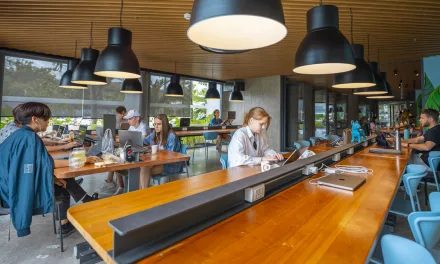
You’ve got reliable workspaces, meeting pods, comfortable seating, food options, fitness facilities, and enough amenities to comfortably spend an entire day there if the weather turns ugly outside.
That’s exactly why so many remote workers use it as their rainy-season safety net.
You don’t need to worry about what happens if the storm lasts longer than expected.
You’re already sorted.
Grind Time: Built for Serious Productivity
For people based around Chalong and the south of the island, Grind Time has earned a strong reputation for good reason.
Some coworking spaces lean heavily into the social side of digital nomad life.
Grind Time feels more focused.
You show up.
You work.
You get things done.
The quiet environment, dedicated work areas, and 24-hour access make it especially useful for people working across international time zones.
If your team is based in Europe, Australia, or North America, having access to a reliable workspace outside traditional business hours becomes incredibly valuable.
Especially when a thunderstorm has just knocked out half your neighbourhood’s internet.
Let’s Work: Productivity With a View
Let’s Work in Rawai offers a slightly different experience.
You still get strong internet, professional workspaces, and meeting facilities, but the atmosphere feels a little more relaxed.
The sea views certainly don’t hurt.
One thing I’ve always liked about Let’s Work is how well it balances focus and community.
Some days you need deep concentration.
Other days you need human interaction after spending too many hours talking to people through Zoom windows.
A good coworking space gives you both.
Sometimes a Cafe Is All You Need
Not every rainy-season problem requires a full coworking membership.
Sometimes your internet is working fine.
You just need a backup location for a few hours.
This is where Phuket’s cafe culture becomes incredibly useful.
Experienced remote workers usually keep a mental list of reliable cafes scattered across the island.
Places they can disappear into when necessary.
Sist.ers Cafe
Sist.ers Cafe in Cherngtalay is one of those spots that feels made for slow, productive mornings.
The setting is peaceful, the atmosphere is relaxed, and it offers enough comfort to settle in with a laptop while the rain does its thing outside.
It’s the sort of place where an unexpected one-hour coffee stop somehow turns into a productive afternoon.
.island
The clean, minimalist design creates a distraction-free environment that’s surprisingly good for focused work.
.island in Chalong is another excellent rainy-day option.
If you’re trying to finish a project while avoiding the temptation to scroll social media every five minutes, this place helps.
Wilson’s Cafe
Wilson’s Cafe in Rawai has quietly become a favourite among many remote workers.
Fast internet, good food, comfortable seating, and enough power outlets to keep a small army of laptops alive.
That combination goes a long way during the Phuket monsoon season.
Build Your Backup Plan Before You Need It
One of the best pieces of advice I can give anyone new to remote work in Thailand is this:
Don’t wait until your internet dies to find a backup workspace.
Visit these places before you need them.
Test the Wi-Fi.
Learn the parking situation.
Figure out how long it takes to get there from home.
Because when a storm is rolling in and your connection suddenly drops halfway through a client call, that’s not the moment you want to start researching coworking Phuket options.
The people who handle the rainy season best are rarely the people with the fastest internet.
They’re the people with the best backup plans.
If you’re still exploring options, our guide to the Best Coworking Spaces in Phuket dives deeper into the work-friendly spots long-term residents rely on throughout the year.
Because during monsoon season, productivity isn’t about having the perfect office.
It’s about having a Plan B before you need one.
The Unexpected Financial Perks of Phuket’s Low Season
Most newcomers look at June in Phuket and see rain.
Long-term expats look at June and see discounts.
That might sound a bit cheeky, but it’s true. The Phuket low season changes the rhythm of the island. The crowds thin out, hotel lobbies get quieter, restaurant bookings become easier, and suddenly the places that felt completely out of reach in January start acting a lot friendlier to local residents.
This is the part of the rainy season many first-year expats miss.
They’re too busy worrying about storm clouds to notice that the island has quietly become better value.
A Phuket long stay expat learns this pretty quickly. Once the high-season rush fades, businesses start shifting their attention away from short-term tourists and toward people who are actually still here. That means staycation deals, spa promotions, resident discounts, long-stay packages, and the kind of midweek offers that make you check the price twice.
I know people who barely leave their neighbourhood during high season because everything feels crowded, expensive, and slightly frantic. Then June arrives and suddenly they’re booking two nights at a resort they’d never touch in December.
Same pool.
Same breakfast buffet.
Same sea view.
Very different price.
Staycations are one of the best rainy-season habits you can pick up in Phuket. You do not need a flight, a suitcase, or a major plan. Sometimes all you need is one night somewhere with a proper bathtub, good air conditioning, a gym, and room service while the rain taps away outside.
Not a bad way to survive monsoon season, is it?
Resorts also become much more flexible during this period. Many offer long-stay packages, dining credits, spa discounts, laundry perks, or reduced nightly rates for guests staying several nights or more. Some properties start quietly courting local residents because they know expats can help fill rooms during slower months.
Wellness offers are another rainy-season win.
Spas, fitness resorts, yoga studios, recovery centres, and wellness hotels often become more accessible once the tourist crowd eases. If you’ve been thinking about doing a reset, trying a recovery package, booking a massage series, or spending a few days somewhere quiet, June can be one of the smartest months to do it.
There’s also something more relaxed about the whole experience.
Staff have more time.
Restaurants feel less rushed.
You can actually have a conversation with the owner of that little place you kept meaning to try.
Even parking gets easier, which might be one of Phuket’s most underrated luxuries.
Resident promotions are worth watching too. Some restaurants, beach clubs, gyms, and hotels run local deals during the Phuket low season, but they do not always shout about them. Sometimes you hear about them through Facebook groups, LINE chats, friends, or simply by asking.
A simple “Do you have any local resident offers?” can go surprisingly far.
Of course, not everything becomes magically cheap. Phuket is still Phuket. There are plenty of places happy to charge high-season prices all year if people keep paying them.
But if you’re flexible, curious, and willing to explore beyond the obvious tourist spots, June can be one of the best-value months on the island.
That’s the funny thing about living here.
At first, rainy season feels like something you need to endure.
Then you discover the quieter roads, the greener hills, the easier bookings, and the better deals.
After a while, you stop seeing low season as the bargain version of Phuket.
You start seeing it as the version of Phuket that finally has room to breathe.
Beating the Monsoon Blues
Most people think the toughest part of Phuket’s rainy season is the weather.
The rain.
The clouds.
The occasional flooded road.
In reality, those things are usually manageable.
What catches many newcomers off guard is something far less obvious.
Isolation.
For months, life in Phuket often revolves around beaches, sunsets, island-hopping trips, outdoor markets, and spontaneous social plans. Then the rainy season arrives and suddenly people spend more time indoors.
Plans get postponed.
Beach days disappear.
That casual social contact you didn’t even realise you relied on starts happening less often.
It’s surprisingly easy to find yourself spending entire days moving between your condo, your laptop, and your local coffee shop.
I’ve seen it happen to plenty of people.
In fact, one of the most common conversations I have with first-year expats around July or August has nothing to do with weather.
It’s usually something like:
“I love Phuket, but lately I feel a bit disconnected.”
That’s the monsoon blues talking.
And the good news is you’re definitely not the only one experiencing it.
The Weather Usually Isn’t The Problem
One thing long-term residents eventually learn is that rainy season rewards people who stay engaged.
The newcomers who struggle the most are often the ones waiting for perfect weather before they start doing things again.
They treat the rainy season like a temporary pause.
Experienced expats treat it like a different season with different activities.
That’s a huge mindset shift.
Instead of asking, “What can’t I do because it’s raining?”
Start asking, “What do locals do during this time of year?”
The answer is surprisingly simple.
They spend more time with other people.
Why Community Matters More During Rainy Season
One of Phuket’s greatest strengths isn’t the beaches.
It’s the people.
The island has an incredibly active Phuket expat community, and many of its best social events actually become more popular during the wet season.
People naturally migrate indoors.
Conversations last longer.
Friendships form faster.
You start seeing the same faces around town.
I’ve met people who built their entire social circle during one rainy season simply because they kept showing up to the same weekly events.
Not networking events.
Not business conferences.
Trivia nights.
The Unexpected Power of Trivia Nights
Now, I’ll admit it.
The first time someone invited me to a pub quiz years ago, I wasn’t particularly excited.
I assumed it would be awkward.
A handful of strangers.
A few random questions.
Maybe a mediocre burger.
Instead, it turned out to be one of the easiest ways to meet people on the island.
Trivia nights have become a rainy-season staple throughout Phuket because they solve a very simple problem.
Nobody has to invent a reason to talk.
The quiz does the work for you.
By the end of the evening you’ve usually laughed with a few strangers, debated an answer nobody was certain about, and exchanged names with people you’ll probably bump into again.
That’s how communities form.
Not through grand plans.
Through small, repeated interactions.
Expat Meetups and Community Events
The same principle applies to local meetups.
During rainy season, you’ll find everything from networking nights and board game evenings to casual social gatherings and community events happening across the island.
They’re particularly valuable for solo travellers, remote workers, and newly arrived expats.
Moving abroad can be exciting.
It can also be lonely.
Especially if your friends and family are several time zones away.
That’s why I always recommend finding at least one regular event you enjoy.
Not because every event will change your life.
But because consistency matters.
The more often you show up, the more familiar faces become friends.
If you’re new to the island, our Phuket Expat Community Guide is a great place to start exploring local groups and social opportunities.
Fitness Is One Of The Best Mental Health Tools You Have
Rainy season has another sneaky effect.
It disrupts routines.
A missed beach walk becomes two missed beach walks.
A skipped workout becomes a skipped week.
Before long, your energy levels start dipping.
This is one reason many long-term residents double down on fitness during monsoon season.
Not because they’re training for anything.
Because it keeps them sane.
Exercise creates structure.
It gets you out of the house.
It puts you around other people.
And it gives you something productive to focus on when the weather isn’t cooperating.
The good news is Phuket has no shortage of options.
Whether you’re into strength training, functional fitness, group classes, yoga, or endurance sports, there are excellent facilities all over the island.
If you’re looking for recommendations, our guide to the Best Gyms in Phuket covers some of the most popular options among residents.
Why Muay Thai Becomes Even More Popular
There is another reason rainy season and Muay Thai seem to go hand in hand.
Training gives you instant community.
Walk into a good gym and you’ll meet people from all over the world who are sweating through the exact same workout.
You don’t need perfect social skills.
You don’t need an introduction.
You just need to survive the warm-up together.
Many long-term friendships on the island have started exactly that way.
It’s also one of the fastest ways to feel connected to Thailand itself.
You’re not just living on the island.
You’re participating in part of its culture.
If you’re curious, check out our guide to Muay Thai Training in Phuket to find beginner-friendly gyms and programmes around the island.
Everyone Feels It Sometimes
Here’s something worth remembering.
Even people who have lived here for years occasionally feel the monsoon blues.
That’s normal.
The rainy season changes routines. It changes energy levels. It changes how people spend their time.
The difference is that experienced residents recognise what’s happening.
They don’t isolate themselves.
They call a friend.
They join a quiz team.
They book a fitness class.
They say yes to the meetup they almost skipped.
Because after a few years on the island, you realise something important.
The best cure for a rainy day in Phuket usually isn’t better weather.
It’s better company.
Where to Swim Safely During Phuket’s Rainy Season
If there’s one rainy-season lesson every newcomer should learn early, it’s this:
The ocean doesn’t care how strong a swimmer you are.
Every year, people arrive in Phuket, see a beautiful beach, notice a few waves rolling in, and assume it’s safe because the water doesn’t look particularly threatening from the shore.
Unfortunately, that’s not how the Phuket rainy season works.
Some of the most dangerous conditions are almost invisible.
And the biggest culprit is something called a rip current.
Understanding Rip Currents
A rip current is essentially a fast-moving channel of water flowing away from the beach and back toward deeper sea.
The problem is that it often looks calmer than the water around it.
That’s why people get caught.
They naturally drift into the calmer-looking section of water without realising it’s actually moving them away from shore.
During the dry season, many of Phuket’s west coast beaches are relatively gentle.
During monsoon season, everything changes.
The southwest monsoon pushes powerful swells into the Andaman coastline, creating stronger waves, rougher conditions, and significantly more dangerous rip currents.
This is why Phuket beach safety becomes a much bigger conversation between May and October.
The danger isn’t always obvious.
That’s exactly what makes it dangerous.
Why Red Flags Matter
Here’s a simple rule that will immediately put you ahead of many visitors.
If you see a red flag, stay out of the water.
Not knee-deep.
Not waist-deep.
Not “just for a quick swim.”
Out.
Completely.
You’d be surprised how often people ignore this advice.
Every rainy season you’ll see tourists standing beside warning signs convincing themselves conditions don’t look that bad.
Meanwhile, lifeguards and local rescue teams are quietly wondering why nobody ever listens to the giant red flag specifically designed to prevent problems.
The flags are there for a reason.
Local authorities monitor beach conditions daily and adjust warnings based on wave activity, currents, and weather conditions.
When those red flags go up, they’re responding to genuine risk.
Why West Coast Beaches Become More Dangerous
Phuket’s west coast takes the full force of the southwest monsoon.
The wind and swell travel across the Andaman Sea before arriving directly on beaches like:
- Patong
- Kata
- Karon
- Surin
These beaches are stunning for much of the year.
During the rainy season, they demand respect.
Patong Beach
Patong is Phuket’s most famous beach, but rainy season transforms it dramatically.
The water becomes rougher, waves increase in size, and strong currents can develop quickly.
Because Patong remains busy year-round, lifeguards frequently deal with visitors who underestimate the conditions.
Never assume a crowded beach equals a safe beach.
Kata Beach
Kata often attracts swimmers and surfers during monsoon season.
For surfers, that’s great news.
For inexperienced swimmers, not always.
Wave conditions can change rapidly, and rip currents occasionally form in areas that look deceptively calm from shore.
Karon Beach
Karon’s long, open stretch of sand makes it particularly exposed to incoming swell.
Beautiful to look at.
Less forgiving when conditions deteriorate.
Many longtime residents become extra cautious around Karon during rough-weather periods because currents can be surprisingly powerful.
Surin Beach
Surin is another west coast favourite that becomes much more challenging during the Phuket monsoon season.
When conditions are rough, waves can arrive with considerable force, creating strong currents and difficult swimming conditions.
Again, the issue isn’t the beach itself.
It’s the combination of weather, swell, and ocean dynamics.
The Good News: Not Every Beach Becomes Dangerous
This is where local knowledge makes a huge difference.
Many newcomers assume all beaches become unusable during rainy season.
Not true.
Some parts of Phuket remain remarkably calm thanks to geography.
The island itself acts as a natural shield in certain locations, blocking much of the incoming monsoon energy.
These spots often become favourites among long-term residents looking for safe beaches rainy season Phuket visitors rarely know about.
Ao Yon: Phuket’s Rainy-Season Secret
Ask a group of longtime expats where they go when the west coast is rough and Ao Yon comes up surprisingly often.
Tucked away near Cape Panwa, Ao Yon sits in a sheltered bay protected from much of the southwest monsoon.
The difference can be remarkable.
While beaches on the opposite side of the island are dealing with heavy surf and warning flags, Ao Yon often remains calm enough for swimming, paddleboarding, and family beach days.
It’s one of those places that makes newcomers ask:
“How is this even the same island?”
Nai Yang Beach
Nai Yang is another strong option during certain periods of the rainy season.
Its location and surrounding geography provide more protection than many west coast beaches.
Conditions can still vary, so always check local warnings, but it often offers a gentler alternative to more exposed locations.
It’s also one of the quieter beaches on the island, which adds to its appeal.
Tri Trang Beach
Located near Patong but protected by surrounding headlands, Tri Trang often experiences calmer conditions than nearby beaches.
That doesn’t mean it’s automatically safe every day.
No beach is.
But it can offer a more sheltered environment when larger beaches are experiencing rougher water.
Use Local Beach Safety Resources
One habit worth developing is checking trusted local beach safety resources before heading out.
Many residents monitor lifeguard updates, local weather forecasts, and Phuket beach safety reports rather than relying purely on what conditions look like from the sand.
The sea can change quickly during monsoon season.
A beach that looked calm yesterday may be displaying warning flags today.
A quick check before leaving home can save a wasted journey and potentially something far more serious.
Respect the Ocean and Enjoy It
The goal isn’t to scare anyone away from the beach.
Quite the opposite.
Some of Phuket’s most beautiful coastal moments happen during the rainy season. Dramatic skies, cooler temperatures, fewer crowds, and incredible scenery are all part of the experience.
The key is understanding which beaches suit the conditions.
Long-term residents don’t stop going to the ocean during monsoon season.
They simply become more selective.
They pay attention to flags.
They respect local warnings.
And they know that sometimes the smartest decision isn’t finding the biggest beach.
It’s finding the right one.
The Hidden Side of Phuket That Only Appears During Rainy Season
Ask ten first-time visitors what Phuket looks like and you’ll probably hear the same answers.
Blue skies.
Island-hopping tours.
Beach clubs.
Crowded sunset viewpoints.
The version of Phuket that fills Instagram feeds.
And to be fair, that version exists.
But it’s not the whole story.
In fact, one of the reasons many long-term residents quietly grow fond of the Phuket rainy season is because it reveals a completely different side of the island. A side most tourists never stick around long enough to see.
It’s greener.
Quieter.
A little slower.
And in some ways, more authentic.
The Island Turns Green Again
By the time the rainy season arrives, something remarkable starts happening across Phuket.
The landscape wakes up.
Hillsides that looked dry and dusty a few months earlier suddenly explode with colour. Trees seem fuller. Jungle trails become alive again. Even roadside vegetation appears determined to reclaim every available centimetre of space.
You notice it most when driving.
Routes you’ve travelled dozens of times start looking different.
The hills around Kathu become richer and deeper in colour. The roads between Chalong and Rawai feel almost tropical in the way people imagine tropical places should feel.
The island stops looking sunburnt.
It starts looking alive.
Waterfalls Return to Life
One of the best examples of this transformation is Phuket’s waterfalls.
During the dry season, some visitors arrive expecting dramatic cascades and leave wondering if they’ve accidentally visited a damp rock formation.
Then the rains arrive.
Everything changes.
Bang Pae Waterfall becomes one of the most rewarding places to visit during the monsoon months. Water rushes through the jungle, the surrounding forest feels cooler, and the whole area takes on an atmosphere that’s difficult to find during the hotter parts of the year.
The same thing happens at Kathu Waterfall.
After a good stretch of rain, the sound alone tells you it’s worth visiting.
The water is stronger. The vegetation is thicker. The entire area feels transformed.
It’s one of those reminders that Phuket isn’t just beaches and sunsets.
There’s a whole island hiding behind the coastline.
For anyone researching things to do in Phuket when it rains, waterfalls deserve far more attention than they usually get.
The Roads Become Yours Again
Let’s be honest.
One of Phuket’s biggest frustrations during peak season is traffic.
There are days when a simple trip across the island can feel like a test of patience.
The rainy season doesn’t magically eliminate traffic, but it does reduce something else.
Tour buses.
Day-trippers.
Rental scooters appearing from every possible direction.
The roads feel calmer.
You start noticing it in small ways.
Parking spaces appear.
U-turns become easier.
The drive home takes twenty minutes instead of forty.
It’s not exactly the kind of thing that makes holiday brochures, but long-term residents understand its value immediately.
Old Phuket Town Feels More Like A Town
One of my favourite rainy-season habits is wandering through Old Phuket Town on an overcast afternoon.
Not because the weather is perfect.
Because the crowds aren’t.
The colourful shophouses are still there. The cafes are still serving coffee. The restaurants are still open.
But the pace changes.
You can actually stop and look around.
You can chat with business owners.
You can linger without feeling like you’re standing in the middle of someone else’s holiday photo.
The quieter atmosphere allows you to notice details that disappear during busier months.
The architecture.
The history.
The local personalities.
The small conversations.
It’s a version of Old Phuket Town that feels less like an attraction and more like a living neighbourhood.
Promthep Cape Without The Crowds
The same thing happens at Promthep Cape.
During high season, sunset often feels like a community event involving hundreds of cameras.
During rainy season, you occasionally get something entirely different.
A handful of people.
Dramatic clouds.
Light breaking through gaps in the sky.
An atmosphere that’s more reflective than spectacular.
And honestly?
Some of the most memorable sunsets I’ve seen in Phuket happened during the rainy season.
Not because they were brighter.
Because they felt quieter.
The Restaurant You Couldn’t Book Last Season
Another underrated benefit of the Phuket rainy season is access.
Restaurants that normally require planning become spontaneous.
The table you’ve been trying to get for months suddenly becomes available.
The chef has time to chat.
The owner remembers your name.
You stop feeling like part of a queue and start feeling like a regular.
This is one of the hidden advantages of staying on the island while others leave.
You begin building genuine relationships.
The Phuket Tourists Rarely See
And perhaps that’s the biggest difference of all.
During peak season, many interactions are transactional.
People arrive.
People leave.
Businesses are busy.
Everyone is moving quickly.
During the rainy season, things slow down enough for relationships to form.
The barista remembers your coffee order.
The restaurant owner asks how your week has been.
The gym coach notices when you’ve missed a few sessions.
The island starts feeling smaller.
Not physically.
Socially.
The longer you stay, the more you realise that Phuket isn’t really defined by its beaches or attractions.
It’s defined by the people who live here.
The Version Worth Sticking Around For
This is why so many long-term residents develop a soft spot for the rainy season.
Not because they enjoy getting caught in downpours.
Not because they love carrying umbrellas.
And definitely not because they enjoy flooded roads.
They love it because the island reveals a side of itself that most visitors never experience.
The waterfalls roar back to life.
The jungle becomes greener.
The roads become quieter.
The crowds disappear.
And somewhere between a rainy afternoon in Old Phuket Town and a peaceful evening at Promthep Cape, you start seeing Phuket differently.
Not as a holiday destination.
As a place people genuinely call home.
Phuket Rainy Season FAQs
Does it rain every day in Phuket during rainy season?
Not usually in the way newcomers imagine. During the Phuket rainy season, you may see rain on many days, but that does not mean it rains from morning until night. A typical day can start dry, warm, and perfectly usable before clouds build later in the afternoon. Then you might get a heavy tropical downpour for 30 minutes to an hour. After that, life often carries on as normal. The mistake many people make is looking at a weather app, seeing rain icons all week, and assuming their plans are ruined. In reality, rainy season in Phuket is often more about timing your day properly than hiding indoors for months.
Which month gets the most rain in Phuket?
September and October are usually the wettest months in Phuket, with heavier rainfall and more unsettled weather than June or July. June still marks the start of the Phuket monsoon season, so you should expect humidity, cloud cover, and regular showers, but it is not normally the peak of the wet season. For first-year expats, June can actually be a useful month to adjust. You get a taste of the rainy-season rhythm without the island feeling completely washed out. Keep an eye on local forecasts, learn your usual flood spots, and build a little flexibility into your routine.
Is June a good time to move to Phuket?
Yes, June can be a good time to move to Phuket, especially if you are planning to stay long term. It is quieter, rents and hotel rates can be more negotiable, and you get to understand the island beyond the high-season postcard version. That said, arriving in June means you need to adapt quickly. You will want a dry home setup, a reliable transport plan, and a few indoor places where you can work or socialise. For a Phuket long stay expat, June is often the month that teaches you how the island really works.
What areas flood most in Phuket?
Some of the most common Phuket flooding areas include parts of Srisoonthorn, Koh Kaew, Patong, Kamala, Chalong Circle, and certain Rawai routes. These areas can struggle during heavy downpours because water runs down from the hills, drains get overwhelmed, and traffic quickly backs up. Flash floods in Phuket can appear fast, but they often drain within a few hours once the rain stops. The local trick is simple: do not rush into flooded roads. Wait somewhere dry, grab a coffee, and let the water drop before trying to move across the island.
Can you swim during Phuket’s rainy season?
Yes, but you need to choose carefully. During the Phuket rainy season, west coast beaches like Patong, Kata, Karon, and Surin can become dangerous because of rough surf and rip currents. If you see red flags, stay out of the water completely. No quick dip. No waist-deep paddle. Just do not go in. Safer beaches during rainy season in Phuket are usually more sheltered spots like Ao Yon, Nai Yang, and Tri Trang, depending on daily conditions. Always check flags, lifeguard advice, and local beach safety updates before swimming.
Is Phuket cheaper during low season?
Yes, Phuket low season can offer some of the best value of the year. Many hotels, resorts, spas, restaurants, and wellness centres become more flexible once the high-season crowds leave. You may find staycation deals, long-stay packages, resident promotions, spa discounts, and easier restaurant bookings. This is one of the reasons many experienced expats quietly enjoy rainy season. The island slows down, prices soften, and places that felt crowded or expensive in January suddenly become much more accessible. It is still Phuket, so not everything is cheap, but June can be a smart month for good deals.
How do expats handle mold and humidity?
Expats handle mold and humidity by treating moisture like a daily part of home care. A good dehumidifier is one of the best rainy-season investments you can make. Many residents also use moisture absorbers in wardrobes, keep fans running, open windows when the weather allows, and avoid leaving damp clothes sitting around. Mold prevention in Thailand is much easier before the mold appears. Pay attention to musty smells, condensation, damp towels, and leather items stored in dark cupboards. If your condo feels sticky and heavy, it is probably time to improve airflow and reduce humidity.
Is Phuket safe during rainy season?
Yes, Phuket is generally safe during rainy season if you use common sense and respect local conditions. The main risks are flooded roads, slippery scooter routes, rough seas, rip currents, and occasional power or internet issues during storms. Most problems happen when people rush, ignore red flags, or try to drive through water they cannot judge properly. Slow down, check local updates, avoid flooded roads, and choose safer beaches for swimming. Once you understand the rhythm of the Phuket rainy season, daily life becomes much easier to manage.
Phuket’s Rainy Season Isn’t Something to Survive. It’s Something to Learn
Remember that first June we talked about at the beginning of this guide?
The one where every flood video feels like a warning. Every weather alert feels personal. Every dark cloud has you wondering if you’ve made a terrible decision moving to Phuket.
Most of us have been there.
The funny thing is that if you speak to people who have lived here for a few years, you’ll notice something interesting.
They don’t really talk about the Phuket rainy season with fear.
They talk about it with familiarity.
Because after a while, you stop seeing the island through a tourist lens.
You learn which roads flood and which roads don’t.
You discover the coffee shops that become your rainy-day office.
You figure out which beaches remain calm when the west coast gets rough.
You learn that a dramatic weather forecast doesn’t necessarily mean your entire day is ruined.
And perhaps most importantly, you stop measuring Phuket by how many sunny beach days you’re getting.
That’s when the island starts revealing its deeper character.
The quieter restaurants.
The greener landscapes.
The conversations with local business owners who finally have time to chat.
The community events that turn strangers into friends.
The waterfalls that come alive after a week of rain.
The version of Phuket that many visitors never stick around long enough to experience.
That’s the real shift.
At first, the rainy season feels like an interruption.
Later, it starts feeling like a season with its own advantages.
Part of Phuket expat life is learning that every season has something to offer. High season brings energy and excitement. Low season brings space, perspective, and a chance to experience the island at a different pace.
No, the rain won’t magically become your favourite thing.
You’ll still get caught in unexpected downpours. You’ll still forget an umbrella at the worst possible moment. You’ll still find yourself checking weather radar before a cross-island drive.
That’s all part of living in Phuket.
But eventually, something changes.
The weather stops feeling like an obstacle and starts feeling like another part of island life.
And somewhere between your first rainy season and your third, you may find yourself giving the same advice to a nervous newcomer sitting across from you in a coffee shop.
Relax.
You’ll be fine.
In fact, you might even discover that rainy season isn’t the worst time to live in Phuket after all.