

Thinking about renting out your villa or guesthouse? Our guide to getting a Hotel Licence in Phuket explains the latest rules, the 30-day rental threshold, Non-Hotel Notifications and what every property owner should know in 2026.
Table of Contents
If you’ve been following local news lately, you’ve probably noticed a steady stream of headlines about Airbnb raids, villa inspections, illegal hotels in Phuket, and a growing push for accommodation businesses to get licensed. It’s easy to read a few headlines and come away thinking the rules suddenly changed overnight.
They didn’t.
What’s changed is how those rules are being enforced.
Over the past few months, several government agencies have started working together much more closely. Instead of looking at hotel licences, company ownership, taxes and property compliance separately, they’re now sharing information and coordinating investigations. That shift is behind much of the recent Phuket hotel crackdown that’s making the news.
For property owners, villa managers and small guesthouses, that has raised plenty of questions. For residents and long-term visitors, it’s also created confusion. Does this affect Airbnb? What counts as a hotel? Can a private villa legally accept short-term bookings? And why are some properties being inspected while others seem untouched?
The answers aren’t always straightforward, and they rarely fit into a short news story.
The good news is that this isn’t just about catching people out. Many of the recent changes are also designed to make it easier for smaller accommodation businesses to operate legally, provided they meet the right requirements under Thailand’s hotel licence system.
In this guide, we’ll break down the Phuket hotel licensing regulations into plain English. We’ll explain what the rules actually say, why enforcement has stepped up, how they affect villas, boutique guesthouses and condo rentals, and what every resident, investor and property owner should understand. No legal jargon. Just the context behind the headlines, explained as simply as possible.
Why Phuket Is Suddenly Cracking Down on Unlicensed Hotels
The first question most people ask is simple.
Why now?
Phuket has always had a busy accommodation market, but the island has changed a lot over the past few years. Tourism has come roaring back. More people are staying longer. Villas, guesthouses, serviced apartments and condo rentals are being booked through platforms that did not exist in the same way when many older rules were written.
At the same time, a large part of the island’s accommodation market has been operating in the grey zone.
That includes small guesthouses without the right paperwork, private villas taking short-term bookings, condo units listed like hotel rooms, and other properties that may never have gone through the proper hotel licensing regulations.
This is why the phrase illegal hotels Phuket keeps appearing in the news. It does not always mean a shady backstreet operation. Sometimes it means a property that looks perfectly normal from the outside, but has not been registered correctly for the way it is being used.
For the government, there are a few reasons this has become harder to ignore.
First, there is tourist safety. Licensed accommodation is supposed to meet certain standards around fire safety, sanitation, guest records and basic building use. When thousands of places operate outside that system, it becomes much harder to know who is staying where, and whether the property is suitable for guests.
Second, there is tax. Hotels that are properly registered are easier to track, inspect and tax. Unlicensed operators can undercut those businesses by avoiding some of the costs that come with doing things properly.
Third, there is fairness. A licensed hotel, resort or guesthouse has to pay fees, meet building standards, handle paperwork and follow inspections. If the place next door is operating like a hotel without those costs, the playing field is not exactly level.
Think of it like a busy night market. If some vendors pay rent, follow hygiene checks and keep their stalls within the rules, while others set up wherever they like and pay nothing, sooner or later someone has to redraw the lines.
That is roughly what is happening now.
The important thing to understand is that this is not Phuket trying to stop tourism. Tourism is still the island’s main engine. This is more about pulling the hospitality sector into a clearer, more formal system, where accommodation businesses are registered, visible and easier to manage.
The biggest change is not only the rules themselves.
It is the coordination.
Hotel licensing, building permits, tax records, immigration reporting and company ownership are no longer being treated as separate little boxes. Government agencies are starting to compare notes. That is why a hotel inspection can now lead to wider questions about the business behind the property.
For everyday residents, this means the island is moving away from the old grey-market model. For property owners, it means the paperwork matters more than it used to. And for guests, it may eventually mean a more reliable accommodation market with clearer standards.
Quick Takeaway
Phuket’s hotel crackdown is not about chasing tourism away. It is about bringing thousands of unlicensed accommodation businesses into the formal hospitality system, so licensed accommodation, safety standards, tax collection and fair competition all sit under one clearer set of rules.
Here’s the next section in Millie Johnson’s voice. It keeps the legal explanation simple while correcting one of the biggest misconceptions readers have.
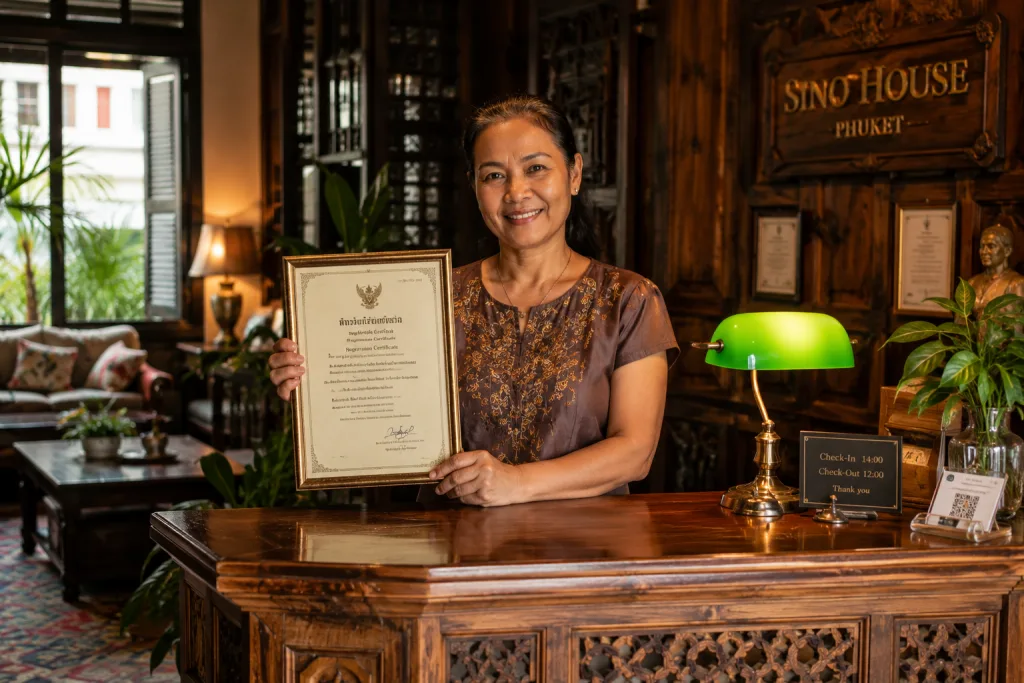
What Actually Counts as a Hotel in Thailand?
One of the biggest surprises for many property owners is this:
You don’t have to call your property a hotel for Thai law to treat it like one.
That’s where a lot of confusion begins.
Under the Thailand Hotel Act, the way a property is used often matters more than what it’s called. In simple terms, if you’re regularly providing paid accommodation for short stays, the property may fall under the rules that apply to hotels.
The part that catches most people out is the 30-day rental rule.
As a general rule, if guests pay to stay for less than 30 days, the property may be considered hotel-style accommodation rather than a private residential rental. This applies whether it’s a boutique guesthouse, a pool villa, or another type of holiday accommodation. The exact legal position depends on the property’s circumstances and whether it qualifies for any exemptions, but the 30-day threshold is the starting point that many people overlook.
This is why you’ve probably seen discussions about short-term rental Phuket listings over the past year. A beautiful villa advertised for weekend stays might look like a private home, but from a legal perspective it could be operating as accommodation that falls under the Hotel Act Thailand.
On the other hand, a property rented to the same tenant for several months is generally treated very differently.
That distinction is one of the foundations of the current enforcement campaign.
It’s also worth remembering that simply owning a villa or condo doesn’t automatically mean you’re breaking any rules. What matters is how the property is being used, how often guests change over, and whether the accommodation has the appropriate registration or licence for that type of business.
Your property may be treated as a hotel if…
- You regularly accept bookings for fewer than 30 days.
- Guests pay nightly or weekly rates.
- Different guests check in and out throughout the month.
- The property is advertised as holiday accommodation or for short stays.
- You’re operating in a way that looks more like a hospitality business than a long-term residential rental.
If you’re unsure where your property fits, don’t assume based on what similar listings are doing. The recent focus on hotel licensing regulations shows that authorities are looking more closely at how accommodation is actually being operated, not simply how it’s described online.
The 8-Room Change That Many People Missed
With so much attention on inspections and enforcement, it’s easy to overlook one of the biggest changes that actually made life easier for small accommodation businesses.
Back in 2023, Thailand updated its hotel licensing regulations to recognise that not every place welcoming overnight guests is a large hotel.
Before the change, many small guesthouses and boutique Phuket villa rental businesses crossed the legal threshold surprisingly quickly. If a property had more than four rooms or accommodated more than 20 guests, it generally needed a full hotel licence.
The updated rules doubled that threshold.
Today, properties with up to 8 rooms and no more than 30 guests can qualify as Non-Hotel Accommodation, provided they meet the required conditions and complete the necessary registration. A full hotel licence is no longer automatically required for these smaller operations.
That may sound like a technical change, but for many family-run businesses it was a significant shift.
Think about a typical Phuket pool villa with six ensuite bedrooms that’s rented to extended families or groups of friends. Under the previous rules, it was much more likely to fall into the full hotel licensing system. Under the newer regulations, it may instead qualify under the simpler Non-Hotel Accommodation framework, assuming it meets the registration and safety requirements.
The same applies to many boutique guesthouses that have quietly welcomed visitors for years. Instead of treating every small operator like a commercial hotel, the rules now recognise that smaller accommodation businesses often need a more practical path to operating legally.
That doesn’t mean registration disappears.
It simply means there is now a different route for qualifying properties.
| Previous Rules | Current Rules |
| Up to 4 rooms | Up to 8 rooms |
| Up to 20 guests | Up to 30 guests |
| Larger properties generally required a full hotel licence | More small operators can qualify as Non-Hotel Accommodation, subject to registration and safety requirements |
For many owners, this change created an opportunity rather than another obstacle. Instead of facing the same requirements as much larger hotels, qualifying properties now have a pathway that’s better suited to smaller businesses.
That’s one reason the current enforcement campaign isn’t only about cracking down. It’s also about encouraging eligible operators to move into the legal system using rules that are more realistic than they were just a few years ago.
What Is a Non-Hotel Notification?
A Non-Hotel Notification is one of those phrases that sounds more complicated than it needs to.
In plain English, it is a simpler hotel registration route for small accommodation businesses that do not fit the traditional idea of a hotel.
It is not the same as a full hotel licence.
That part matters.
A full hotel licence Thailand process is usually for larger accommodation businesses, especially places with more rooms, more guests, restaurants, event spaces or other hotel-style facilities. A Non-Hotel Notification is for smaller properties that still welcome paying guests, but sit below the main hotel threshold.
In most cases, this means a property with up to 8 rooms and no more than 30 guests.
So, for example, a small guesthouse, a family-run homestay or a boutique villa may fall into this category if it meets the right conditions. A large resort would not. A 40-room hotel would not. A condo unit rented out by itself usually brings up a different set of issues, which we will come to shortly.
The key thing to understand is that a Non-Hotel Notification is not a free pass.
It is still a formal step.
The property still needs to be registered with the local authority. It still needs to meet basic safety and hygiene standards. And the owner still needs to make sure the property is allowed to operate in that way.
The registration is generally valid for five years, which means it is not something you do once and forget forever. Like a driving licence or business registration, it needs to be kept current.
For small accommodation operators, this system can be helpful. It recognises that not every small place should be treated like a large hotel. But it also brings those smaller businesses into the official system, which is exactly what the current Phuket hotel licensing regulations are trying to do.
Non-Hotel Notification checklist
A small accommodation business may need to check:
- Does the property have 8 rooms or fewer?
- Does it host no more than 30 guests?
- Is the property registered with the local authority?
- Are the rooms safe and suitable for guests?
- Are there proper locks, lighting and sanitation?
- Is the building allowed to be used for accommodation?
- Is the registration still valid?
- Are guest records and reporting duties being handled correctly?
For many owners, the Non-Hotel Notification is the middle ground. It is less demanding than a full hotel licence, but it still means stepping out of the grey zone and into the formal system.

Why Villas and Condominiums Are Treated Differently
At first glance, a holiday villa and a condominium might seem like they’re doing exactly the same thing.
Someone books a few nights.
They check in.
They enjoy their holiday.
So why does the law often treat them differently?
The answer comes down to how the property was originally designed, approved and registered.
A standalone villa has a better chance of qualifying as accommodation for short stays, provided it meets the relevant requirements around registration, building use and safety. Many villa rental Phuket businesses fall within the smaller accommodation category we discussed earlier, which means they may be able to operate through the appropriate registration process instead of needing a full hotel licence.
A condominium is a different story.
Most condominiums in Thailand are legally registered as residential buildings. They’re designed to be places where people live, not individual hotel rooms spread throughout the building.
That creates a practical challenge for owners offering short-term rental stays.
Even if one apartment is beautifully managed, the building itself is still primarily a residential development. Under the current legal framework, an individual owner generally cannot obtain hotel registration for a single condo unit. Converting a condominium into a legally recognised hotel would involve changes affecting the entire building, which is why this is rarely possible in practice.
Here’s a simple comparison.
| Standalone Villa | Condominium Unit |
| May qualify for the Non-Hotel Accommodation framework if it meets the required conditions | Usually remains part of a residential building |
| Registration may be possible for eligible properties | Individual units generally cannot obtain hotel registration on their own |
| Often designed as an independent accommodation business | Building is intended primarily for residential living |
| Rules depend on building approval, zoning and registration | Rules also depend on the legal status of the entire condominium |
This is why conversations about Airbnb Phuket often become confusing.
You’ll hear someone say, “My friend’s villa has guests every weekend.”
Someone else replies, “I heard Airbnb is illegal.”
In reality, both statements can be based on different types of property.
The issue is not simply whether a booking comes through Airbnb or another platform. It’s whether the property itself can legally operate as that type of accommodation.
For many condo owners, this has gradually shifted investment strategies. Rather than focusing on frequent guest turnover, many now target monthly or longer stays that sit outside the 30-day rule discussion. Long-term tenants also tend to provide more predictable occupancy and fewer management demands, making this an attractive option for many owners.
As always, the right approach depends on the individual property and its circumstances, but understanding the difference between a villa and a condominium is one of the most important pieces of the puzzle.
The July 2026 Deadline That Changed Everything
If the recent Phuket hotel crackdown seemed to appear out of nowhere, it probably felt that way because most people only noticed the final chapter.
The story actually started a few weeks earlier.
Recognising that thousands of accommodation businesses were still operating outside the formal system, the Department of Provincial Administration worked with Phuket authorities to open a temporary hotel licensing clinic. Instead of sending owners from one government office to another, the idea was to bring everything together in one place.
For a limited time, operators could ask questions, check what documents they needed, submit applications and start the process of bringing their properties into compliance. The clinic also accepted applications through district offices in Mueang Phuket, Kathu and Thalang, making it easier for businesses across the island to begin their hotel registration process.
The message was fairly straightforward.
If you’ve been meaning to sort out your paperwork, now is the time.
Then came 2 July 2026.
The temporary registration window closed, and the focus shifted.
Instead of helping operators understand the process, authorities began carrying out inspections and enforcement against properties that had chosen not to register or were still operating outside the legal framework. That’s when news reports about raids, inspections and unlicensed accommodation became much more common.
Seen together, the sequence makes much more sense.
Timeline
Before July 2026
Authorities announce a temporary hotel licensing clinic to help accommodation businesses understand the rules and begin the registration process.
⬇️
During the registration window
Property owners can seek advice, prepare documents and submit applications through the one-stop service or district offices.
⬇️
2 July 2026
The temporary registration window closes.
⬇️
After 2 July 2026
Enforcement activity increases, with inspections targeting properties believed to be operating without the required registration or licence.
Understanding this timeline helps explain why enforcement appeared to ramp up so quickly. It wasn’t that a completely new law suddenly came into force. Authorities first created a pathway for eligible operators to enter the formal system. Once that opportunity had passed, they began focusing more heavily on businesses that remained outside it.
What Happens If a Property Isn’t Licensed?
By this point, you might be wondering what actually happens if a property should be registered but isn’t.
The goal of the current enforcement campaign isn’t simply to hand out penalties. The government says it’s trying to encourage accommodation businesses to meet the same basic standards around safety, registration and fair competition.
That said, the hotel licence Thailand rules do include penalties for operators who continue offering accommodation without the appropriate registration or licence.
Depending on the circumstances, authorities may take one or more of the following actions:
- Financial penalties. Operators can face an initial fine of up to THB 20,000, with additional daily fines of up to THB 10,000 while the violation continues.
- Possible imprisonment. The Hotel Act also allows for imprisonment of up to one year in some cases. Whether that applies depends on the facts of each case and any legal proceedings.
- Closure of the accommodation business. Authorities may order an illegal hotel to stop operating until the appropriate registration or licensing requirements have been met.
- Ongoing inspections. The recent Phuket operations suggest enforcement is continuing rather than being a one-off campaign. Authorities have indicated they will keep inspecting accommodation businesses across the island.
For most readers, the important takeaway isn’t memorising the numbers.
It’s understanding that the way authorities approach compliance has changed. Registration, building approvals and operating licences are receiving much closer attention than they did in the past, which is why discussions around hotel fines Thailand have become much more common in recent months.
As with everything in this guide, these rules can apply differently depending on the property, how it’s being used and its individual circumstances. This article is intended to help explain the current framework in plain English. It is general information only and should not be taken as legal advice.
Why This Crackdown Is Bigger Than Hotel Licences
The hotel licence is only one part of the story.
What makes the current enforcement push different is that authorities are not just looking at whether a property has the right accommodation paperwork. They are also looking at the business behind the property.
That means a hotel inspection can now lead to wider questions.
Who owns the company?
Who controls the bank account?
Are the shareholders real investors?
Is the business paying tax properly?
This is where agencies such as the DBD, which oversees company registrations, and AMLO, which focuses on financial crime and money laundering, can become part of the picture.
For many years, some foreign-owned property businesses in Thailand used local company structures to hold land or operate accommodation businesses. Some of these were legitimate. Others relied on nominee companies, where Thai shareholders appeared on paper but did not really control or fund the business.
That is the part authorities are now paying closer attention to.
In simple terms, hotel licensing has become one doorway into a bigger compliance check.
Here is the basic flow:
Hotel inspection
↓
Company records
↓
Ownership review
↓
Tax checks
↓
Further investigation if required
For a small operator with clean paperwork, this may simply mean answering questions and showing documents.
For a business with unclear foreign ownership, unusual shareholders, missing tax records or an unlicensed accommodation operation, the inspection may open up a wider review.
This does not mean every villa owner or guesthouse operator is suddenly under suspicion. It means the old system of separate boxes is changing.
Hotel licensing is no longer just about the front desk, the guest rooms or the fire extinguisher on the wall. It can also connect to company structure, tax reporting and who actually controls the business.
For Phuket, that is a major shift.
The island has a large hospitality market, a busy property market and many foreign investors. When those three things overlap, authorities now seem more willing to ask deeper questions. Not just, “Is this property registered?” but also, “Who is really operating it?”
That is why the current Phuket hotel crackdown feels broader than previous campaigns. It is not only about accommodation. It is about bringing the business side of the accommodation market into clearer view.
If You Own a Villa, Here’s What to Check Next
If you’re one of the many villa owners Phuket has attracted over the years, now is a good time to take a fresh look at your paperwork.
That doesn’t automatically mean there’s a problem.
Many villas are already operating correctly. Others may simply need to confirm that everything matches the way the property is actually being used.
Think of it like an annual health check. You’re not looking for bad news. You’re making sure everything is in order before it becomes an issue.
A good place to start is with the basics.
Check your building permit
Every property begins with its building permit.
Ask yourself whether the approved use of the building matches the way it’s being operated today. A villa built as a private residence may require additional approvals before being used as commercial accommodation.
Understand your zoning
Location matters too.
Some parts of Phuket have planning restrictions based on environmental protection, hillside development or land use. Even if a villa is beautifully built, zoning rules may affect how the property can legally operate as accommodation.
Count your rooms
This sounds obvious, but it’s one of the first things authorities look at.
Properties with up to 8 rooms may qualify for the simpler Non-Hotel Accommodation framework if they meet the relevant conditions. Larger properties generally fall into the standard hotel licence system.
Knowing exactly where your property sits helps you understand which pathway may apply.
Review your company structure
If your villa is owned through a company, make sure the company records, shareholders and supporting documents are accurate and up to date.
This has become more important as government agencies increasingly compare company records with accommodation registrations and other official databases.
Speak with the right professionals
Every property is different.
Building history, land title, zoning, ownership structure and previous approvals can all influence the next steps.
A qualified lawyer, licensing consultant or property professional who regularly works with Phuket accommodation businesses can help explain which requirements apply to your specific situation.
A simple checklist
Before accepting your next booking, consider asking yourself:
- Does my building permit match the current use of the property?
- Is the villa located in an area where this type of accommodation is allowed?
- How many guest rooms does the property have?
- Do I understand whether a Non-Hotel Notification or a hotel licence is more likely to apply?
- If the villa is company-owned, are the company records current and accurate?
- Have I spoken with a qualified professional if I’m unsure about any part of the process?
You don’t need to become an expert in Thai property law overnight.
The goal is simply to understand how your villa fits into today’s rules. A little time spent reviewing the basics now can make future decisions much easier, whether you’re welcoming holiday guests, planning renovations or considering the long-term future of the property.
If You Own a Condo, Here’s the Practical Reality
For many people, buying a Phuket condo has always been an attractive investment.
Condos are often more affordable than villas, they’re easier to maintain, and many are in locations where holiday visitors want to stay.
The challenge isn’t owning the property.
It’s how the property is used.
As we’ve already covered, individual condominium units are generally part of a residential building. Because of that, they don’t usually follow the same pathway as standalone villas when it comes to short-term accommodation.
That’s why you’ll often hear conflicting advice about Airbnb condo listings in Thailand.
Some owners continue to advertise nightly stays.
Others only accept monthly bookings.
Others decide not to rent their units at all.
The difference usually comes down to each owner’s approach to risk, the building’s own rules and how they interpret the current regulatory environment.
Over the past year, many investors have quietly shifted towards longer rentals.
Instead of changing guests every few days, they look for tenants staying one month, three months or even longer. In many cases, that approach sits outside the discussion around the 30-day rental rule and also appeals to digital nomads, retirees, remote workers and seasonal residents who want a place to call home rather than a holiday base.
Longer stays can offer other practical advantages too.
Fewer check-ins.
Lower cleaning costs.
Less day-to-day management.
A steadier rental income throughout the year.
Of course, every condominium is different. Some buildings have their own management rules, often referred to as juristic regulations, that place additional limits on short-term letting. Those building rules are separate from Thailand’s wider condo regulations, so owners should understand both before deciding how they want to rent their property.
For many investors today, the question is no longer, “Can I fill every weekend?”
Instead, it’s, “What rental strategy makes the most sense over the next five or ten years?”
For a growing number of condo owners, the answer is simple. Focus on longer-term tenants, keep management straightforward and build a more predictable investment over time.
Does This Affect Long-Term Residents?
For most people living in Phuket long term, day-to-day life probably will not change much.
If you have a normal rental agreement, you live in a house or condo, and you are not running the property as short-term accommodation, this crackdown is not really aimed at you.
The focus is mainly on properties operating like hotels without the correct registration.
That said, long-term residents should still understand one piece of the puzzle: TM30.
TM30 is the immigration report that tells authorities where a foreign national is staying in Thailand. In simple terms, landlords, hotels or property managers are expected to report the address of foreign guests or tenants. For expats Phuket already living here, this usually matters when renewing a visa, extending a stay or dealing with immigration paperwork.
If you are renting long term from a private landlord, it is sensible to check that your TM30 has been filed correctly. Not because you need to panic, but because missing paperwork can make routine immigration tasks more annoying than they need to be.
For people staying in registered accommodation, this is usually handled as part of the normal check-in or rental process. Licensed hotels and properly managed accommodation businesses are generally used to dealing with guest reporting.
Where it can become messy is with informal short-term stays, especially where the operator is trying to avoid leaving a paper trail. That is one reason hotel licensing and immigration reporting now feel more connected than they used to.
For residents, the practical takeaway is simple.
If you are renting long term, keep copies of your lease, ask whether your TM30 has been filed, and make sure your address records match where you actually live. You do not need to become an expert in hotel regulations, but having your own paperwork in order makes life in Phuket much smoother.
What Could This Mean for Phuket Over the Next Few Years?
Whenever regulations change, people naturally wonder what comes next.
No one has a crystal ball, and the Phuket property market has surprised us more than once over the past decade. But based on the direction of the current reforms, there are a few trends that seem worth watching.
The biggest shift may simply be towards a more professional accommodation industry.
For years, Phuket’s tourism market has included everything from large international hotel brands to individual homeowners renting out a spare villa for a few weeks each year. That variety is one of the island’s strengths.
As compliance becomes more important, operators who already have their paperwork in order may find themselves on a more level playing field. Businesses that invest in proper licensing, safety standards and professional management could benefit from greater consistency across the market.
That may also influence villa investment decisions.
Instead of asking, “How many nights can I rent this property?” investors may increasingly ask, “Can this property operate legally over the long term?” Building permits, zoning, operating costs and licensing may become part of the conversation much earlier in the buying process.
The mix of accommodation available to visitors could change as well.
If some owners decide that short-term letting is no longer the right fit for their property, parts of the holiday rental market could gradually shift towards longer bookings. That doesn’t necessarily mean Airbnb disappears from Phuket. It may simply mean that some owners focus on monthly stays rather than nightly turnover, while others choose to operate through the appropriate licensing pathway.
Long-term rentals may also become more attractive for certain investors.
Remote workers, retirees and families relocating to Phuket often stay for several months rather than a few days. For some property owners, serving that market offers predictable occupancy with less day-to-day management.
Another area to watch is guest confidence.
Many travellers never think about licensing when they book accommodation. But knowing a property meets recognised standards around safety and registration can help build trust, especially for families or first-time visitors.
Finally, these changes may make Phuket an even more attractive destination for larger hospitality businesses and institutional investors. Companies making long-term investments generally value clear rules and greater certainty, even if those rules require more upfront work.
None of this means the island will suddenly look different next year.
Phuket has always adapted.
The tourism industry has evolved before, and it will evolve again.
What feels different this time is that the accommodation market appears to be moving steadily towards greater transparency, clearer standards and a stronger distinction between private homes and professionally operated, licensed accommodation. For property owners, investors and guests alike, that is likely to shape the next chapter of Phuket’s hospitality industry.
Frequently Asked Questions
Is Airbnb illegal in Phuket?
Not exactly, and that’s where much of the confusion comes from.
There isn’t a law that specifically bans Airbnb. Instead, the question is whether the property being rented complies with Thailand’s accommodation laws. A booking platform is simply a marketplace. The legal issue is how the property is being used.
For example, a villa that qualifies under the appropriate registration framework may be in a very different position from an individual condominium unit being rented for weekend stays. The property’s approval, registration, building use and length of stay all play a part.
That’s why you’ll often hear completely different answers from different property owners. They may all be talking about different types of accommodation.
Rather than asking whether Airbnb itself is legal, it’s usually more useful to ask whether the specific property is allowed to operate as short-term accommodation under the current rules.
Can I rent my villa on Airbnb?
Many villa owners do rent their properties to holidaymakers, but the answer depends on the villa itself rather than the booking platform.
Factors such as the number of guest rooms, the property’s approved use, local planning requirements and the type of registration all matter. Some smaller villas may qualify under the Non-Hotel Accommodation framework, while larger properties generally fall under the standard hotel licensing system.
The key point is that a villa is usually treated differently from an individual condominium because it is a standalone property.
If you’re planning to rent your villa regularly for short stays, it’s worth understanding which registration pathway may apply before accepting bookings. That gives you a much clearer picture than relying on advice from online forums or social media groups, where every property is often treated as if it follows the same rules.
Do I need a hotel licence?
Not every accommodation business requires a full hotel licence.
That is one of the biggest misunderstandings surrounding the recent enforcement campaign.
Smaller accommodation businesses that meet certain criteria may instead qualify for a Non-Hotel Notification, which is a simpler registration system created for eligible properties.
Larger hotels, resorts and accommodation businesses with more rooms or additional facilities generally require a full hotel licence.
The deciding factors are usually things like the size of the property, how many guests it accommodates, how it is used and whether it meets the relevant building and safety requirements.
Because every property is different, there isn’t a single answer that applies to every villa, guesthouse or apartment. Understanding which category your property falls into is usually the first step before looking at licensing requirements.
What is a Non-Hotel Notification?
A Non-Hotel Notification is a simplified registration process created for smaller accommodation businesses.
Instead of treating every guesthouse or boutique villa exactly like a large commercial hotel, the regulations recognise that some properties operate on a much smaller scale.
Properties that qualify still need to register with the local authority, meet basic safety standards and renew their registration periodically. It is not an exemption from the rules, and it is not a shortcut around compliance.
Think of it as a different category rather than a lesser one.
For many small accommodation operators, this has created a more practical pathway into the formal system while still giving guests confidence that minimum standards have been met.
If your property exceeds the qualifying thresholds, a full hotel licence is generally the next step instead.
Can I rent my condo for weekends?
This is one of the most common questions among foreign property owners.
Individual condominium units are generally treated differently from standalone villas because condominiums are primarily registered as residential buildings.
That means a single owner usually cannot obtain hotel registration for just one apartment while the rest of the building remains residential.
Weekend rentals therefore become much more complicated than many owners expect.
Many investors have responded by focusing on monthly or longer bookings instead. That approach often aligns better with the way condominium buildings are intended to be used and also appeals to long-stay visitors, remote workers and retirees.
Every condominium also has its own building management rules, so owners should understand both the building’s policies and Thailand’s wider accommodation regulations before deciding how they wish to rent their property.
Does the 30-day rule still apply?
Yes. The 30-day rule remains one of the key ideas behind Thailand’s accommodation framework.
In general terms, rentals of fewer than 30 days are treated differently from longer residential tenancies. That distinction helps determine whether a property is operating more like a hotel or more like a traditional rental home.
The rule is often mentioned on its own, but it doesn’t tell the whole story.
Authorities also look at factors such as the type of property, how it is registered, whether it qualifies for a Non-Hotel Notification and whether the appropriate approvals are in place.
That’s why two properties accepting short bookings may not always be treated in exactly the same way.
The 30-day rule is an important starting point, but it is only one piece of a much bigger picture.
What happens if my property isn’t registered?
Recent enforcement activity shows that authorities are placing much greater attention on accommodation businesses operating outside the formal system.
Depending on the circumstances, operators may face inspections, financial penalties, orders to stop operating or other enforcement measures under the relevant legislation.
The bigger change, however, is that agencies are increasingly sharing information. Hotel registration, company records, taxation and ownership structures are no longer being viewed entirely separately.
For property owners, this means registration has become more important than it was a few years ago.
If you’re unsure about your property’s status, gathering the right information early is usually much easier than trying to resolve questions after an inspection has already begun.
Does this affect long-term residents?
For most people, probably not.
If you’re renting a home on a normal long-term lease and simply living your life in Phuket, the current enforcement campaign isn’t really aimed at you.
The main thing to be aware of is making sure your address is correctly recorded through the TM30 reporting process, which is normally handled by your landlord, hotel or property manager.
Keeping copies of your lease and checking that your accommodation has completed any required reporting can make future immigration appointments much smoother.
Otherwise, most expats and long-term residents are unlikely to notice major changes in their daily routine as a result of these accommodation reforms.
Can tourists stay in Airbnb accommodation?
Many visitors continue to book holiday accommodation through Airbnb and other online platforms every day.
From a guest’s perspective, the experience often looks no different from booking through a hotel website.
The legal responsibilities, however, usually sit with the accommodation provider rather than the traveller.
If you are visiting Phuket, choosing professionally managed or properly registered accommodation can provide greater confidence that the property meets local requirements and safety standards.
For longer visits, serviced apartments, licensed hotels and monthly rentals often provide a wider range of options depending on the type of trip you’re planning.
As always, if you’re unsure about a property, asking the host questions before booking is perfectly reasonable.
Where can I learn more?
Accommodation rules in Thailand can change over time, so it’s worth relying on reputable sources rather than social media rumours.
Official announcements from the Department of Provincial Administration and other government agencies are the primary source for regulatory updates. If you’re buying property or planning to operate an accommodation business, it’s also sensible to speak with a qualified Thai lawyer or licensing specialist who understands the current requirements.
For everyone else, we’ll continue following the story here at Phuket Community Newsletter.
As new regulations, enforcement campaigns or licensing changes are announced, we’ll explain what they mean in plain English, separate the headlines from the reality, and focus on the practical information that matters most to people living, investing and travelling in Phuket.